Volume 1 · pp. 180–182
Chapter VIII. On the property of substance, which is to signify this something
A marker with ≈ is an approximate page boundary, placed by measure of the text; the page photographs remain the authority. In the paired views, clicking a page marker brings that page into view.
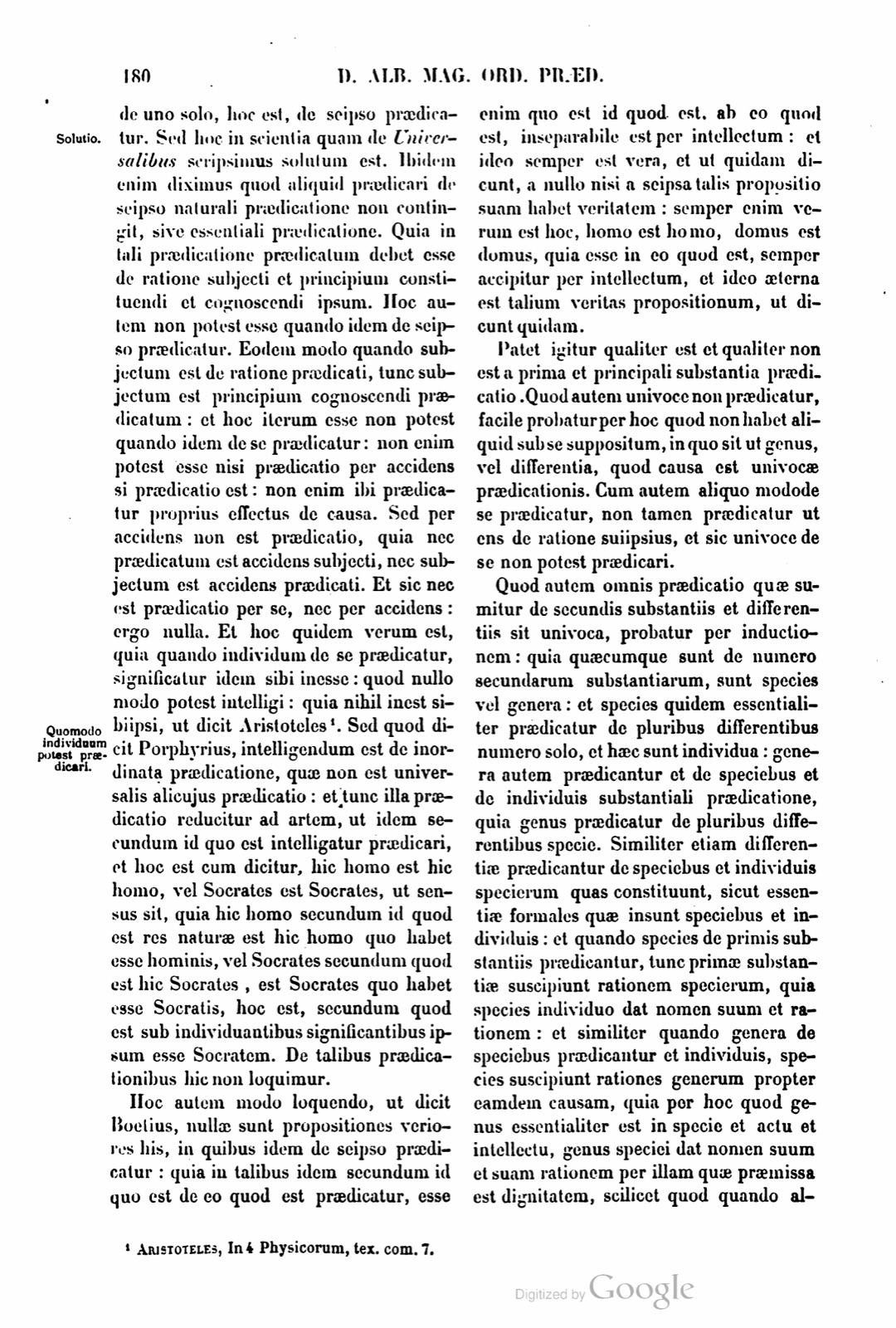
alterum de altero prædicatur ut de subjecto, quæcumque substantialiter de prædicato prædicantur, omnia de subjecto dicuntur eodem modo et ordine prædicationis. Similiter autem quando differentia prædicatur de speciebus et individuis, per hoc quod essentialiter ut actus est in illis, tunc diffinitivam rationem differentiæ suscipiunt et species et individua, quia ipsa differentia, ut actus et ut forma est essentialiter in illis. Sed jam habitum est quod univoca sunt, quorum nomen est commune et unum, et ratio diffinitiva secundum id nomen data est eadem. Nomine autem uno et ratione una prædicantur secundæ substantiæ et differentiæ: ergo omnia prædicata quæ a substantiis secundis et differentiis ordinata prædicatione sumpta sunt, univoce dicuntur sive prædicantur.
Attende autem, quod quamvis differentia non sumatur ut genus, et subjectum in recta linea standi supra et subtus non habeat, sed sit a latere respiciens talem lineam, tamen differentia subjectum habet cui inest, de quo est ut prædicabile et ut quoddam universale, et sic de illo prædicatur univoce.
Adhuc autem notandum est, quod quamvis differentia non habeat genus quod in ipsa sit per intellectum, et sic non habeat veram diffinitionem qua prædicetur, tamen habet assignatum nomen suum per essentialia sua formativa per causam essentialem, sicut quod dicitur quod ad esse conducit, et quod ejus quod est esse rei pars est. Hæc enim assignatio per causam data est, secundum quod ipsa differentia est causa esse, et per hanc univoce habet prædicari: et cui convenit prædicatio sui nominis, in ipso est differentia per hanc eamdem rationem completam, scilicet quod differentia id ad esse conducit, et quod ipsa differentia esse illius rei pars est essentialis. Sic enim intelligitur quid prædicari nomine et ratione, sic scilicet ut subjectum de quo prædicatio fit, sicut participat prædicatum nomine, sic participet ipsum ratione.
one thing is predicated of another as of a subject, whatever things are predicated substantially of the predicate are all said of the subject in the same mode and order of predication. Similarly, when difference is predicated of species and individuals, through the fact that it is in them essentially as act, then both species and individuals receive the definitive account of the difference, because difference itself, as act and as form, is essentially in them. But it has already been held that univocal things are those whose name is common and one, and the definitive account given according to that name is the same. But second substances and differences are predicated with one name and one account; therefore all predicates which are taken from second substances and differences by ordered predication are said or predicated univocally.
But attend, that although difference is not taken as a genus and does not have a subject in the straight line of standing above and beneath, but is from the side, looking toward such a line, nevertheless difference has a subject in which it is, of which it is as a predicable and as a certain universal, and thus it is predicated univocally of that.
Moreover it must be noted that although difference does not have a genus which is in it through understanding, and thus does not have a true definition by which it is predicated, nevertheless it has its name assigned through its own formative essentials by an essential cause, as when it is said that it leads to being, and that it is part of the being of the thing that is. For this assignment has been given through a cause, according as difference itself is a cause of being, and through this it has being predicated univocally; and in that to which the predication of its name belongs, difference is in it through this same completed account, namely that difference leads it to being, and that difference itself is an essential part of the being of that thing. For thus it is understood what it is to be predicated by name and account: namely, that as the subject of which predication is made participates in the predicate by name, so it participates in it by account.
CAPUT VIII. De proprio substantiæ quod est significare hoc aliquid.
Omnibus autem jam habitis proprietatibus quæ substantiam secundum quod est unum prædicabilium consequuntur, nunc restat videre de proprietatibus ipsius secundum quod ipsa est substantia absque hoc quod consideretur ut prædicabile vel unum prædicabilium sive prædicamentorum. Dico igitur, quod omnis substantia videtur hoc aliquid significare: hoc autem aliquid significare convenit quidem soli substantiæ, sed non convenit omni, quia sicut univoce prædicari convenit secundæ substantiæ et non primæ, ita hoc aliquid significare convenit primæ substantiæ et non secundæ, quamvis convenire videatur etiam ipsi substantiæ secundæ. Et in primis quidem indubitabile est et verum universaliter, quoniam primæ substantiæ hoc aliquid significant: quia habent materiam terminatam et signatam accidentibus et individuantibus, per quæ sunt hic et nunc, et per quæ singula earum est unum numero, et hic et nunc, in quo, ut dicit Boetius, non invenitur diversitas in numerando: quod non convenit ei quod est specie vel genere unum, quod nec habet materiam determinatam neque signatam, et ideo divisione materiæ agit in individuorum pluralitatem, et divisione differentiarum genus dividentium in specierum pluralitatem, ita quod unitas numeri non servatur in ipsis. Prima igitur substantia quod sit hæc, habet ab individuatione et terminatione individuantium, quod autem aliquid in forma, habet a specie quæ est in ipsa, et est esse ipsius, et sic proprie dicitur hoc aliquid: unde dicit Boetius in libro de Hebdomadibus: Omne quod est, ab alio habet quod est, et ab alio quod hoc est: quod enim hoc est, per designationem est hujus, quia hoc est: quod
CHAPTER VIII. On the property of substance, which is to signify this something.
But now that all the properties have been had which follow substance according as it is one of the predicables, it remains now to see concerning its properties according as it is substance, apart from the fact that it is considered as a predicable or one of the predicables or predicaments. Therefore I say that every substance seems to signify this something; but to signify this something indeed belongs to substance alone, but does not belong to every substance, because just as to be predicated univocally belongs to second substance and not to first, so to signify this something belongs to first substance and not to second, although it seems also to belong to second substance itself. And among first substances this indeed is indubitable and universally true, since first substances signify this something: because they have matter terminated and marked by accidents and individuating things, through which they are here and now, and through which each of them is one in number, and here and now, in which, as Boethius says, no diversity is found in numbering. This does not belong to that which is one in species or genus, which has neither determinate nor marked matter, and therefore by division of matter acts into the plurality of individuals, and by division of differences dividing the genus into the plurality of species, so that unity of number is not preserved in them. Therefore first substance, that it is this, has from individuation and the termination of individuating things; but that it is something in form, it has from the species which is in it and is its being, and thus it is properly called this something. Hence Boethius says in the book On the Hebdomads: Everything that is has from one thing what it is, and from another that it is this; for that it is this is through the designation of this thing, because it is this; but what
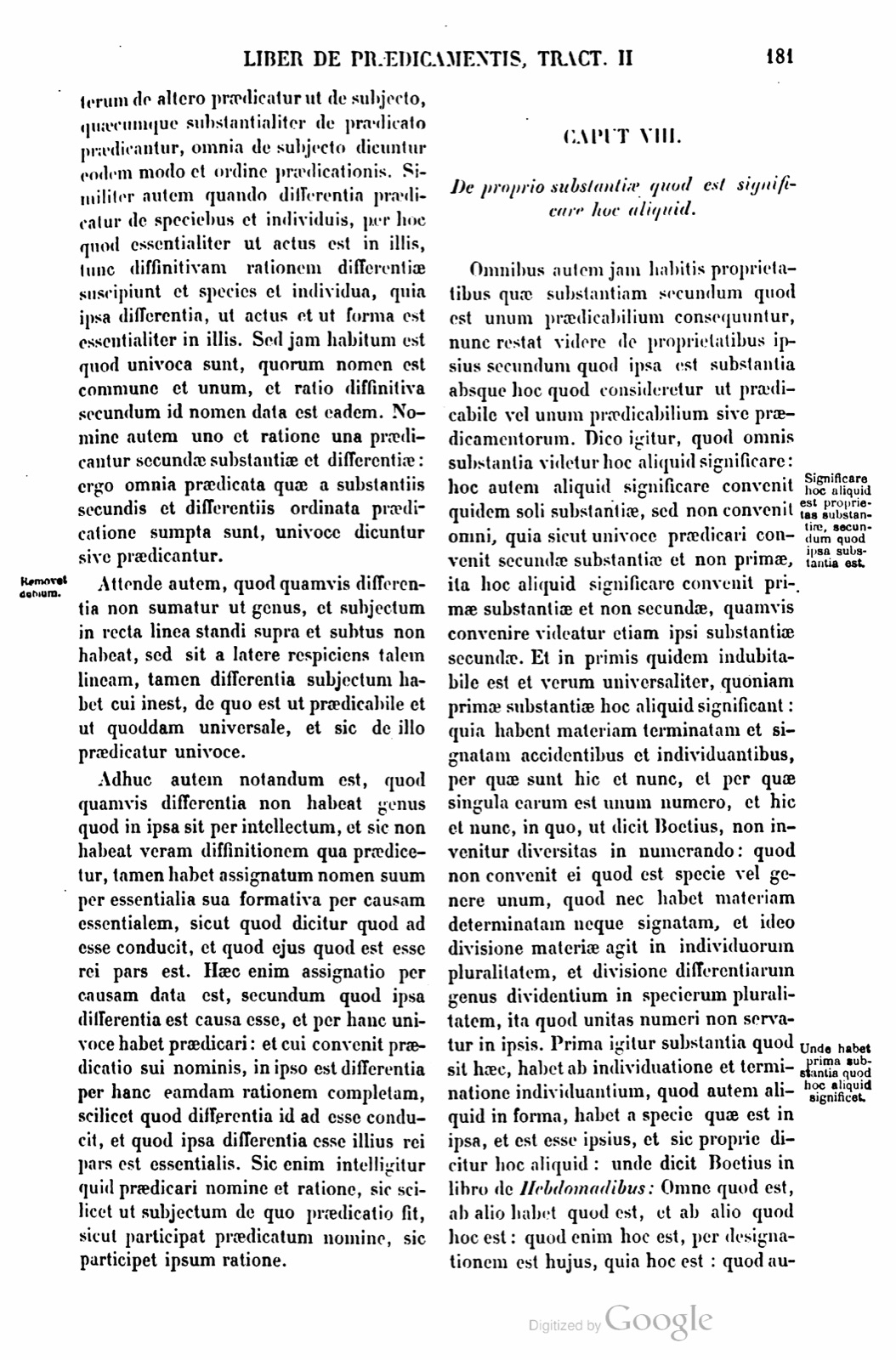
autem est, non potest esse nisi per hoc quod est sibi causa essendi.
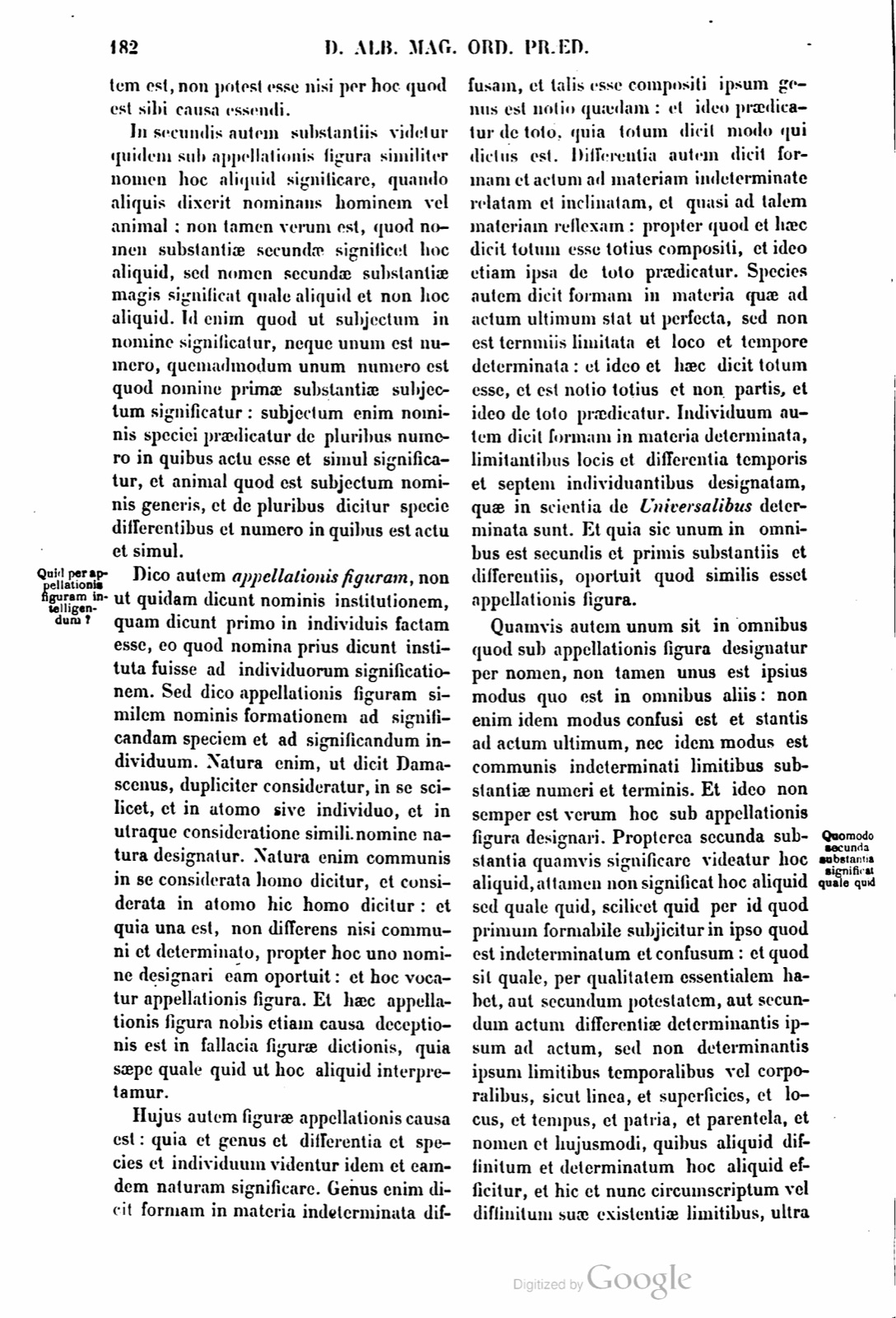
In secundis autem substantiis videtur quidem sub appellationis figura similiter nomen hoc aliquid significare, quando aliquis dixerit nominans hominem vel animal: non tamen verum est, quod nomen substantiæ secundæ significet hoc aliquid, sed nomen secundæ substantiæ magis significat quale aliquid et non hoc aliquid. Id enim quod ut subjectum in nomine significatur, neque unum est numero, quemadmodum unum numero est quod nomine primæ substantiæ subjectum significatur: subjectum enim nominis speciei prædicatur de pluribus numero in quibus actu esse et simul significatur, et animal quod est subjectum nominis generis, et de pluribus dicitur specie differentibus et numero in quibus est actu et simul.
Dico autem appellationis figuram, non ut quidam dicunt nominis institutionem, quam dicunt primo in individuis factam esse, eo quod nomina prius dicunt instituta fuisse ad individuorum significationem. Sed dico appellationis figuram similem nominis formationem ad significandam speciem et ad significandum individuum. Natura enim, ut dicit Damascenus, dupliciter consideratur, in se scilicet, et in atomo sive individuo, et in utraque consideratione simili nomine natura designatur. Natura enim communis in se considerata homo dicitur, et considerata in atomo hic homo dicitur: et quia una est, non differens nisi communi et determinato, propter hoc uno nomine designari eam oportuit: et hoc vocatur appellationis figura. Et hæc appellationis figura nobis etiam causa deceptionis est in fallacia figuræ dictionis, quia sæpe quale quid ut hoc aliquid interpretamur.
Hujus autem figuræ appellationis causa est: quia et genus et differentia et species et individuum videntur idem et eamdem naturam significare. Genus enim dicit formam in materia indeterminata diffusam, et talis esse compositi ipsum genus est notio quædam: et ideo prædicatur de toto, quia totum dicit modo qui dictus est. Differentia autem dicit formam et actum ad materiam indeterminate relatam et inclinatam, et quasi ad talem materiam reflexam: propter quod et hæc dicit totum esse totius compositi, et ideo etiam ipsa de toto prædicatur. Species autem dicit formam in materia quæ ad actum ultimum stat ut perfecta, sed non est terminis limitata et loco et tempore determinata: et ideo et hæc dicit totum esse, et est notio totius et non partis, et ideo de toto prædicatur. Individuum autem dicit formam in materia determinata, limitantibus locis et differentia temporis et septem individuantibus designatam, quæ in scientia de Universalibus determinata sunt. Et quia sic unum in omnibus est secundis et primis substantiis et differentiis, oportuit quod similis esset appellationis figura.
however it is, it cannot be except through this, that it is for itself the cause of being.
But in second substances the name seems indeed, under the figure of appellation, similarly to signify this something, when someone will have said, naming man or animal; yet it is not true that the name of second substance signifies this something, but the name of second substance signifies rather a qualified something and not this something. For that which is signified in the name as the subject is not one in number, in the way that what is signified as subject by the name of first substance is one in number. For the subject of the name of the species is predicated of many things in number, in which being in act and at once is signified; and animal, which is the subject of the name of the genus, is said also of many things differing in species and in number, in which it is in act and at once.
But I say figure of appellation, not institution of a name as certain persons say, which they say was first made in individuals, because they say that names were instituted earlier for the signification of individuals. But I call figure of appellation a similar formation of a name for signifying the species and for signifying the individual. For nature, as Damascene says, is considered in two ways, namely in itself and in an atom or individual, and in each consideration nature is designated by a similar name. For common nature considered in itself is called man, and considered in an atom it is called this man; and because it is one, differing only by common and determinate, for this reason it had to be designated by one name, and this is called the figure of appellation. And this figure of appellation is also for us a cause of deception in the fallacy of figure of speech, because often we interpret a qualified something as this something.
But the cause of this figure of appellation is that genus and difference and species and individual seem to signify the same thing and the same nature. For genus says form diffused in indeterminate matter, and the genus itself is a certain notion of the being of such a composite; and therefore it is predicated of the whole, because it says the whole in the mode that has been stated. But difference says form and act in relation to matter related indeterminately and inclined, and as if reflected back to such matter; on account of which this too says the whole being of the whole composite, and therefore it too is predicated of the whole. But species says form in matter which stands at ultimate act as perfected, but is not limited by terms and determined by place and time; and therefore this too says the whole being, and is the notion of the whole and not of a part, and therefore it is predicated of the whole. But individual says form in determinate matter, designated by limiting places and by difference of time and by the seven individuating things which were determined in the science On the Universals. And because what is thus one in all is in second and first substances and differences, it was necessary that there be a similar figure of appellation.
Quamvis autem unum sit in omnibus quod sub appellationis figura designatur per nomen, non tamen unus est ipsius modus quo est in omnibus aliis: non enim idem modus confusi est et stantis ad actum ultimum, nec idem modus est communis indeterminati limitibus substantiæ numeri et terminis. Et ideo non semper est verum hoc sub appellationis figura designari. Propterea secunda substantia quamvis significare videatur hoc aliquid, attamen non significat hoc aliquid sed quale quid, scilicet quid per id quod primum formabile subjicitur in ipso quod est indeterminatum et confusum: et quod sit quale, per qualitatem essentialem habet, aut secundum potestatem, aut secundum actum differentiæ determinantis ipsum ad actum, sed non determinantis ipsum limitibus temporalibus vel corporalibus, sicut linea, et superficies, et locus, et tempus, et patria, et parentela, et nomen et hujusmodi, quibus aliquid diffinitum et determinatum hoc aliquid efficitur, et hic et nunc circumscriptum vel diffinitionum suæ existentiæ limitibus, ultra
But although what is designated by name under the figure of appellation is one in all, nevertheless there is not one mode of it by which it is in all the others: for the mode of the confused and of what stands at ultimate act is not the same, nor is the mode of the common indeterminate by the limits of substance of number and by terms the same. And therefore it is not always true that this is designated under the figure of appellation. For this reason second substance, although it seems to signify this something, nevertheless does not signify this something but a qualified what, namely a what through that which, as first formable, is subjected in it which is indeterminate and confused; and that it is qualified it has through essential quality, either according to potency or according to the act of difference determining it to act, but not determining it by temporal or bodily limits, such as line, surface, place, time, native land, parentage, name, and things of this sort, by which something defined and determined is made this something, and circumscribed here and now, or by the limits of definitions of its own existence, beyond
If a page does not appear, its photograph has not been uploaded yet.