Volume 1 · pp. 167–169
Chapter II. What first substance is, and an explanation of its definition
A marker with ≈ is an approximate page boundary, placed by measure of the text; the page photographs remain the authority. In the paired views, clicking a page marker brings that page into view.
CAPUT II. De substantia prima quid sit, et declaratio diffinitionis ejus.
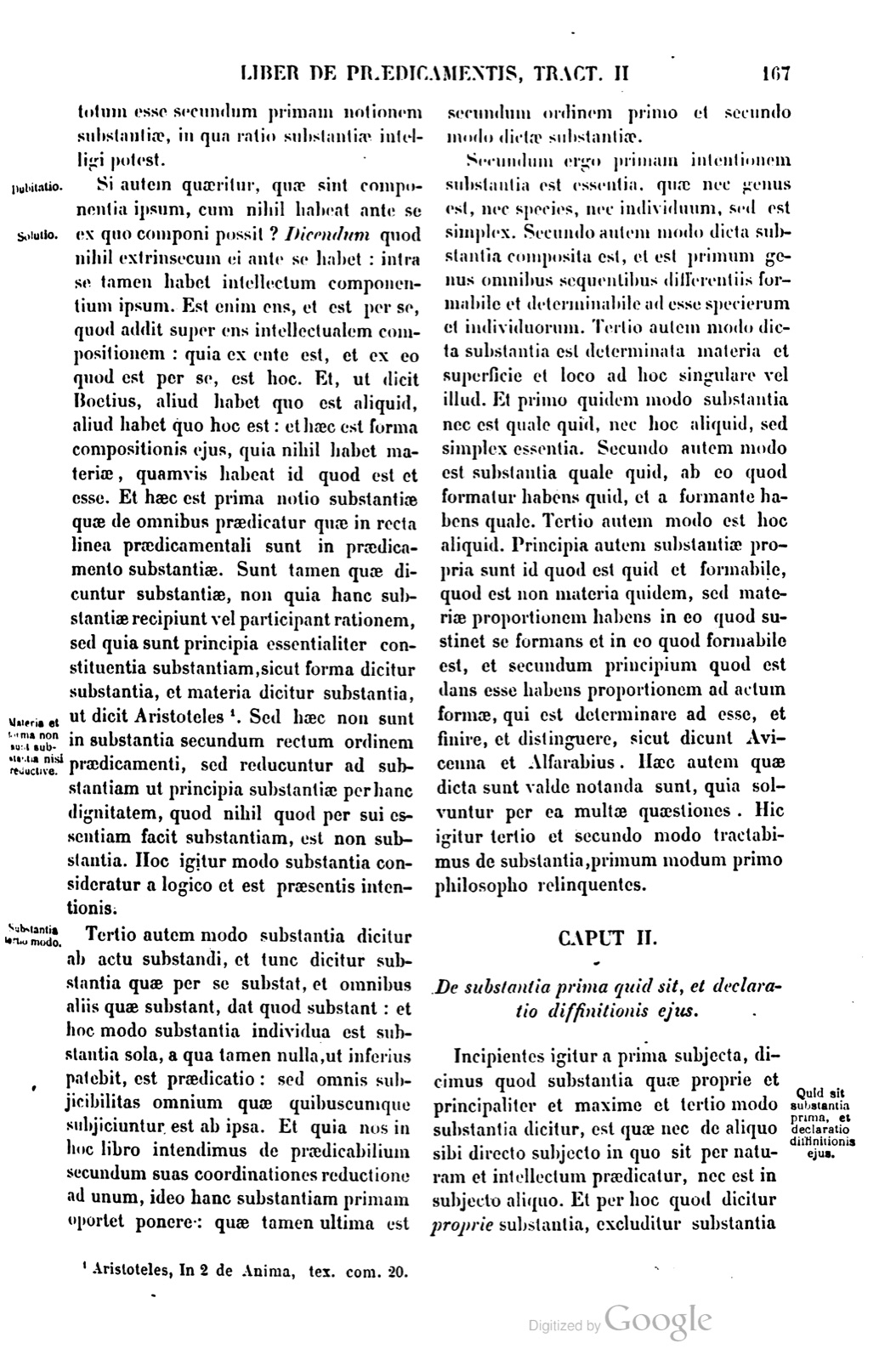
Incipientes igitur a prima subjecta, dicimus quod substantia quæ proprie et principaliter et maxime et tertio modo substantia dicitur, est quæ nec de aliquo sibi directo subjecto in quo sit per naturam et intellectum prædicatur, nec est in subjecto aliquo. Et per hoc quod dicitur proprie substantia, excluditur substantia quæ non est proprie substantia, sed substantiale primum in quolibet genere, sicut color substantiale est albedini, et mensura substantialis est pedis, vel cubiti, vel alicujus alterius speciei mensuræ. Dicitur autem principaliter ad secundæ substantiæ exclusionem, quæ substantia est ab actu substandi dicta per primam substantiam. Et dicitur maxime eo quod pluribus substat quam aliqua alia: quia substat communiter accidentibus quæ non sunt nisi accidentia individui. Per hoc autem quod de subjecto non dicitur, habet quod est individua vere in natura secundum actum existens, et non habet actu intellectus existentiam ut universale. Per hoc autem quod non est in subjecto, habet quod est per se ens, et non in alio nec ab alio existentiam habens. Hæc igitur est prima substantia, cujus exemplum est ut aliquis homo, vel aliquis equus.1
Quod autem per negationem diffinitur, cum dicitur quæ neque de subjecto dicitur neque in subjecto est, causa est quia sicut prima est in substando, ita ultima est in essendo. Et ideo in substando per affirmationem affirmantem aliquid quod sibi causa esset substandi diffiniri non potuit. Nec etiam potuit diffiniri per aliquid quod sibi esset causa de aliquo prædicandi, quia de nullo prædicatur: ultimum enim in ordine essendi non potest habere aliquid sub se cui essentialiter insit. Inesse autem essentialiter, causa est quod aliquid de aliquo ut genus vel species essentialiter prædicetur: perfectum autem esse in actu ultimo secundum naturam et sustentans omnia alia, causa est quod in nullo sit ut accidens. His ergo de causis sic per duas negationes oportuit ipsam diffiniri: quæ tamen negationes infinitæ non sunt quia finitæ sunt ab his quæ in eadem diffinitione ponuntur.
CHAPTER II. What first substance is, and an explanation of its definition.
Beginning, therefore, from the first subject, we say that the substance which properly and principally and most of all, and in the third mode, is called substance, is that which neither is predicated of any direct subject of its own, in which it would be by nature and by intellect, nor is in any subject. And by this, that it is called properly substance, substance is excluded which is not properly substance, but the first substantial thing in any genus, just as color is substantial to whiteness, and measure is substantial to a foot, or to a cubit, or to some other species of measure. It is called principally, however, for the exclusion of second substance, which is substance said from the act of underlying through first substance. And it is called most of all because it underlies more things than any other: because it commonly underlies accidents which are nothing except accidents of the individual. By this, however, that it is not said of a subject, it has this, that it is individual, truly existing in nature according to act, and does not have existence by act of the intellect as a universal. By this, however, that it is not in a subject, it has this, that it is a being through itself, and having existence neither in another nor from another. This, therefore, is first substance, of which an example is as some man, or some horse.1
But the cause why it is defined through negation, when it is said that it is that which is neither said of a subject nor is in a subject, is that, just as it is first in underlying, so it is last in being. And therefore, in underlying, it could not be defined through an affirmation affirming something which would be for it a cause of underlying. Nor also could it be defined through something which would be for it a cause of predicating concerning something, because it is predicated of nothing: for what is last in the order of being cannot have something under itself in which it is essentially. But to be in essentially is the cause that something is predicated essentially of something as genus or species; but perfected being in ultimate act according to nature, and sustaining all other things, is the cause that it is in nothing as an accident. For these causes, therefore, it was necessary that it be defined thus through two negations, which negations nevertheless are not infinite, because they are bounded by those things which are placed in the same definition.
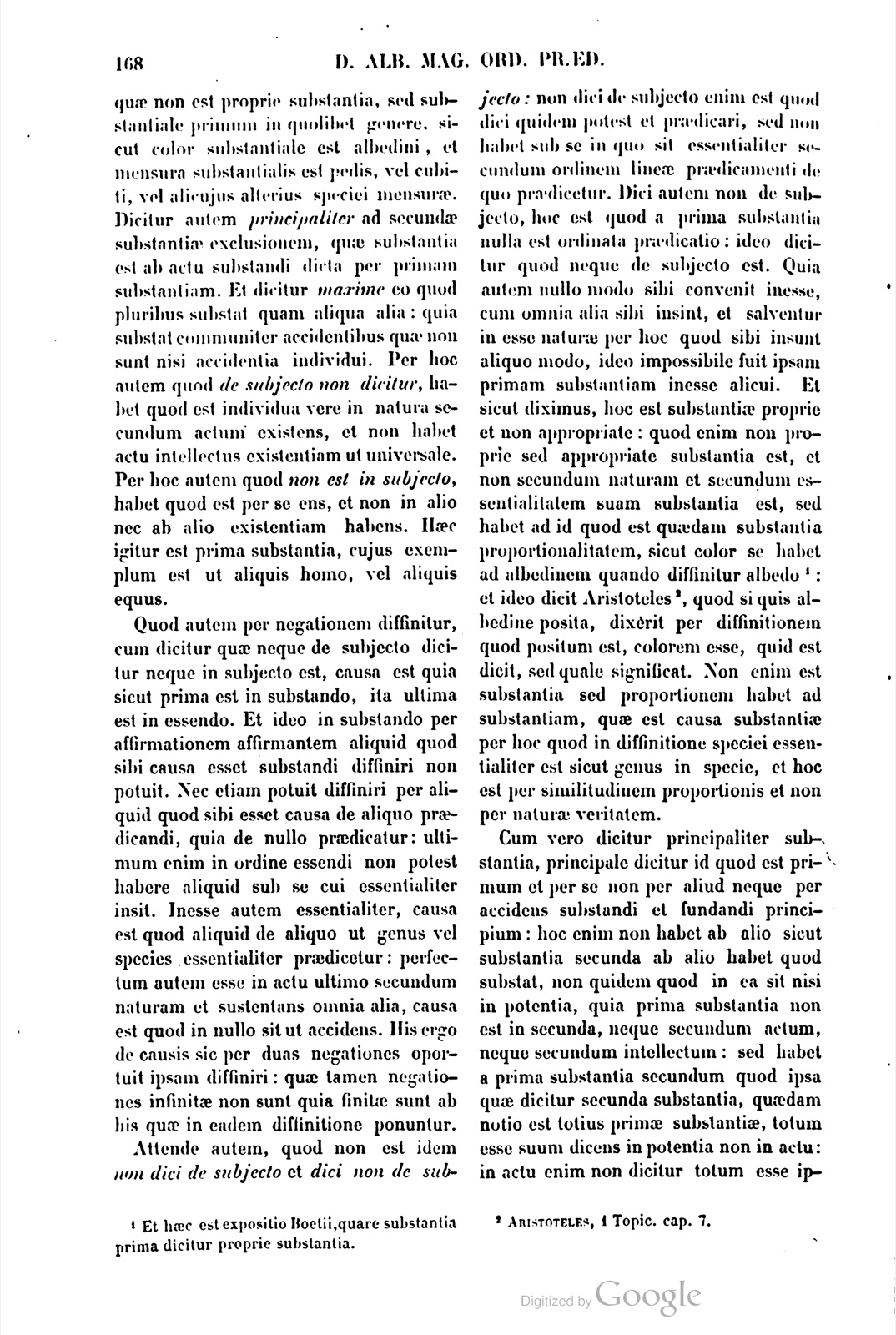
Attende autem, quod non est idem non dici de subjecto et dici non de subjecto: non dici de subjecto enim est dici quidem potest et prædicari, sed non habet sub se in quo sit essentialiter secundum ordinem lineæ prædicamenti de quo prædicetur. Dici autem non de subjecto, hoc est quod a prima substantia nulla est ordinata prædicatio: ideo dicitur quod neque de subjecto est. Quod autem nullo modo sibi convenit inesse, cum omnia alia sibi insint, et salventur in esse naturæ per hoc quod sibi insint aliquo modo, ideo impossibile fuit ipsam primam substantiam inesse alicui.
Et sicut diximus, hoc est substantiæ proprie et non appropriate: quod enim non proprie sed appropriate substantia est, id non secundum naturam et secundum essentialitatem suam substantia est, sed habet ad id quod est quædam substantia proportionalitatem, sicut color se habet ad albedinem quando diffinitur albedo: et ideo dicit Aristoteles2, quod si quis albedine posita, dixerit per diffinitionem quod positum est, colorem esse, quid etiam dicit, sed quale significat. Non enim est substantia sed proportionem habet ad substantiam, quæ est causa substantiæ per hoc quod in diffinitione speciei essentialiter est sicut genus in specie, et hoc est per similitudinem proportionis et non per naturæ veritatem.
Cum vero dicitur principaliter substantia, principale dicitur id quod est primum et per se non per aliud neque per accidens substandi et fundandi principium: hoc enim non habet ab alio sicut substantia secunda ab alio habet quod substat, non quidem quod in ea sit re in potentia, quia prima substantia non est in secunda, neque secundum actum, neque secundum intellectum: sed habet a prima substantia secundum quod ipsa quæ dicitur secunda substantia, quædam notio est totius primæ substantiæ, totum esse suum dicens in potentia non in actu: in actu enim non dicitur totum esse ipsius nisi nomine individui, potentia autem est ab actu aliquo primo in ordine rerum omnium et generum. Et, sicut diximus, maxime dicitur: quia omnibus quæ insunt, substat quocumque modo aliquid sit in aliquo et salvat in esse omnia secundum naturam, quod solum esse est perfectum et verum: et tale esse non habet secunda substantia, prout secunda substantia est: et ideo in tali esse fundare non potest aliquid.
Attend, however, that not to be said of a subject and to be said not of a subject are not the same. For not to be said of a subject is this: it can indeed be said and predicated, but it does not have under itself something in which it is essentially according to the order of the line of the predicament, concerning which it may be predicated. But to be said not of a subject, this is that from first substance there is no ordered predication: therefore it is said that it is neither of a subject. But because to be in belongs to it in no way, since all other things are in it, and are saved in the being of nature through this, that they are in it in some way, therefore it was impossible for first substance itself to be in anything.
And as we said, this belongs to substance properly and not appropriately: for that which is substance not properly but appropriately is not substance according to nature and according to its own essentiality, but has toward that which is some substance a certain proportionality, just as color has itself to whiteness when whiteness is defined. And therefore Aristotle says2 that if, once whiteness has been posited, someone has said through definition that what has been posited is color, he also says what it is, but signifies a quale. For it is not substance, but has a proportion to substance, which is the cause of substance through this, that in the definition of the species it is essentially as genus in species; and this is through likeness of proportion and not through truth of nature.
But when it is said principally substance, principal is said of that which is first and through itself, not through another nor by accident, the principle of underlying and of founding. For it does not have this from another, as second substance has from another that it underlies: not indeed that first substance is in it as a thing in potency, because first substance is not in second substance, neither according to act nor according to intellect; but it has it from first substance according as that which is called second substance is a certain notion of the whole first substance, saying its whole being in potency, not in act. For in act the whole being of it is not said except by the name of the individual; but potency is from some first act in the order of all things and genera. And, as we said, it is called most of all: because it underlies all things which are in it, in whatever way something is in something, and preserves all things in being according to nature, which alone is perfect and true being. And such being second substance does not have, insofar as it is second substance; and therefore in such being it cannot found anything.
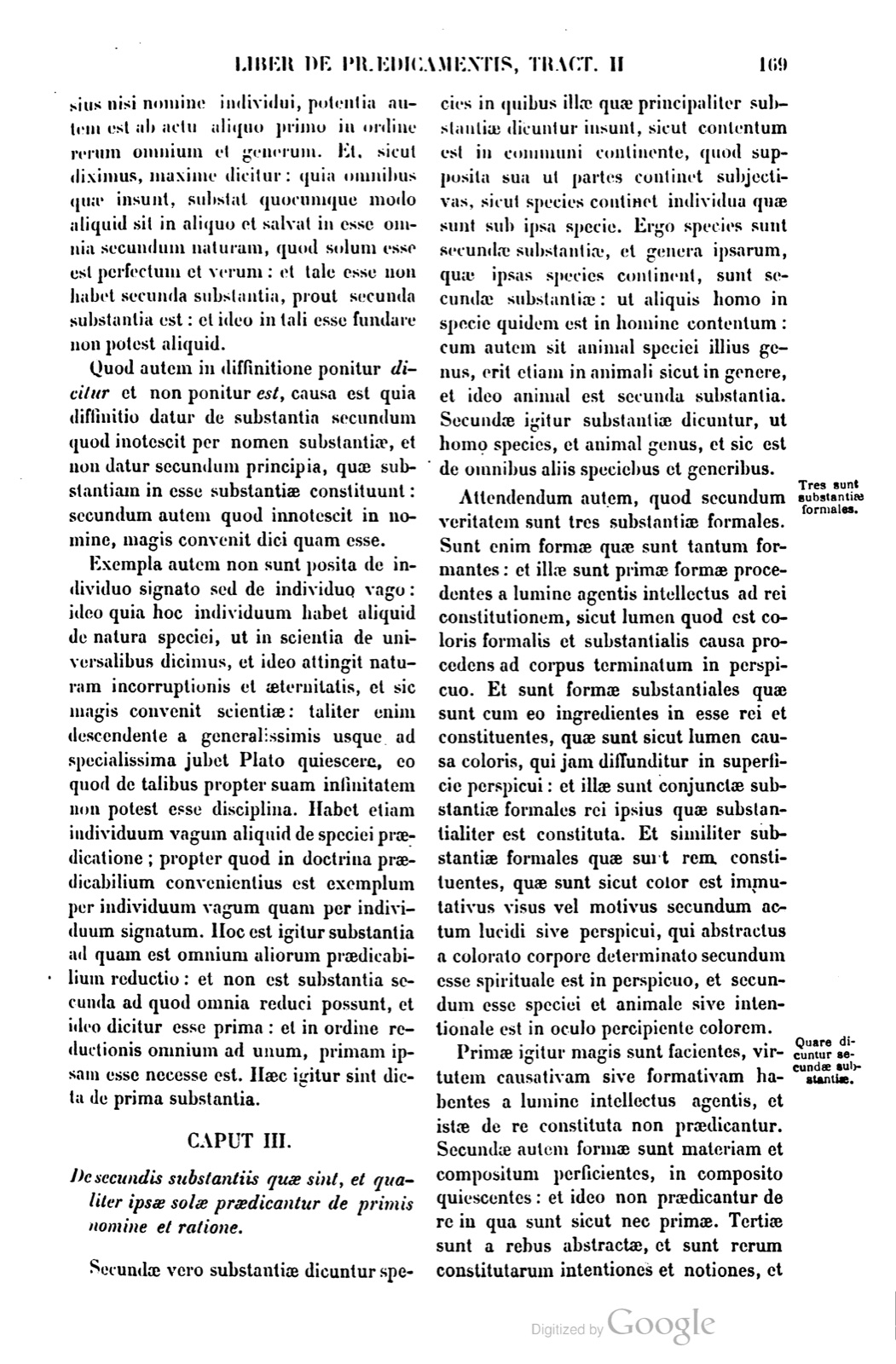
Quod autem in diffinitione ponitur dicitur et non ponitur est, causa est quia diffinitio datur de substantia secundum quod innotescit per nomen substantiæ, et non datur secundum principia, quæ substantiam in esse substantiæ constituunt: secundum autem quod innotescit in nomine, magis convenit dici quam esse.
Exempla autem non sunt posita de individuo signato sed de individuo vago: ideo quia hoc individuum habet aliquid de natura speciei, ut in scientia de universalibus dicimus, et ideo attingit naturam incorruptionis et æternitatis, et sic magis convenit scientiæ: taliter enim descendente a generalissimis usque ad specialissima jubet Plato quiescere, eo quod de talibus propter suam infinitatem non potest esse disciplina. Habet etiam individuum vagum aliquid de speciei prædicatione; propter quod in doctrina prædicabilium convenientius est exemplum per individuum vagum quam per individuum signatum. Hoc est igitur substantia ad quam est omnium aliorum prædicabilium reductio: et non est substantia secunda ad quod omnia reduci possunt, et ideo dicitur esse prima: et in ordine reductionis omnium ad unum, primam ipsam esse necesse est. Hæc igitur sint dicta de prima substantia.
But the cause why in the definition there is placed is said and there is not placed is, is because the definition is given concerning substance according as it becomes known through the name substance, and is not given according to the principles which constitute substance in the being of substance. But according as it becomes known in the name, to be said agrees with it more than to be.
The examples, however, are not set down concerning a designated individual, but concerning a vague individual: and this is because this individual has something of the nature of the species, as we say in the science concerning universals, and therefore it touches the nature of incorruption and eternity, and thus it is more fitting for science. For Plato orders one descending in such a way from the most general things down to the most special things to rest, because concerning such things, on account of their infinity, there cannot be discipline. The vague individual also has something of the predication of the species; on account of which, in the doctrine of predicables, an example through a vague individual is more suitable than through a designated individual. This, therefore, is the substance to which there is the reduction of all other predicables; and it is not second substance to which all things can be reduced, and therefore it is said to be first. And in the order of the reduction of all things to one, it is necessary that it itself be first. These things, therefore, let them have been said about first substance.
If a page does not appear, its photograph has not been uploaded yet.