Volume 1 · pp. 166–167
Tractate II. On substance, which is the first predicable. Chapter I. In what signification substance is taken
A marker with ≈ is an approximate page boundary, placed by measure of the text; the page photographs remain the authority. In the paired views, clicking a page marker brings that page into view.
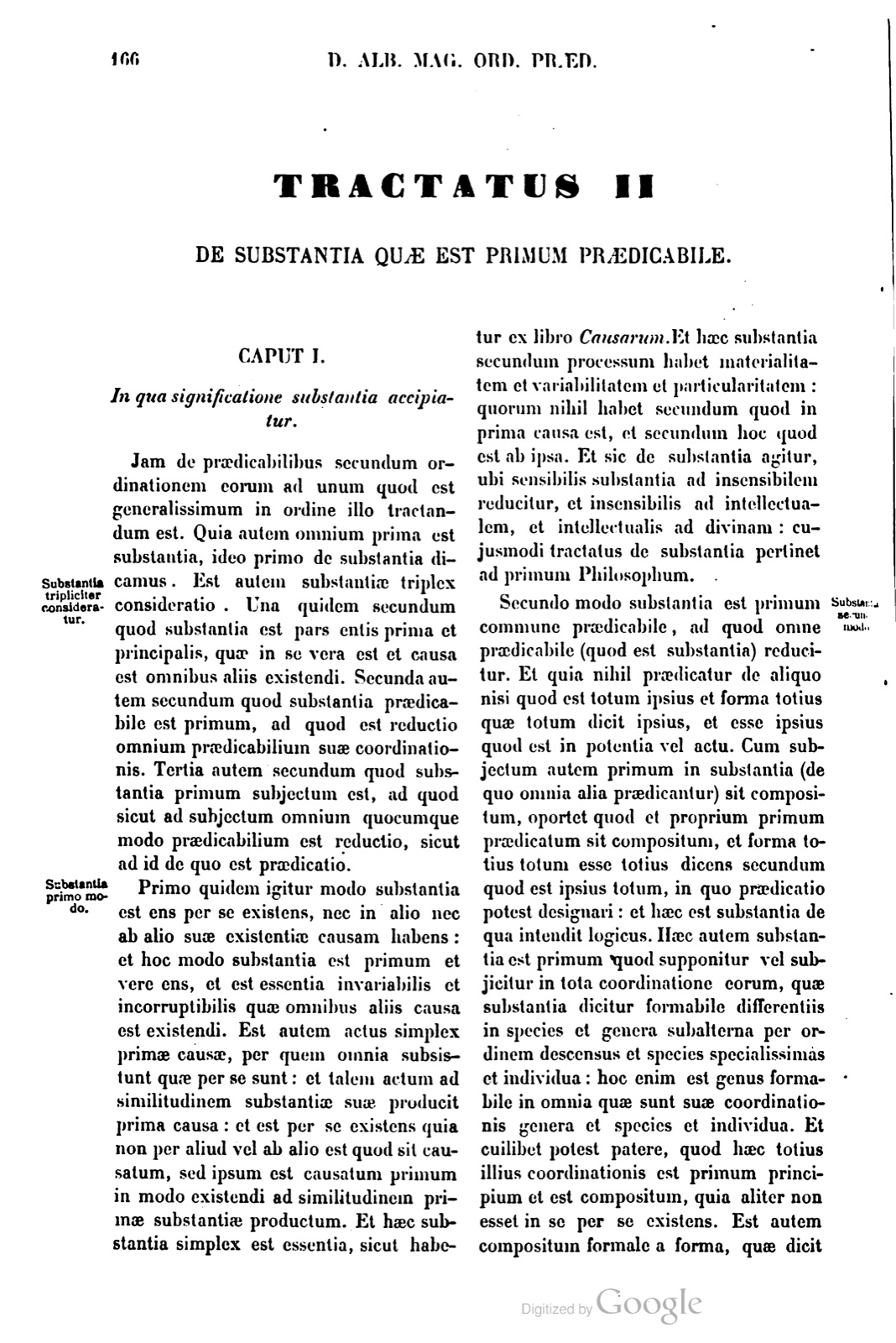
TRACTATUS II. DE SUBSTANTIA QUÆ EST PRIMUM PRÆDICABILE.
CAPUT I. In qua significatione substantia accipiatur.
Jam de prædicabilibus secundum ordinationem eorum ad unum quod est generalissimum in ordine illo tractandum est. Quia autem omnium prima est substantia, ideo primo de substantia dicamus. Est autem substantiæ triplex consideratio. Una quidem secundum quod substantia est pars entis prima et principalis, quæ in se vera est et causa est omnibus aliis existendi. Secunda autem secundum quod substantia prædicabile est primum, ad quod est reductio omnium prædicabilium suæ coordinationis. Tertia autem secundum quod substantia primum subjectum est, ad quod sicut ad subjectum omnium quocumque modo prædicabilium est reductio, sicut ad id de quo est prædicatio.
Primo quidem igitur modo substantia est ens per se existens, nec in alio nec ab alio suæ existentiæ causam habens: et hoc modo substantia est primum et vere ens, et est essentia invariabilis et incorruptibilis quæ omnibus aliis causa est existendi. Est autem actus simplex primæ causæ, per quem omnia subsistunt quæ per se sunt: et talem actum ad similitudinem substantiæ suæ producit prima causa: et est per se existens quia non per aliud vel ab alio est quod sit causatum, sed ipsum est causatum primum in modo existendi ad similitudinem primæ substantiæ productum. Et hæc substantia simplex est essentia, sicut habetur ex libro Causarum. Et hæc substantia secundum processum habet materialitatem et variabilitatem et particularitatem: quorum nihil habet secundum quod in prima causa est, et secundum hoc quod est ab ipsa. Et sic de substantia agitur, ubi sensibilis substantia ad insensibilem reducitur, et insensibilis ad intellectualem, et intellectualis ad divinam: cujusmodi tractatus de substantia pertinet ad primum Philosophum.
Secundo modo substantia est primum commune prædicabile, ad quod omne prædicabile quod est substantia reducitur. Et quia nihil prædicatur de aliquo nisi quod est totum ipsius et forma totius quæ totum dicit ipsius, et esse ipsius quod est in potentia vel actu. Cum subjectum autem primum in substantia, de quo omnia alia prædicantur, sit compositum, oportet quod et proprium primum prædicatum sit compositum, et forma totius totum esse totius dicens secundum quod est ipsius totum, in quo prædicatio potest designari: et hæc est substantia de qua intendit logicus. Hæc autem substantia est primum quod supponitur vel subjicitur in tota coordinatione eorum, quæ substantia dicitur formabile differentiis in species et genera subalterna per ordinem descensus et species specialissimas et individua: hoc enim est genus formabile in omnia quæ sunt suæ coordinationis genera et species et individua. Et cuilibet potest patere, quod hæc totius illius coordinationis est primum principium et est compositum, quia aliter non esset in se per se existens. Est autem compositum formale a forma, quæ dicit totum esse secundum primam notionem substantiæ, in qua ratio substantiæ intelligi potest.
TRACTATE II. ON SUBSTANCE, WHICH IS THE FIRST PREDICABLE.
CHAPTER I. In what signification substance is taken.
Now one must treat of predicables according to their ordering to one thing which is the most general in that order. But because substance is first of all, therefore let us first speak about substance. There is, however, a threefold consideration of substance. One, indeed, is according as substance is the first and principal part of being, which is true in itself and is the cause of existing for all other things. The second, however, is according as substance is the first predicable, to which there is the reduction of all predicables of its own coordination. The third, however, is according as substance is the first subject, to which, as to the subject of all things predicable in whatever way, there is reduction, as to that about which predication is.
In the first mode, therefore, substance is a being existing through itself, and having the cause of its existence neither in another nor from another; and in this mode substance is first and truly being, and is an invariable and incorruptible essence which is the cause for all other things of existing. It is, however, the simple act of the first cause, through which all things subsist which are through themselves; and such an act the first cause produces according to the likeness of its own substance. And it is existing through itself because it is not through another or from another that it is caused, but it itself is the first caused thing in the mode of existing, produced according to the likeness of the first substance. And this simple substance is essence, as is had from the book On Causes. And this substance, according to procession, has materiality and variability and particularity, none of which it has according as it is in the first cause, and according to this, that it is from it. And thus substance is treated where sensible substance is reduced to insensible substance, and insensible to intellectual, and intellectual to divine; a treatment of substance of this sort belongs to the first Philosopher.
In the second mode, substance is the first common predicable, to which every predicable which is substance is reduced. And because nothing is predicated of something except that which is the whole of it, and the form of the whole which says the whole of it, and its being which is in potency or in act. But since the first subject in substance, about which all other things are predicated, is composite, it is fitting that the proper first predicate also be composite, and that it be the form of the whole saying the whole being of the whole according as it is the whole of it, in which predication can be designated; and this is the substance concerning which the logician intends. This substance, however, is the first thing which is supposed or subjected in the whole coordination of those things, which substance is called formable by differences into species and subalternate genera through the order of descent, and into most special species and individuals. For this is the genus formable into all the things which are of its coordination: genera and species and individuals. And it can be clear to anyone that this is the first principle of that whole coordination and is composite, because otherwise it would not be existing in itself through itself. It is, however, a formal composite from form, which says the whole being according to the first notion of substance, in which the account of substance can be understood.
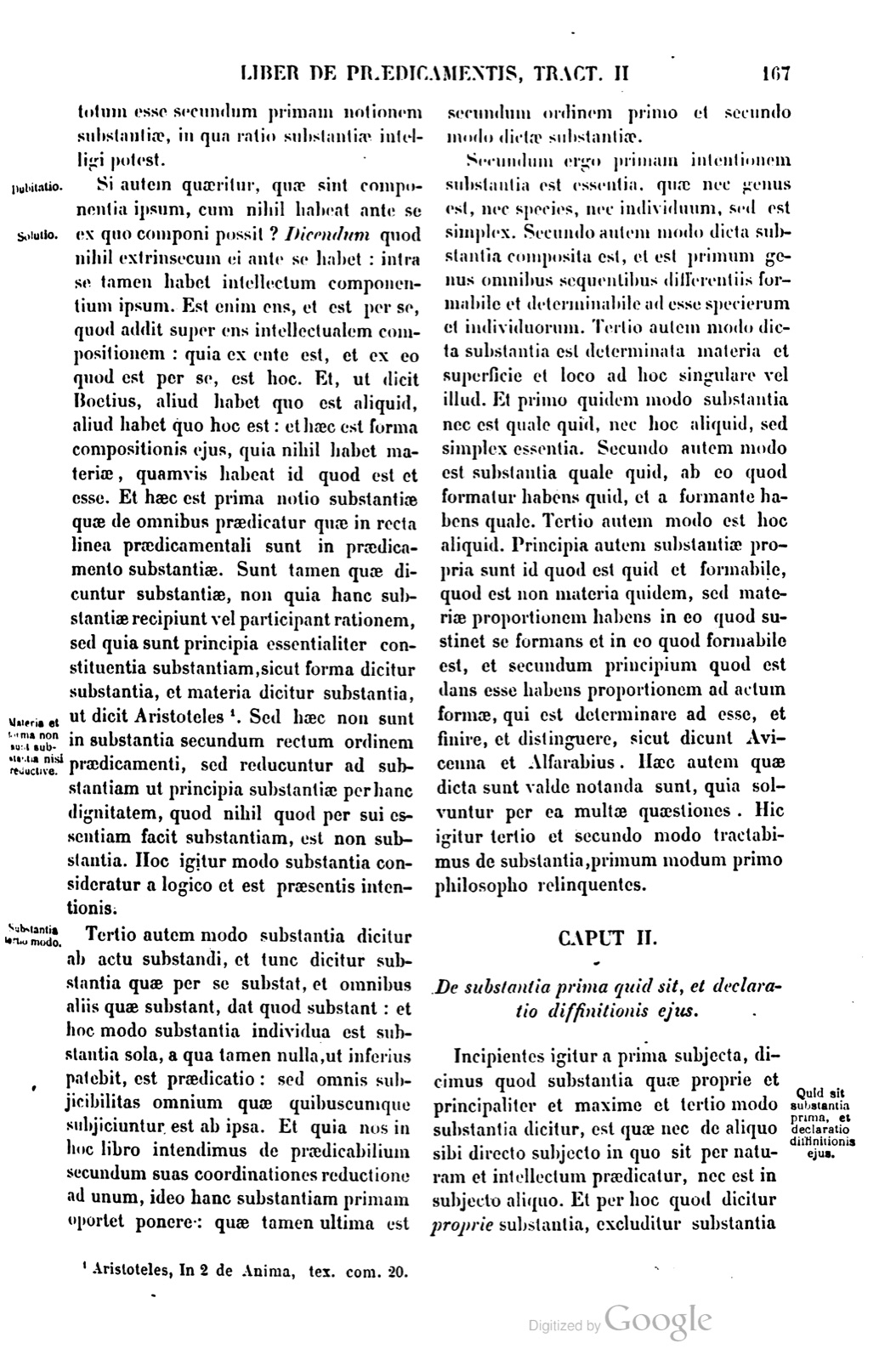
Si autem quæritur, quæ sint componentia ipsum, cum nihil habeat ante se ex quo componi possit? Dicendum quod nihil extrinsecum ei ante se habet: intra se tamen habet intellectum componentium ipsum. Est enim ens, et est per se, quod addit super ens intellectualem compositionem: quia ex ente est, et ex eo quod est per se, est hoc. Et, ut dicit Boetius, aliud habet quo est aliquid, aliud habet quo hoc est: et hæc est forma compositionis ejus, quia nihil habet materiæ, quamvis habeat id quod est et esse. Et hæc est prima notio substantiæ quæ de omnibus prædicatur quæ in recta linea prædicamentali sunt in prædicamento substantiæ. Sunt tamen quæ dicuntur substantiæ, non quia hanc substantiæ recipiunt vel participant rationem, sed quia sunt principia essentialiter constituentia substantiam, sicut forma dicitur substantia, et materia dicitur substantia, ut dicit Aristoteles1. Sed hæc non sunt in substantia secundum rectum ordinem prædicamenti, sed reducuntur ad substantiam ut principia substantiæ per hanc dignitatem, quod nihil quod per sui essentiam facit substantiam, est non substantia. Hoc igitur modo substantia consideratur a logico et est præsentis intentionis.
Tertio autem modo substantia dicitur ab actu substandi, et tunc dicitur substantia quæ per se substat, et omnibus aliis quæ substant, dat quod substant: et hoc modo substantia individua est substantia sola, a qua tamen nulla, ut inferius patebit, est prædicatio: sed omnis subjicibilitas omnium quæ quibuscumque subjiciuntur, est ab ipsa. Et quia nos in hoc libro intendimus de prædicabilium secundum suas coordinationes reductione ad unum, ideo hanc substantiam primam oportet ponere: quæ tamen ultima est secundum ordinem primo et secundo modo dictæ substantiæ.
Secundum ergo primam intentionem substantia est essentia, quæ nec genus est, nec species, nec individuum, sed est simplex. Secundo autem modo dicta substantia composita est, et est primum genus omnibus sequentibus differentiis formabile et determinabile ad esse specierum et individuorum. Tertio autem modo dicta substantia est determinata materia et superficie et loco ad hoc singulare vel illud. Et primo quidem modo substantia nec est quale quid, nec hoc aliquid, sed simplex essentia. Secundo autem modo est substantia quale quid, ab eo quod formatur habens quid, et a formante habens quale. Tertio autem modo est hoc aliquid. Principia autem substantiæ propria sunt id quod est quid et formabile, quod est non materia quidem, sed materiæ proportionem habens in eo quod sustinet se formans et in eo quod formabile est, et secundum principium quod est dans esse habens proportionem ad actum formæ, qui est determinare ad esse, et finire, et distinguere, sicut dicunt Avicenna et Alfarabius. Hæc autem quæ dicta sunt valde notanda sunt, quia solvuntur per ea multæ quæstiones. Hic igitur tertio et secundo modo tractabimus de substantia, primum modum primo philosopho relinquentes.
If, however, it is asked what the things are which compose it, since it has nothing before itself from which it could be composed, it must be said that it has nothing extrinsic before itself; nevertheless within itself it has the understanding of the things composing it. For it is being, and it is through itself, which adds over being an intellectual composition: because from being it is, and from that which is through itself, it is this. And, as Boethius says, it has one thing by which it is something, and another by which it is this; and this is the form of its composition, because it has nothing of matter, although it has that which is and being. And this is the first notion of substance which is predicated of all things which are in the straight predicamental line in the predicament of substance. Nevertheless there are things which are called substances, not because they receive or participate in this account of substance, but because they are principles essentially constituting substance, just as form is called substance, and matter is called substance, as Aristotle says1. But these are not in substance according to the straight order of the predicament, but are reduced to substance as principles of substance through this dignity: that nothing which through its own essence makes substance is non-substance. Therefore in this mode substance is considered by the logician and is of the present intention.
In the third mode, however, substance is said from the act of underlying, and then that is called substance which underlies through itself, and gives to all the other things which underlie that they underlie; and in this mode individual substance alone is substance, from which nevertheless, as will be clear below, there is no predication. But every subjectibility of all things which are subjected to anything whatsoever is from it. And because in this book we intend the reduction of predicables according to their coordinations to one, therefore it is necessary to posit this first substance, which nevertheless is last according to the order of substance said in the first and second mode.
Therefore, according to the first intention, substance is essence, which is neither genus, nor species, nor individual, but is simple. In the second mode, however, substance as said is composite, and is the first genus formable by all following differences and determinable to the being of species and individuals. In the third mode, however, substance as said is matter determined by surface and by place to this singular or that one. And in the first mode, indeed, substance is neither a quale quid nor this something, but simple essence. In the second mode, however, it is substance as quale quid, having quid from that which is formed, and having quale from that which forms. In the third mode, however, it is this something. But the proper principles of substance are that which is quid and formable, which indeed is not matter, but has the proportion of matter in that it sustains itself forming and in that it is formable; and according to the principle which gives being, it has a proportion to the act of form, which is to determine to being, and to bound, and to distinguish, as Avicenna and Alfarabius say. These things, however, which have been said must be very much noted, because many questions are solved through them. Here, therefore, in the third and second mode we shall treat of substance, leaving the first mode to the first philosopher.
Notes
- Aristotle, On the Soul II, text/commentary 20. (Aristoteles, In 2 de Anima, tex. com. 20.) ↩
If a page does not appear, its photograph has not been uploaded yet.