Volume 1 · pp. 145–146
Tractate IX, Chapter I: How all these coincide in one
A marker with ≈ is an approximate page boundary, placed by measure of the text; the page photographs remain the authority. In the paired views, clicking a page marker brings that page into view.
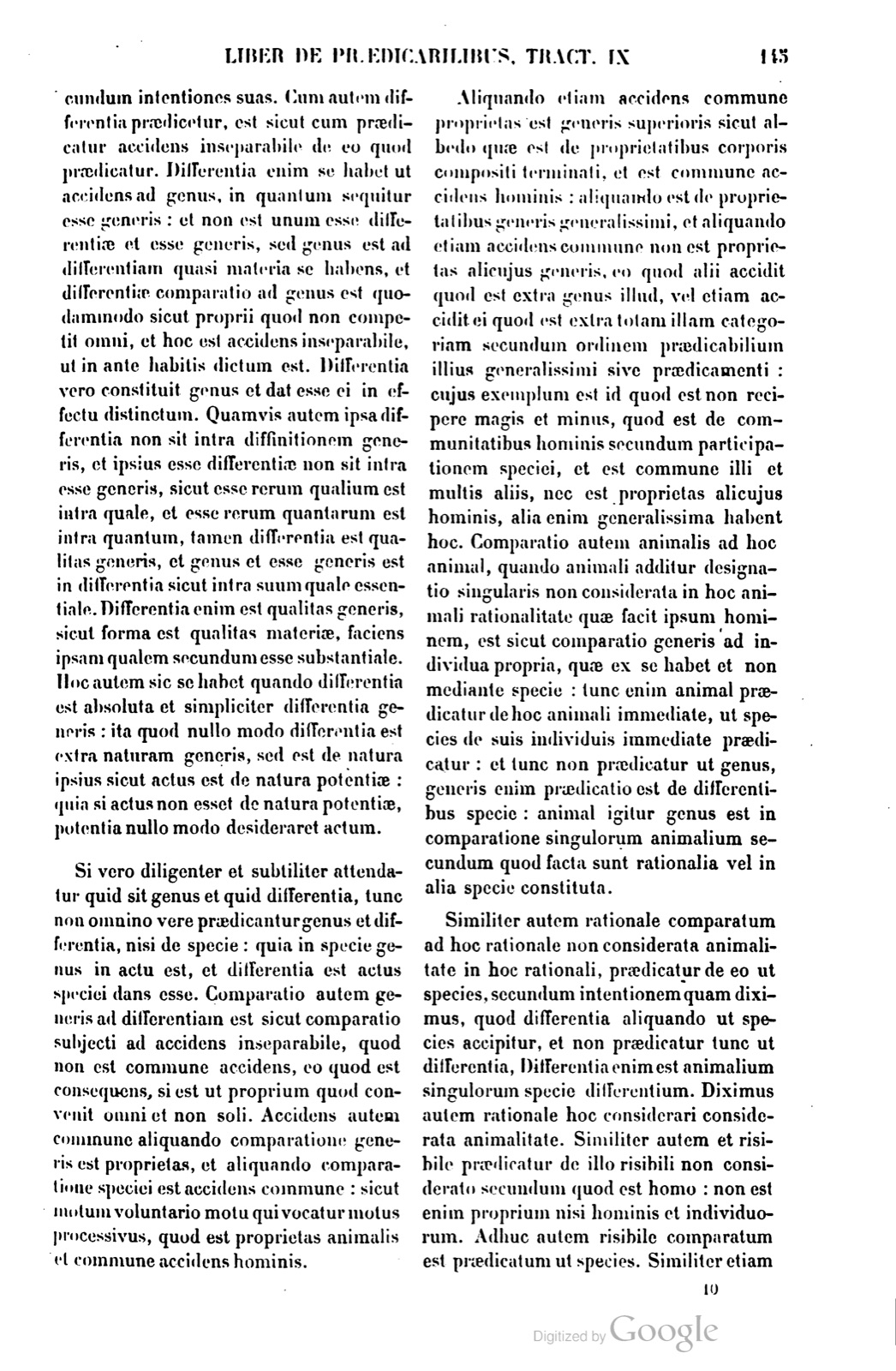
intentiones suas. Cum autem differentia praedicetur, est sicut cum praedicatur accidens inseparabile de eo quod praedicatur. Differentia enim se habet ut accidens ad genus, in quantum sequitur esse generis: et non est unum esse differentiae et esse generis, sed genus est ad differentiam quasi materia se habens, et differentiae comparatio ad genus est quodammodo sicut proprii quod non competit omni, et hoc est accidens inseparabile, ut in ante habitis dictum est. Differentia vero constituit genus et dat esse ei in effectu distinctum. Quamvis autem ipsa differentia non sit intra diffinitionem generis, et ipsius esse differentiae non sit intra esse generis, sicut esse rerum qualium est intra quale, et esse rerum quantarum est intra quantum, tamen differentia est qualitas generis, et genus et esse generis est in differentia sicut intra suum quale essentiale. Differentia enim est qualitas generis, sicut forma est qualitas materiae, faciens ipsam qualem secundum esse substantiale. Hoc autem sic se habet quando differentia est absoluta et simpliciter differentia generis: ita quod nullo modo differentia est extra naturam generis, sed est de natura ipsius sicut actus est de natura potentiae: quia si actus non esset de natura potentiae, potentia nullo modo desideraret actum.
Si vero diligenter et subtiliter attendatur quid sit genus et quid differentia, tunc non omnino vere praedicantur genus et differentia, nisi de specie: quia in specie genus in actu est, et differentia est actus speciei dans esse. Comparatio autem generis ad differentiam est sicut comparatio subjecti ad accidens inseparabile, quod non est commune accidens, eo quod est consequens, si est ut proprium quod convenit omni et non soli. Accidens autem commune aliquando comparatione generis est proprietas, et aliquando comparatione speciei est accidens commune: sicut motum voluntario motu qui vocatur motus processivus, quod est proprietas animalis et commune accidens hominis.
Aliquando etiam accidens commune proprietas est generis superioris sicut albedo quae est de proprietatibus corporis compositi terminati, et est commune accidens hominis: aliquando est de proprietatibus generis generalissimi, et aliquando etiam accidens commune non est proprietas alicujus generis, eo quod alii accidit quod est extra genus illud, vel etiam accidit ei quod est extra totam illam categoriam secundum ordinem praedicabilium illius generalissimi sive praedicamenti: cujus exemplum est id quod est non recipere magis et minus, quod est de communitatibus hominis secundum participationem speciei, et est commune illi et multis aliis, nec est proprietas alicujus hominis, alia enim generalissima habent hoc. Comparatio autem animalis ad hoc animal, quando animali additur designatio singularis non considerata in hoc animali rationalitate quae facit ipsum hominem, est sicut comparatio generis ad individua propria, quae ex se habet et non mediante specie: tunc enim animal praedicatur de hoc animali immediate, ut species de suis individuis immediate praedicatur: et tunc non praedicatur ut genus, generis enim praedicatio est de differentiis specie: animal igitur genus est in comparatione singulorum animalium secundum quod facta sunt rationalia vel in alia specie constituta.
its intentions. But when difference is predicated, it is as when an inseparable accident is predicated of that of which it is predicated. For difference relates itself as an accident to genus, insofar as it follows upon the being of the genus; and the being of difference and the being of genus are not one being, but genus stands toward difference as matter holding itself, and the comparison of difference to genus is in a certain way like that of a proper which does not belong to every one, and this is an inseparable accident, as has been said in the preceding matters. But difference constitutes genus and gives it distinct being in effect. Although the difference itself is not within the definition of the genus, and the very being of difference is not within the being of genus, as the being of qualitative things is within quality, and the being of quantitative things is within quantity, nevertheless difference is the quality of the genus, and genus and the being of genus is in difference as within its essential quality. For difference is the quality of genus, as form is the quality of matter, making it qualified according to substantial being. But this is so when difference is absolute and simply the difference of genus: such that in no way is difference outside the nature of the genus, but it is of its nature as act is of the nature of potency; because if act were not of the nature of potency, potency would in no way desire act.
But if one attends diligently and subtly to what genus is and what difference is, then genus and difference are not wholly truly predicated except of species, because in species genus is in act, and difference is the act of species giving being. But the comparison of genus to difference is like the comparison of subject to an inseparable accident, which is not a common accident, because it is consequent, if it is as a proper that belongs to every one and not to it alone. But a common accident is sometimes, by comparison with genus, a property, and sometimes, by comparison with species, a common accident, as motion by voluntary motion, which is called processive motion, is a property of animal and a common accident of man.
Sometimes also a common accident is a property of a superior genus, as whiteness, which belongs to the properties of a terminated composite body and is a common accident of man; sometimes it belongs to the properties of the most general genus, and sometimes also a common accident is not the property of any genus, because it happens to another thing which is outside that genus, or also happens to that which is outside that whole category according to the order of the predicables of that most general genus or predicament. An example of this is that which is not to receive more and less, which belongs to the common features of man according to participation in species, and is common to him and to many others, nor is it the property of any man; for other most general genera have this. But the comparison of animal to this animal, when singular designation is added to animal, with the rationality which makes it a man not considered in this animal, is like the comparison of genus to proper individuals, which it has from itself and not by means of species: for then animal is predicated of this animal immediately, as species is predicated immediately of its individuals; and then it is not predicated as genus, for the predication of genus is of differences in species. Therefore animal is genus in comparison with single animals according as they have been made rational or constituted in another species.
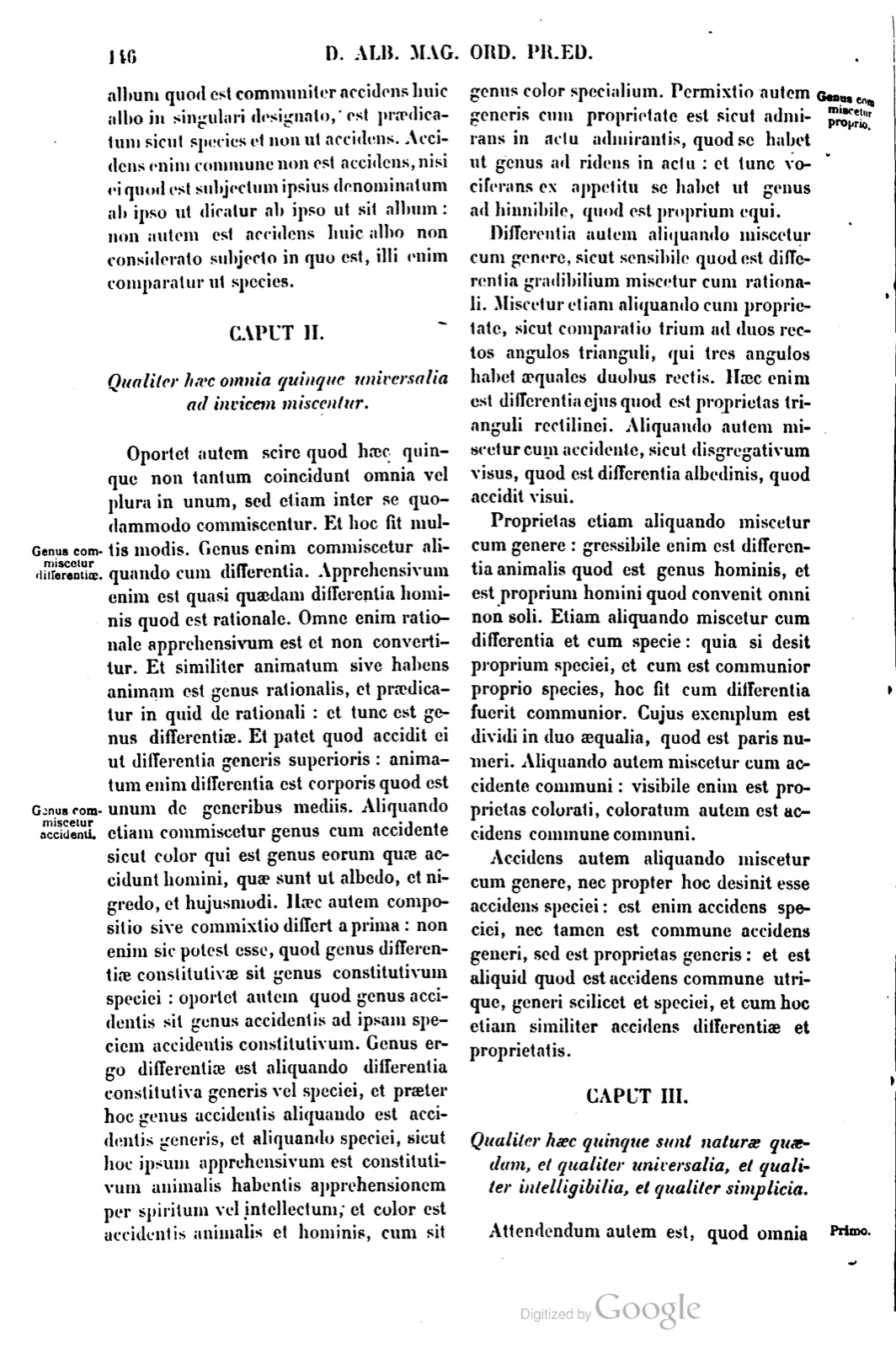
Similiter autem rationale comparatum ad hoc rationale non considerata animalitate in hoc rationali, praedicatur de eo ut species, secundum intentionem quam diximus, quod differentia aliquando ut species accipitur, et non praedicatur tunc ut differentia. Differentia enim est animalium singulorum specie differentium. Diximus autem rationale hoc considerari considerata animalitate. Similiter autem et risibile praedicatur de illo risibili non considerato secundum quod est homo: non est enim proprium nisi hominis et individuorum. Adhuc autem risibile comparatum est praedicatum ut species. Similiter etiam album quod est communiter accidens huic albo in singulari designato, est praedicatum sicut species et non ut accidens. Accidens enim commune non est accidens, nisi ei quod est subjectum ipsius denominatum ab ipso ut dicatur ab ipso ut sit album: non autem est accidens huic albo non considerato subjecto in quo est, illi enim comparatur ut species.
Likewise rational, compared to this rational thing, with animality in this rational thing not considered, is predicated of it as species, according to the intention which we stated, namely that difference is sometimes taken as species and is not then predicated as difference. For difference belongs to individual animals differing in species. But we said that this rational thing is considered with animality considered. Likewise also risible is predicated of that risible thing not considered according as it is man, for it is not proper except to man and individuals. Further, risible compared in this way is a predicate as species. Likewise also white, which is commonly an accident of this white thing designated singularly, is predicated as species and not as accident. For a common accident is not an accident except to that which is its subject denominated by it, so that from it it is said to be white; but it is not an accident to this white thing when the subject in which it is is not considered, for it is compared to that as species.
If a page does not appear, its photograph has not been uploaded yet.