Volume 1 · pp. 140–141
Chapter X. On the commonalities and differences of difference and accident.
A marker with ≈ is an approximate page boundary, placed by measure of the text; the page photographs remain the authority. In the paired views, clicking a page marker brings that page into view.
CAPUT X.
De communitatibus et differentiis differentiae et accidentis.
Differentiae autem et accidenti, ut dicit Porphyrius, commune est de pluribus praedicari in quantum utrumque illorum universale est: hoc enim omni quidem convenit universali in quantum est in multis, et de multis. Ad inseparabile autem accidens specialiter habet differentia communitatem, quod scilicet tam differentia quam inseparabile accidens semper adest omnibus de quibus praedicatur. Quod exemplo probatur et inductione: quia bipes semper adest corvis, cum sit differentia de corvis et hominibus praedicata: nigrum etiam esse, quod tanquam accidens inseparabile praedicatur de corvis, semper adest corvis, quamvis etiam posset fieri corvus albus vel aetate vel arte: tamen quia corvus non tantum nominat speciem, sed in tali complexione, quae causa nigredinis est, designatur subjectum materiale, et hoc accidens nominato tali subjecto semper est accidens inseparabile.
In hoc etiam differunt differentia et accidens, quia differentia quidem continet ambitu suae communitatis ea de quibus praedicatur. Continere enim est ea de quibus praedicatur intra suam communitatem claudere: continet ergo differentia et non continetur ab his de quibus praedicatur. Sic enim continet haec differentia quae est rationale, totum hominem et particularia ipsius. Accidentia vero nec proprie nec vere, sed quodammodo continent quaedam eorum de quibus praedicantur secundum quod in pluribus sunt, et excedunt ea de quibus praedicantur. Quodam autem modo continent, eo quia subjecta eorum de quibus praedicantur, non omnia susceptibilia sunt horum sed plurimorum: et omnia continent quibus insunt, et exceduntur ab his quibus non insunt. Album enim praedicatur de hominibus albis et quodam modo continet ea, de non albis autem non praedicatur: et aliquis homo est non albus, et quoddam album non est homo, quia potest esse in alio subjecto quam in homine. Ideo cum dicitur, homo est albus, homo continetur: sed ista continentia non est propria, quia continere est formae substantialis: et ideo accidens in quantum est forma continet, in quantum autem est accidens fluidum, habet esse et continetur a subjecto. Et sermo quidem Porphyrii obscurus est, sed hunc quem dixi veriorem puto esse intellectum.
CHAPTER X.
On the commonalities and differences of difference and accident.
To difference and accident, as Porphyry says, it is common to be predicated of many insofar as each of them is a universal; for this belongs to every universal insofar as it is in many and of many. But difference has a special commonality with inseparable accident, namely that both difference and inseparable accident are always present to all the things of which they are predicated. This is proved by example and induction: because two-footed is always present to ravens, since it is a difference predicated of ravens and men; and being black, which is predicated of ravens as an inseparable accident, is always present to ravens, although a raven could also become white by age or art. Yet because raven names not only the species, but the material subject is designated in such a complexion, which is the cause of blackness, this accident, once such a subject is named, is always an inseparable accident.
Difference and accident also differ in this, that difference contains within the range of its commonness those things of which it is predicated. For to contain is to enclose within its commonness those things of which it is predicated; therefore difference contains and is not contained by those things of which it is predicated. Thus this difference which is rational contains the whole man and his particulars. But accidents neither properly nor truly, but in a certain way, contain some of the things of which they are predicated according as they are in many, and they exceed the things of which they are predicated. But in a certain way they contain, because the subjects of which they are predicated are not all susceptible of them, but very many are; and they contain all the things in which they are, and are exceeded by those things in which they are not. For white is predicated of white men and in a certain way contains them, but is not predicated of non-white men; and some man is not white, and some white thing is not man, because it can be in another subject than man. Therefore when it is said, man is white, man is contained; but this containment is not proper, because to contain belongs to substantial form. Therefore accident, insofar as it is form, contains; but insofar as it is a flowing accident, has being and is contained by the subject. Porphyry's speech is indeed obscure, but I think the understanding I have stated is the truer one.
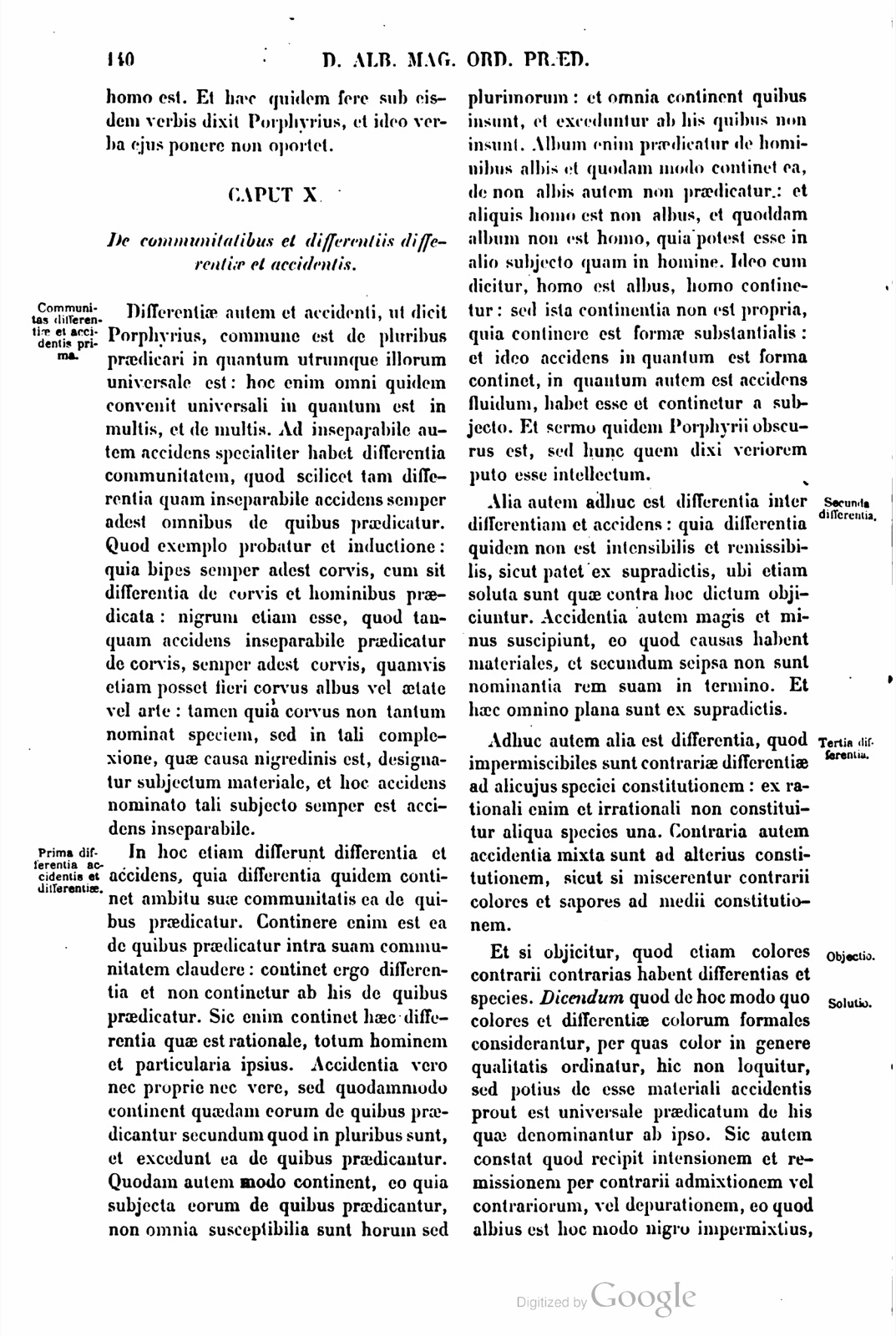
Alia autem adhuc est differentia inter differentiam et accidens: quia differentia quidem non est intensibilis et remissibilis, sicut patet ex supradictis, ubi etiam soluta sunt quae contra hoc dictum objiciuntur. Accidentia autem magis et minus suscipiunt, eo quod causas habent materiales, et secundum seipsa non sunt nominantia rem suam in termino. Et haec omnino plana sunt ex supradictis.
Adhuc autem alia est differentia, quod impermiscibiles sunt contrariae differentiae ad alicujus speciei constitutionem: ex rationali enim et irrationali non constituitur aliqua species una. Contraria autem accidentia mixta sunt ad alterius constitutionem, sicut si miscerentur contrarii colores et sapores ad medii constitutionem.
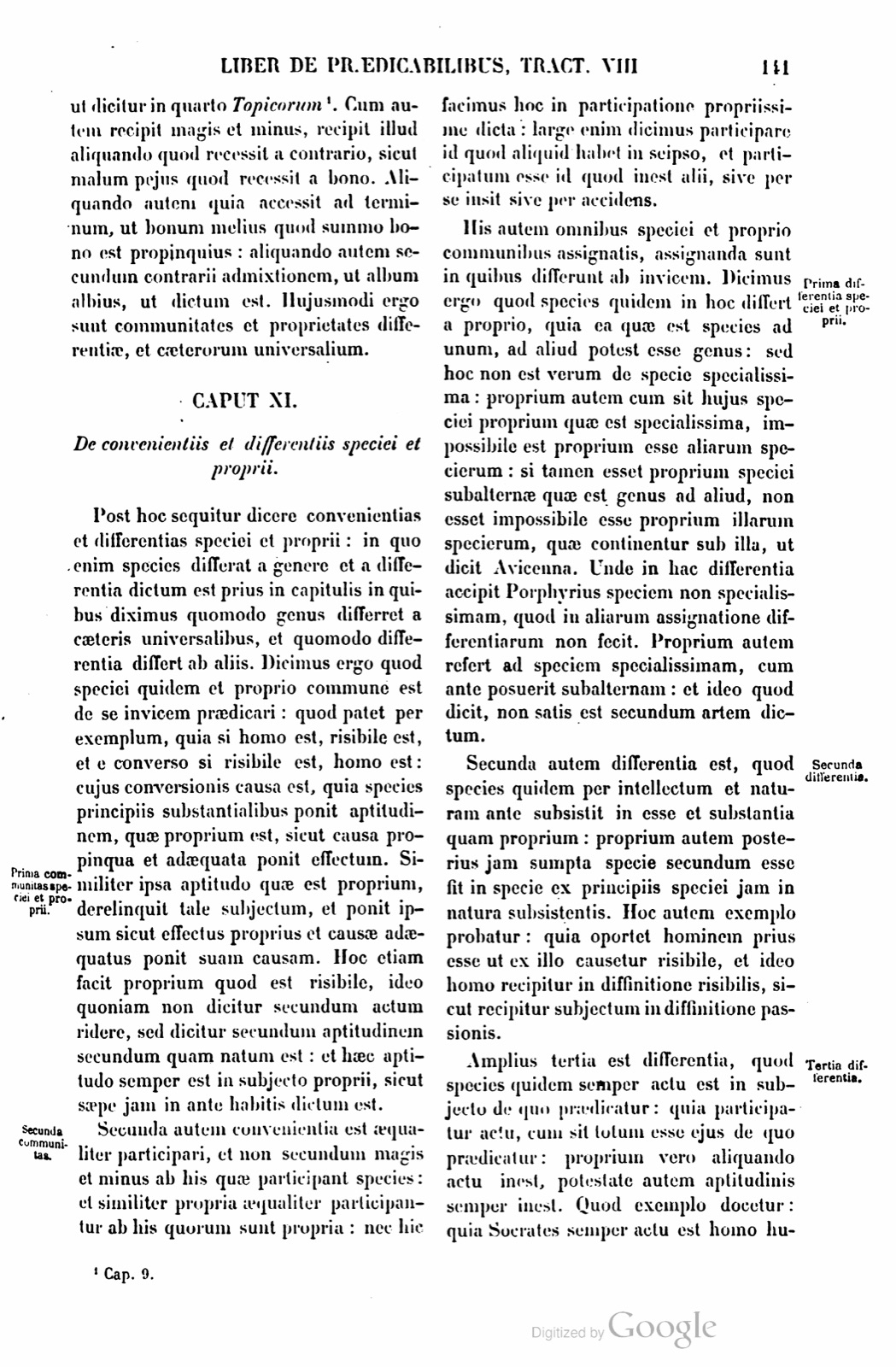
Et si objicitur, quod etiam colores contrarii contrarias habent differentias et species. Dicendum quod de hoc modo quo colores et differentiae colorum formales considerantur, per quas color in genere qualitatis ordinatur, hic non loquitur, sed potius de esse materiali accidentis prout est universale praedicatum de his quae denominantur ab ipso. Sic autem constat quod recipit intensionem et remissionem per contrarii admixtionem vel contrariorum, vel depurationem, eo quod albius est hoc modo nigro impermixtius, ut dicitur in quarto Topicorum1. Cum autem recipit magis et minus, recipit illud aliquando quod recessit a contrario, sicut malum pejus quod recessit a bono. Aliquando autem quia accessit ad terminum, ut bonum melius quod summo bono est propinquius: aliquando autem secundum contrarii admixtionem, ut album in albius, ut dictum est. Hujusmodi ergo sunt communitates et proprietates differentiae, et caeterorum universalium.
There is still another difference between difference and accident, because difference is not intensible and remissible, as is clear from the things said above, where the objections made against this saying were also solved. But accidents receive more and less, because they have material causes and according to themselves do not name their thing at the term. And these things are altogether plain from the foregoing.
Further there is another difference, that contrary differences are immiscible for the constitution of some species; for from rational and irrational no one species is constituted. But contrary accidents are mixed for the constitution of another, as if contrary colors and flavors were mixed for the constitution of a mean.
And if it is objected that contrary colors also have contrary differences and species, one must say that he is not speaking here of the mode in which colors and the formal differences of colors are considered, through which color is ordered in the genus of quality, but rather of the material being of accident insofar as it is a universal predicated of those things which are denominated from it. In this way it is clear that it receives intension and remission through admixture of a contrary or contraries, or purification, because the whiter in this way is more unmixed with black, as is said in the fourth book of the Topics1. But when it receives more and less, it sometimes receives that because it has receded from the contrary, as worse evil has receded from good; sometimes because it has approached the term, as better good is nearer to the highest good; and sometimes according to admixture of a contrary, as white into whiter, as has been said. Therefore of this sort are the commonalities and properties of difference and of the remaining universals.
Notes
- Chapter 9. (Cap. 9.) ↩
If a page does not appear, its photograph has not been uploaded yet.