Volume 1 · pp. 139–140
Chapter IX. On the commonalities and differences of difference and proper.
A marker with ≈ is an approximate page boundary, placed by measure of the text; the page photographs remain the authority. In the paired views, clicking a page marker brings that page into view.
CAPUT IX.
De communitatibus et differentiis differentiae et proprii.
Nunc dicamus differentias et communia differentiae et proprii. Differentia igitur et proprium commune quidem habent prima communitate, quod aequaliter et non secundum intensionem et remissionem a suis de quibus praedicantur suppositis participantur: utrumque enim illorum in termino participatur, eo quod unum, videlicet differentia, pars formalis est ipsius esse, quod, sicut dictum est saepius, unum est et non recipit magis et minus: proprium autem ab aptitudine naturalis potentiae formaliter imponitur: quae aptitudo in potentia per habitum completur, et non actum qui est operatio, cum sit completio major qua potentia completur per habitum, et rem suam dicit in termino: et ideo non potest suscipere magis et minus: quamvis, sicut in ante habitis dictum est, impedientia vel expedientia ad actum in substantia possit habere, quibus expeditius vel minus expedite agat per potentiam illam: sed haec non variant potentiam stantem in habitu naturali: participantur ergo haec duo aequaliter ab his quae participant ea. Ea enim quae rationalia sunt de quibus praedicatur rationale aequaliter et non secundum magis et minus rationalia sunt, et similiter ea quae sunt risibilia de quibus praedicatur risibile sunt aequaliter et non secundum magis et minus risibilia.
Amplius et in hoc conveniunt, quod utrumque, differentia scilicet et proprium, semper et omni sive universaliter adsunt illis de quibus praedicantur: quia secundum naturae potentiam et aptitudinem attribuuntur illis de quibus praedicantur et non secundum actum. Quamvis enim uno vel utroque pede careat qui secundum naturam bipes est, non propter hoc perit substantia formalis in ipso qua formatur ad habendos duos pedes, sed potius id quod tali natura ad bipes formatum est, semper bipes dicitur per naturae aptitudinem, sicut et risibile a potentia naturali cum naturali habitu completa semper dicitur risibile, quamvis non semper rideat secundum effectum, nec plus habet potentiam naturalem in actu quando ridet, quam quando plorat. Si aliter habet eam et ad aliquid habuerit eam, semper est in aptitudine aequali quam non exercet secundum actum.
CHAPTER IX.
On the commonalities and differences of difference and proper.
Now let us state the differences and common features of difference and proper. Therefore difference and proper have in common by a first commonality that they are participated equally and not according to intension and remission by their supposits of which they are predicated. For each of them is participated at the term, because one, namely difference, is the formal part of being itself, which, as has often been said, is one and does not receive more and less. But proper is formally imposed from the aptitude of a natural potency; this aptitude is completed in potency by a habit, and not by act which is operation, since it is a greater completion by which potency is completed through habit, and it says its own thing at the term. Therefore it cannot receive more and less, although, as has been said in the preceding matters, it can have in substance things impeding or expediting act, by which it acts through that potency more readily or less readily. But these do not vary the potency standing in natural habit. Therefore these two are participated equally by those things that participate them. For the things that are rational, of which rational is predicated, are rational equally and not according to more and less; and similarly the things that are risible, of which risible is predicated, are risible equally and not according to more and less.
Further, they agree in this, that each, namely difference and proper, is always and to every thing, or universally, present to those of which they are predicated, because they are attributed to those of which they are predicated according to natural power and aptitude and not according to act. For although one who is two-footed according to nature lacks one foot or both, the formal substance in him by which he is formed to having two feet does not on this account perish. Rather, that which by such a nature has been formed to being two-footed is always called two-footed by aptitude of nature, just as risible, from natural potency completed with natural habit, is always called risible, although it does not always laugh according to effect, nor does it have more natural potency in act when it laughs than when it weeps. If it has it otherwise and has it relative to something, it is always in equal aptitude which it does not exercise according to act.
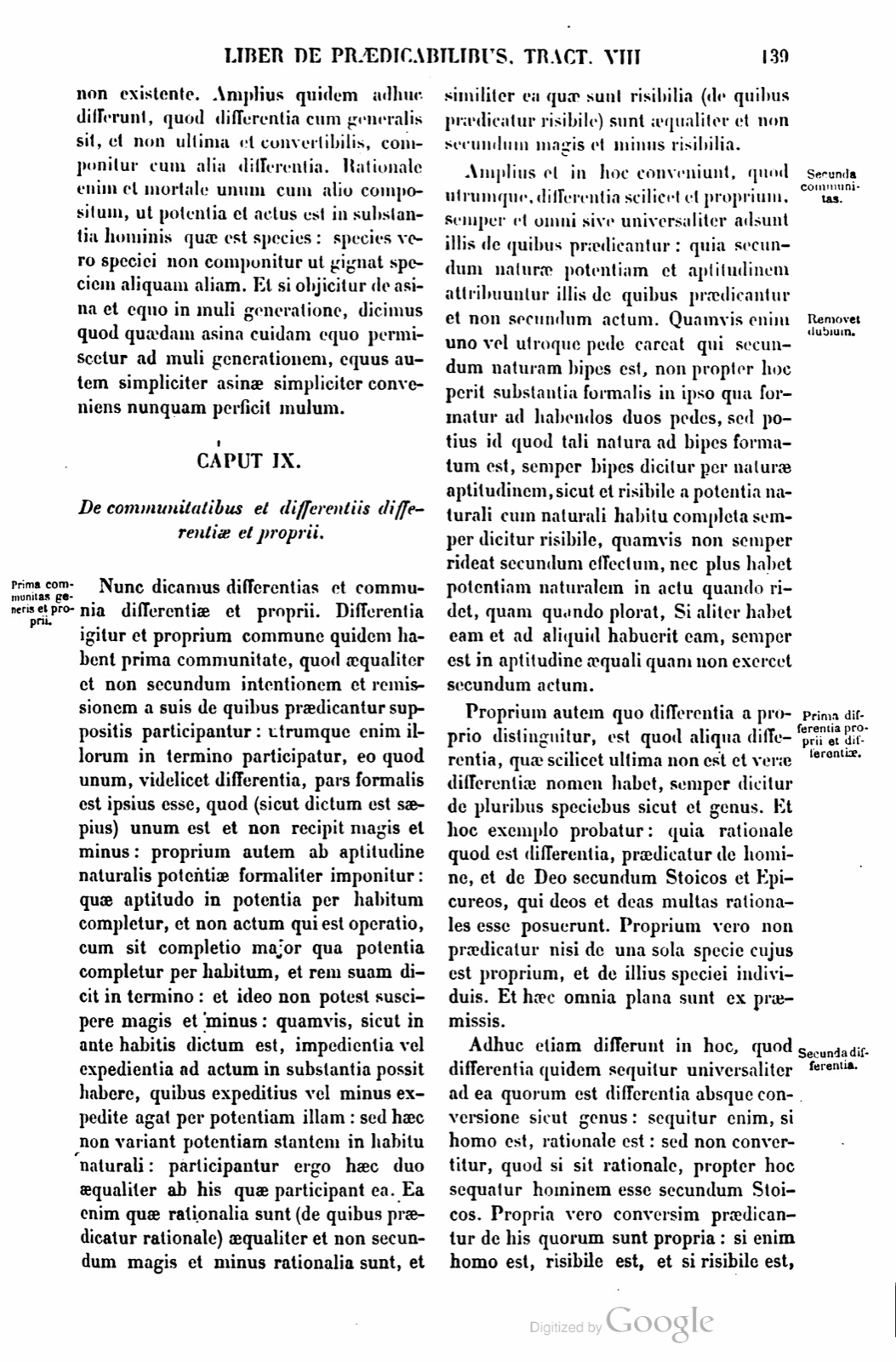
Proprium autem quo differentia a proprio distinguitur, est quod aliqua differentia, quae scilicet ultima non est et verae differentiae nomen habet, semper dicitur de pluribus speciebus sicut et genus. Et hoc exemplo probatur: quia rationale quod est differentia, praedicatur de homine, et de Deo secundum Stoicos et Epicureos, qui deos et deas multas rationales esse posuerunt. Proprium vero non praedicatur nisi de una sola specie cujus est proprium, et de illius speciei individuis. Et haec omnia plana sunt ex praemissis.
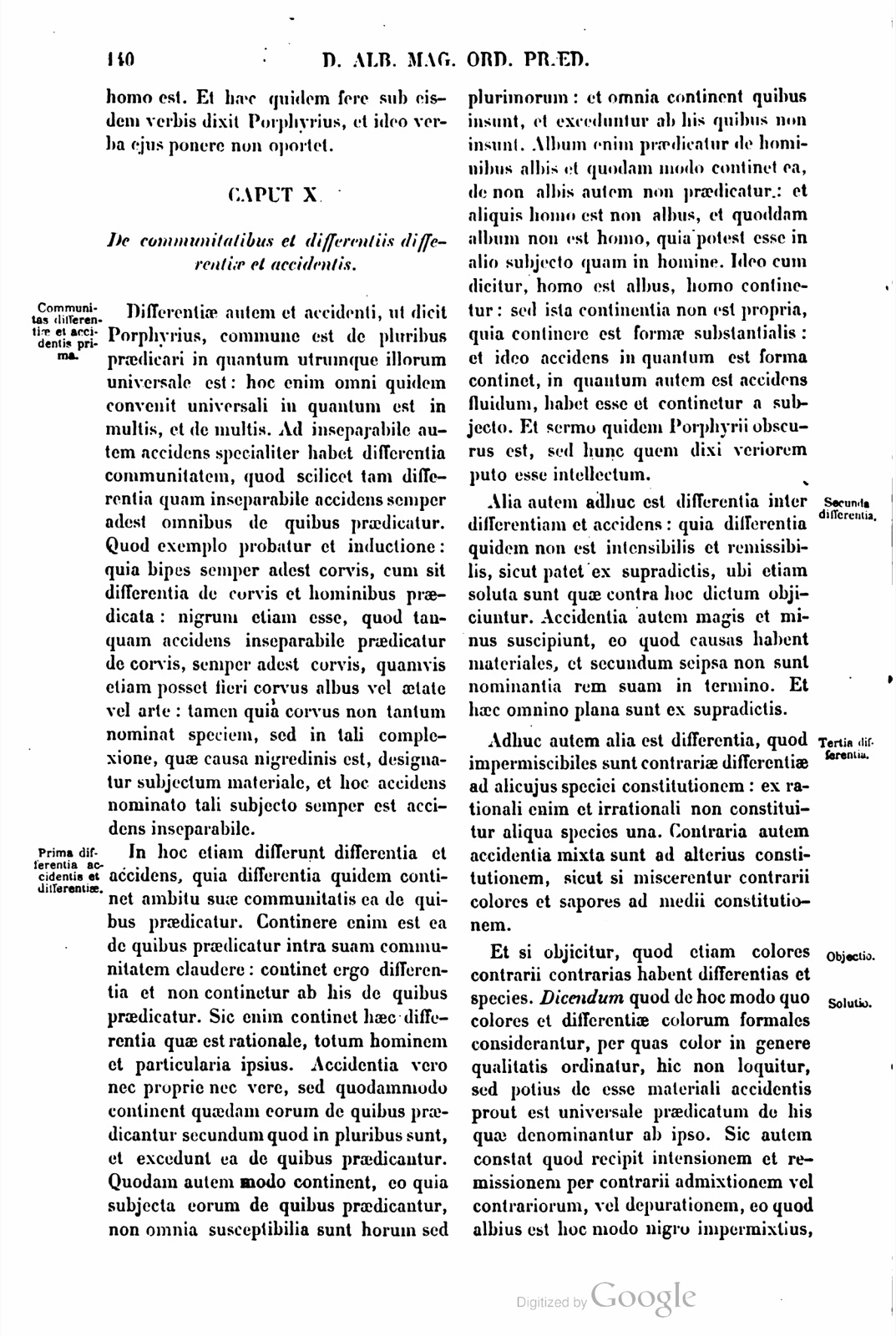
Adhuc etiam differunt in hoc, quod differentia quidem sequitur universaliter ad ea quorum est differentia absque conversione sicut genus: sequitur enim, si homo est, rationale est: sed non convertitur, quod si sit rationale, propter hoc sequatur hominem esse secundum Stoicos. Propria vero conversim praedicantur de his quorum sunt propria: si enim homo est, risibile est, et si risibile est, homo est. Et haec quidem fere sub eisdem verbis dixit Porphyrius, et ideo verba ejus ponere non oportet.
But the proper feature by which difference is distinguished from proper is that some difference, namely one which is not final and has the name of true difference, is always said of several species just as genus is. This is proved by example, because rational, which is difference, is predicated of man and of God according to the Stoics and Epicureans, who posited many rational gods and goddesses. Proper, however, is predicated only of the one species of which it is the proper, and of the individuals of that species. And all these things are plain from the foregoing.
They also differ further in this, that difference follows universally upon those things of which it is the difference without conversion, as genus does. For it follows: if man is, rational is; but it is not converted, that if rational is, for this reason it follows that man is, according to the Stoics. But propers are predicated conversely of those things of which they are propers: for if man is, risible is, and if risible is, man is. And Porphyry said these things almost under the same words; therefore it is not necessary to set down his words.
If a page does not appear, its photograph has not been uploaded yet.