Volume 1 · pp. 128–130
Chapter IV. On the summary of the things said concerning the common and proper features of genus and difference.
A marker with ≈ is an approximate page boundary, placed by measure of the text; the page photographs remain the authority. In the paired views, clicking a page marker brings that page into view.
CAPUT IV.
De compendio dictorum circa generis et differentiae tam communia quam propria.
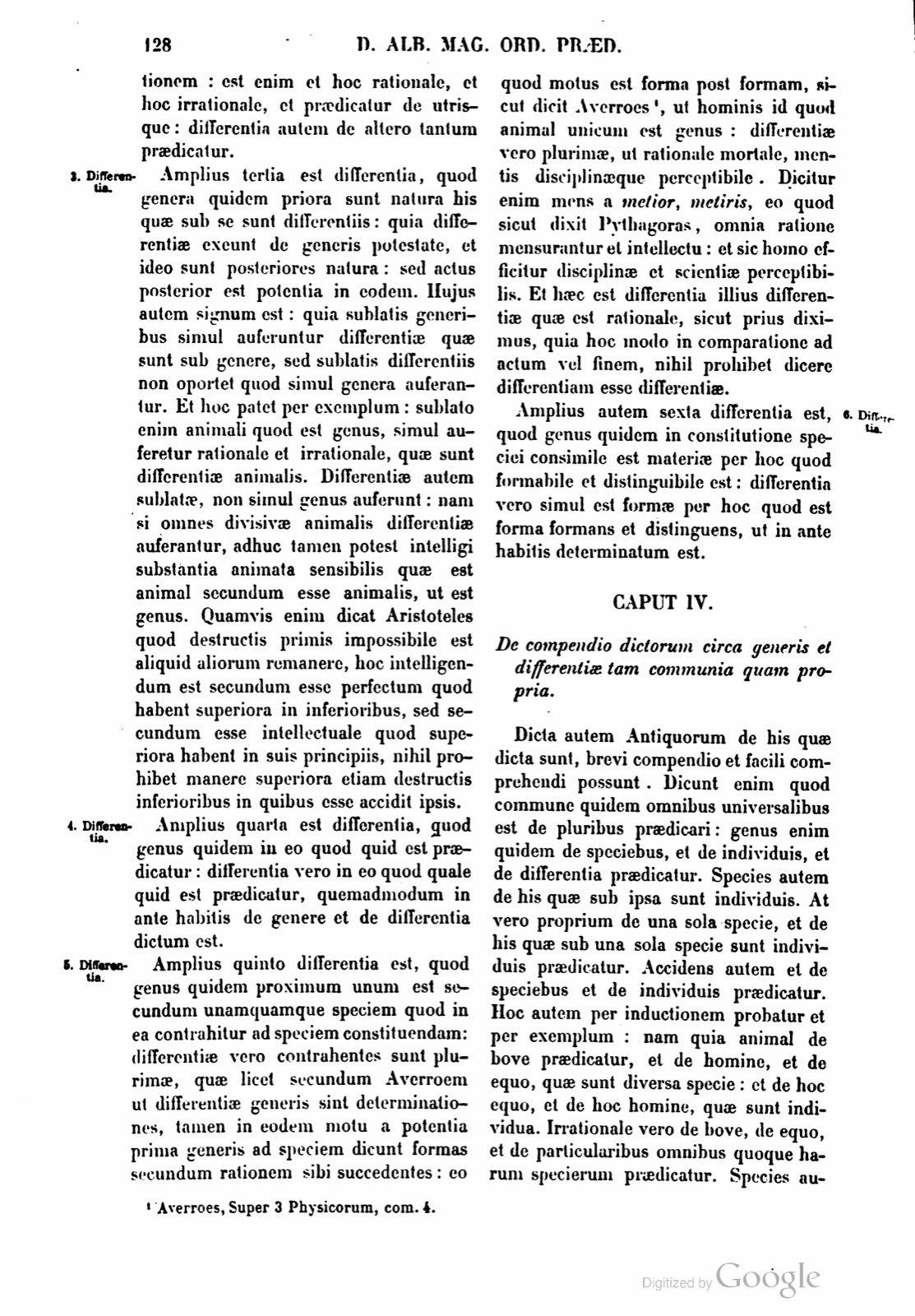
Dicta autem Antiquorum de his quae dicta sunt, brevi compendio et facili comprehendi possunt. Dicunt enim quod commune quidem omnibus universalibus est de pluribus praedicari: genus enim quidem de speciebus, et de individuis, et de differentia praedicatur. Species autem de his quae sub ipsa sunt individuis. At vero proprium de una sola specie, et de his quae sub una sola specie sunt individuis praedicatur. Accidens autem et de speciebus et de individuis praedicatur. Hoc autem per inductionem probatur et per exemplum: nam quia animal de bove praedicatur, et de homine, et de equo, quae sunt diversa specie: et de hoc equo, et de hoc homine, quae sunt individua. Irrationale vero de bove, de equo, et de particularibus omnibus quoque harum specierum praedicatur. Species autem, ut homo, solum de his qui sunt particulares homines praedicatur. Proprium autem quod est risibile praedicatur de homine, et de his qui sunt particulares homines. Nigrum autem de specie corvorum, et de his qui sunt particulares corvi praedicatur: quod nigrum est accidens inseparabile. Moveri autem de homine et equo praedicatur quod est separabile accidens: sed prius quidem de individuo praedicatur cum sit accidens individui, secundo vero loco praedicatur et de speciebus quae continent individua.
Commune autem est generi et differentiae: primo quidem continentia specierum, continet enim differentia species, etsi non tot quot continet genus: rationale enim, etsi non continet irrationalia, quemadmodum irrationalia continet animal, tamen continet hominem et Deum qui sunt species animalis. Commune etiam generi et differentiae est, quod quaecumque praedicantur de genere ut genus, et de his quae sunt sub ipso speciebus praedicantur. Et quaecumque de differentia, ut differentia praedicantur, etiam de ea quae sub ipsa est specie praedicantur; nam cum genus sit animal, non solum de eodem genere praedicantur ut genus substantia et animatum sive vivum, quae genera animalis sunt, sed praedicantur etiam de his quae sub animali sunt speciebus usque ad earumdem specierum et generum individua. Cumque rationalis sit differentia, praedicatur de ea ut differentia id quod est uti ratione: et hoc non solum praedicatur de eo quod rationale, sed etiam de his quae sunt sub rationali speciebus praedicabitur, scilicet ipsum quod est uti ratione. Commune est item generi et differentiae, quod perempto genere et perempta differentia simul perimi species est necesse quae sunt sub ipsis: quemadmodum si non sit animal, non est equus nec homo: aut si non sit rationale, nullum erit animal quod utatur ratione.
CHAPTER IV.
On the summary of the things said concerning the common and proper features of genus and difference.
But the sayings of the Ancients about the things that have been said can be comprehended in a brief and easy summary. For they say that what is common to all universals is to be predicated of many: for genus is predicated of species, individuals, and difference. But species is predicated of those individuals which are under it. Proper, however, is predicated of one species alone and of those individuals which are under one species alone. Accident, however, is predicated both of species and of individuals. This is proved by induction and example: for animal is predicated of ox, man, and horse, which are diverse in species, and of this horse and this man, which are individuals. But irrational is predicated of ox, horse, and all the particulars also of these species. Species, however, as man, is predicated only of those who are particular men. But proper, which is risible, is predicated of man and of those who are particular men. Black, however, is predicated of the species of ravens and of those which are particular ravens, and black is an inseparable accident. But to be moved is predicated of man and horse, and it is a separable accident; but it is first predicated of the individual, since it is an accident of the individual, while in the second place it is also predicated of the species which contain individuals.
But this is common to genus and difference: first, the containing of species, for difference contains species, even if not as many as genus contains; for rational, even if it does not contain irrational things in the way animal contains irrational things, nevertheless contains man and God, which are species of animal. It is also common to genus and difference that whatever things are predicated of genus as genus are also predicated of those species which are under it. And whatever things are predicated of difference as difference are also predicated of that species which is under it. For when the genus is animal, not only are substance and animated or living predicated of the same genus as genus, and these are genera of animal, but they are also predicated of the species which are under animal down to the individuals of those same species and genera. And since rational is a difference, what it is to use reason is predicated of it as difference; and this is predicated not only of that which is rational, but will also be predicated of the species which are under rational, namely this very thing, to use reason. Likewise it is common to genus and difference that when genus has been removed and difference has been removed, the species which are under them must be removed at the same time; just as if animal does not exist, neither horse nor man exists, or if rational does not exist, there will be no animal that uses reason.
Proprium autem generis, quod genus distinguit a differentia, est de pluribus praedicari, quam differentia, et species, et proprium, et accidens. Animal enim de homine, de equo, et ave, et serpente praedicatur. Quadrupes autem quod est differentia, non praedicatur nisi de quatuor pedes habentibus animalibus. Homo vero cum sit species, de solis praedicatur individuis hominis. Et hinnibile cum sit proprium, de solo praedicatur equo, et de his qui sunt equi particulares. Et accidens similiter de paucioribus praedicatur quam animal, quia non contingit unum accidens commune omnibus accidere.
Ne autem sophistice aliquis instet contra praedicta, dicimus quod oportet accipere differentiam divisivam, qua dividitur genus, et non eas quae complent substantiam generum in specierum constitutione, sicut actus complet potentiam.
But the proper feature of genus, which distinguishes genus from difference, is to be predicated of more things than difference, species, proper, and accident. For animal is predicated of man, horse, bird, and serpent. But quadruped, which is a difference, is predicated only of animals having four feet. Man, since it is a species, is predicated only of individuals of man. And neigh-able, since it is a proper, is predicated only of horse and of those which are particular horses. And accident is similarly predicated of fewer things than animal, because one common accident cannot happen to all things.
But lest someone sophistically press against the foregoing, we say that one must take the divisive difference by which genus is divided, and not those which complete the substance of genera in the constitution of species, as act completes potency.
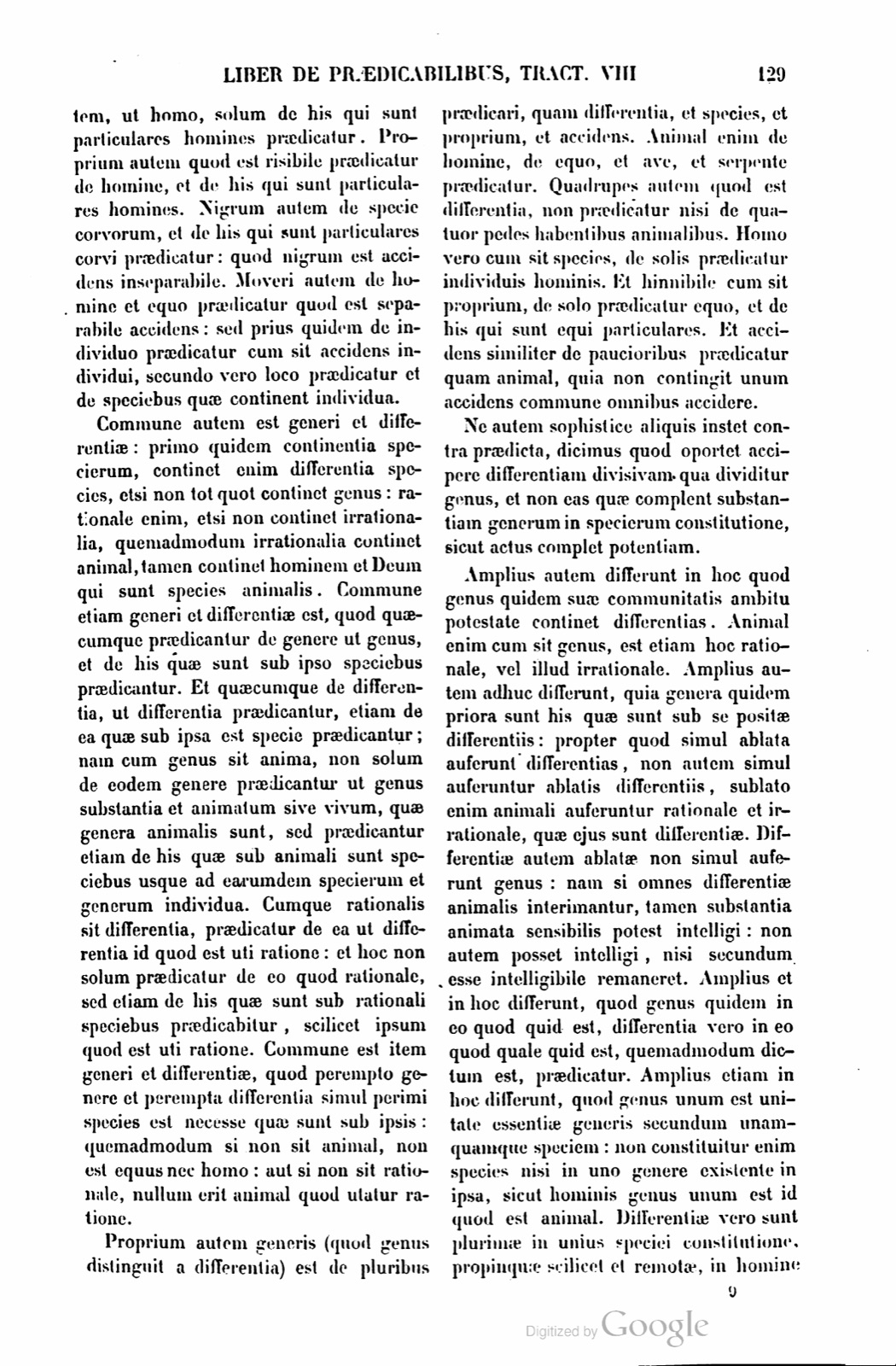
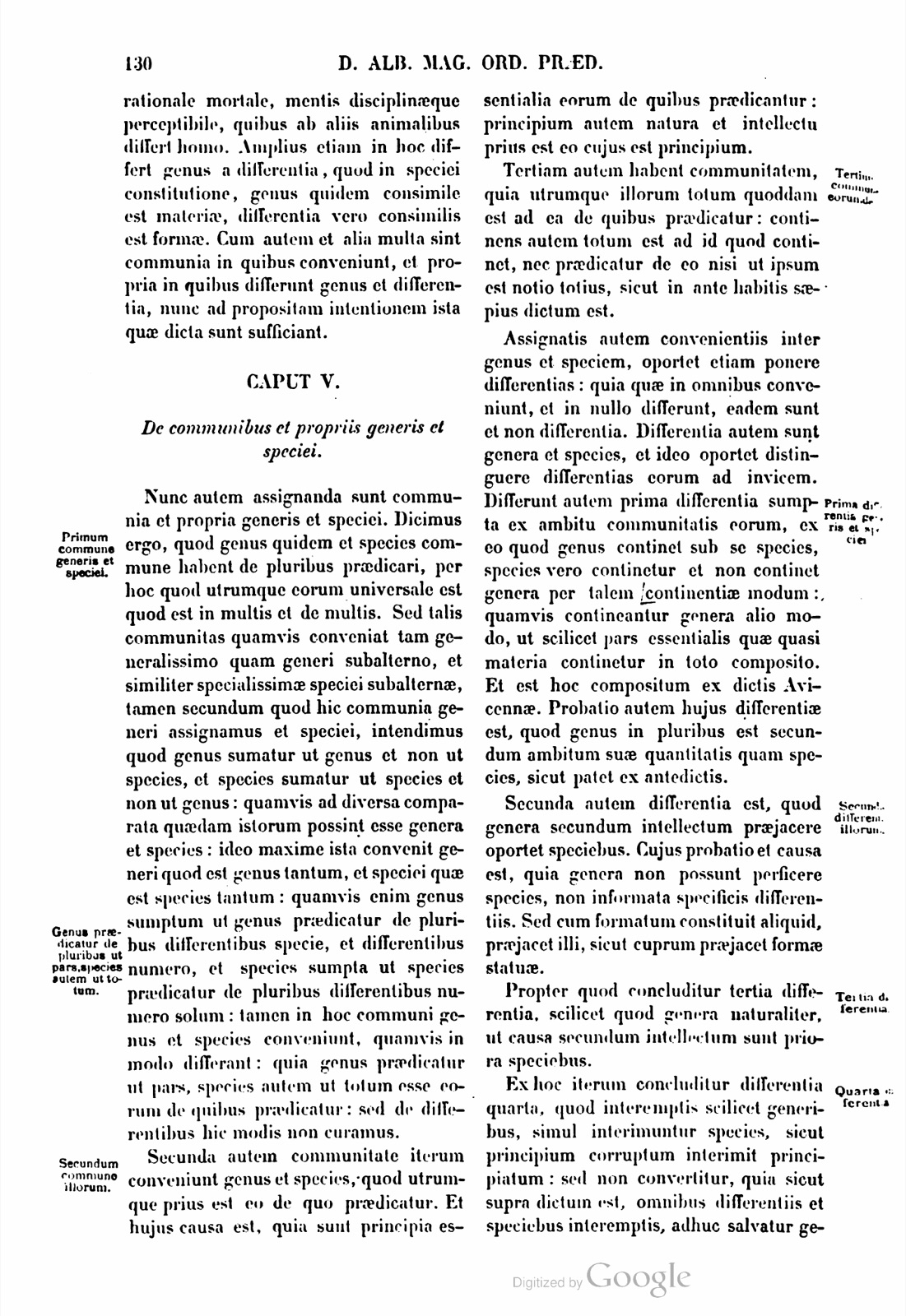
Amplius autem differunt in hoc quod genus quidem suae communitatis ambitu potestate continet differentias. Animal enim cum sit genus, est etiam hoc rationale, vel illud irrationale. Amplius autem adhuc differunt, quia genera quidem priora sunt his quae sunt sub se positae differentiis: propter quod simul ablata auferunt differentias, non autem simul auferuntur ablatis differentiis, sublato enim animali auferuntur rationale et irrationale, quae ejus sunt differentiae. Differentiae autem ablatae non simul auferunt genus: nam si omnes differentiae animalis interimantur, tamen substantia animata sensibilis potest intelligi: non autem posset intelligi, nisi secundum esse intelligibile remaneret. Amplius et in hoc differunt, quod genus quidem in eo quod quid est, differentia vero in eo quod quale quid est, quemadmodum dictum est, praedicatur. Amplius etiam in hoc differunt, quod genus unum est unitate essentiae generis secundum unamquamque speciem: non constituitur enim species nisi in uno genere existente in ipsa, sicut hominis genus unum est id quod est animal. Differentiae vero sunt plurimae in unius speciei constitutione, propinquae scilicet et remotae, in homine rationale mortale, mentis disciplinaeque perceptibile, quibus ab aliis animalibus differt homo. Amplius etiam in hoc differt genus a differentia, quod in speciei constitutione, genus quidem consimile est materiae, differentia vero consimilis est formae. Cum autem et alia multa sint communia in quibus conveniunt, et propria in quibus differunt genus et differentia, nunc ad propositam intentionem ista quae dicta sunt sufficiant.
Further, they differ in this, that genus contains differences by power in the range of its commonness. For animal, since it is a genus, is also this rational thing or that irrational thing. Further, they also differ because genera are prior to the differences placed under them; on account of this, when genera are removed, they remove differences at the same time, but they are not removed at the same time when differences are removed. For when animal is removed, rational and irrational, which are its differences, are removed. But differences when removed do not at the same time remove genus; for if all differences of animal are destroyed, nevertheless animated sensible substance can be understood, but it could not be understood unless it remained according to intelligible being. Further, they differ also in this, that genus is predicated in what it is, but difference in what-sort-of what it is, as has been said. Further, they differ also in this, that genus is one by the unity of the essence of genus according to each species; for a species is not constituted except in one genus existing in it, as the one genus of man is that which is animal. But differences are many in the constitution of one species, namely proximate and remote, as in man rational, mortal, receptive of mind and discipline, by which man differs from other animals. Further also genus differs from difference in this, that in the constitution of species genus is like matter, but difference is like form. But since there are also many other things common in which genus and difference agree, and proper things in which they differ, for the proposed intention now these things that have been said suffice.
If a page does not appear, its photograph has not been uploaded yet.