Volume 1 · pp. 127–128
Chapter III. In which things genus and difference differ.
A marker with ≈ is an approximate page boundary, placed by measure of the text; the page photographs remain the authority. In the paired views, clicking a page marker brings that page into view.
CAPUT III.
In quibus differunt genus et differentia.
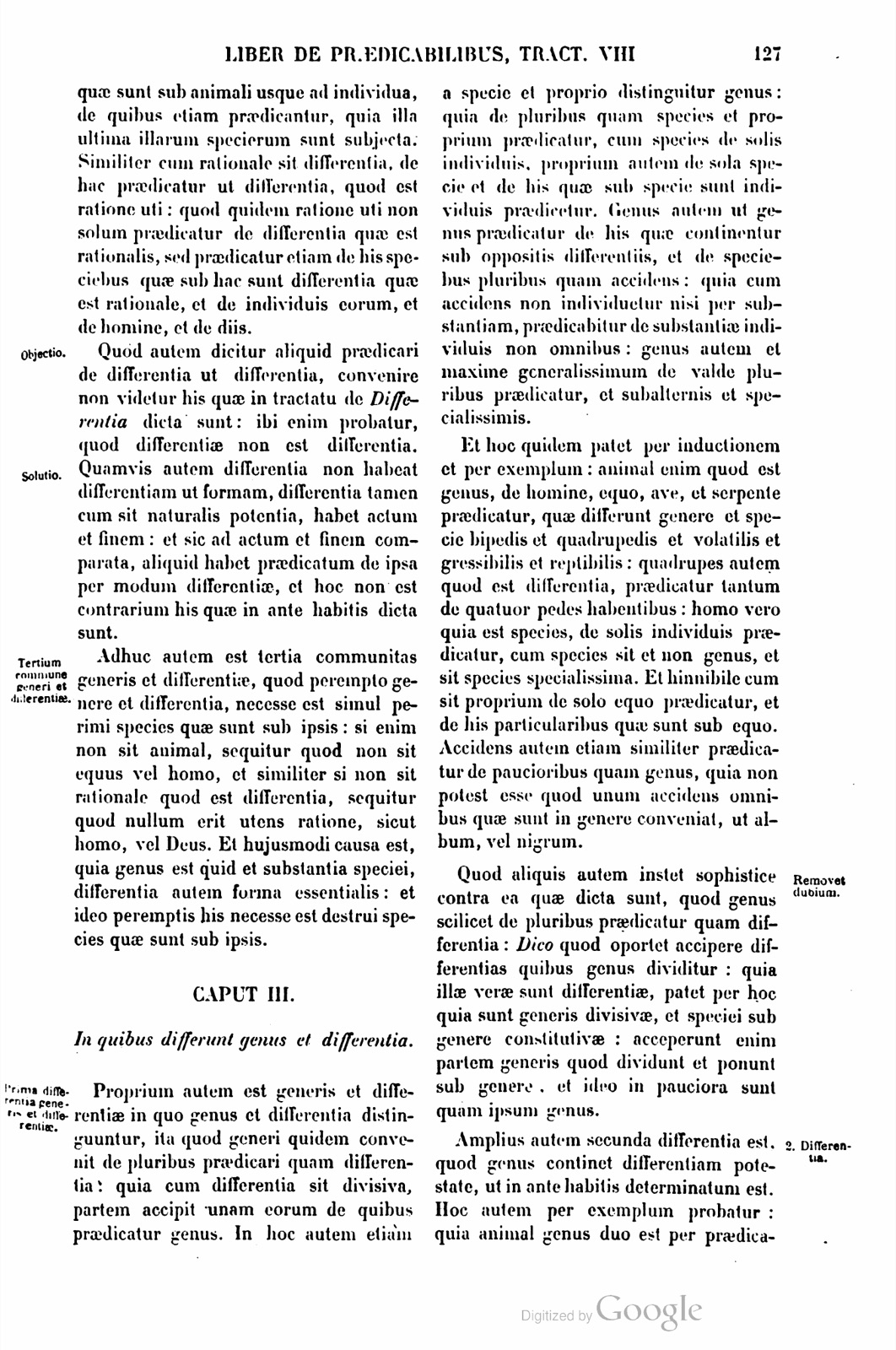
Proprium autem est generis et differentiae in quo genus et differentia distinguuntur, ita quod generi quidem convenit de pluribus praedicari quam differentia: quia cum differentia sit divisiva, partem accipit unam eorum de quibus praedicatur genus. In hoc autem etiam a specie et proprio distinguitur genus: quia de pluribus quam species et proprium praedicatur, cum species de solis individuis, proprium autem de sola specie et de his quae sub specie sunt individuis praedicetur. Genus autem ut genus praedicatur de his quae continentur sub oppositis differentiis, et de speciebus pluribus quam accidens: quia cum accidens non individuetur nisi per substantiam, praedicabitur de substantiae individuis non omnibus: genus autem et maxime generalissimum de valde pluribus praedicatur, et subalternis et specialissimis.
Et hoc quidem patet per inductionem et per exemplum: animal enim quod est genus, de homine, equo, ave, et serpente praedicatur, quae differunt genere et specie bipedis et quadrupedis et volatilis et gressibilis et reptibilis: quadrupes autem quod est differentia, praedicatur tantum de quatuor pedes habentibus: homo vero quia est species, de solis individuis praedicatur, cum species sit et non genus, et sit species specialissima. Et hinnibile cum sit proprium de solo equo praedicatur, et de his particularibus quae sunt sub equo. Accidens autem etiam similiter praedicatur de paucioribus quam genus, quia non potest esse quod unum accidens omnibus quae sunt in genere conveniat, ut album, vel nigrum.
Quod aliquis autem instet sophistice contra ea quae dicta sunt, quod genus scilicet de pluribus praedicatur quam differentia: dico quod oportet accipere differentias quibus genus dividitur: quia illae verae sunt differentiae, patet per hoc quia sunt generis divisivae, et speciei sub genere constitutivae: acceperunt enim partem generis quod dividunt et ponunt sub genere, et ideo in pauciora sunt quam ipsum genus.
Amplius autem secunda differentia est, quod genus continet differentiam potestate, ut in ante habitis determinatum est. Hoc autem per exemplum probatur: quia animal genus duo est per praedicationem: est enim et hoc rationale, et hoc irrationale, et praedicatur de utrisque: differentia autem de altero tantum praedicatur.
Amplius tertia est differentia, quod genera quidem priora sunt natura his quae sub se sunt differentiis: quia differentiae exeunt de generis potestate, et ideo sunt posteriores natura: sed actus posterior est potentia in eodem. Hujus autem signum est: quia sublatis generibus simul auferuntur differentiae quae sunt sub genere, sed sublatis differentiis non oportet quod simul genera auferantur. Et hoc patet per exemplum: sublato enim animali quod est genus, simul auferetur rationale et irrationale, quae sunt differentiae animalis. Differentiae autem sublatae, non simul genus auferunt: nam si omnes divisivae animalis differentiae auferantur, adhuc tamen potest intelligi substantia animata sensibilis quae est animal secundum esse animalis, ut est genus. Quamvis enim dicat Aristoteles quod destructis primis impossibile est aliquid aliorum remanere, hoc intelligendum est secundum esse perfectum quod habent superiora in inferioribus, sed secundum esse intellectuale quod superiora habent in suis principiis, nihil prohibet manere superiora etiam destructis inferioribus in quibus esse accidit ipsis.
CHAPTER III.
In which things genus and difference differ.
But the proper feature of genus and difference, in which genus and difference are distinguished, is such that it belongs to genus to be predicated of more things than difference. For since difference is divisive, it takes one part of those things of which genus is predicated. In this genus is also distinguished from species and proper, because it is predicated of more things than species and proper, since species is predicated only of individuals, while proper is predicated of one species alone and of those individuals which are under the species. But genus as genus is predicated of those things which are contained under opposite differences, and of more species than accident, because since accident is not individuated except through substance, it will not be predicated of all individuals of substance. But genus, and especially the most general genus, is predicated of very many things, both subaltern and most special.
And this is indeed clear by induction and by example: for animal, which is genus, is predicated of man, horse, bird, and serpent, which differ in the genus and species of two-footed, four-footed, winged, walking, and creeping. But four-footed, which is a difference, is predicated only of those having four feet. Man, however, because it is a species, is predicated only of individuals, since it is species and not genus, and is a most special species. And neigh-able, since it is a proper, is predicated only of horse and of those particulars which are under horse. Accident also is similarly predicated of fewer things than genus, because it cannot be that one accident belongs to all things that are in a genus, as white or black.
But if someone presses sophistically against the things that have been said, namely that genus is predicated of more things than difference, I say that one must take the differences by which genus is divided, because those are true differences. This is clear from the fact that they are divisive of genus and constitutive of species under genus; for they have taken part of the genus which they divide and place under genus, and therefore they are in fewer things than the genus itself.
Further, the second difference is that genus contains difference by power, as has been determined in the preceding matters. This is proved by example: because the genus animal is two things through predication, for it is both this rational and this irrational, and is predicated of each; but difference is predicated only of one of the two.
Further, the third difference is that genera are prior by nature to the differences which are under them, because differences go forth from the power of genus and therefore are posterior by nature; but act is posterior to potency in the same thing. The sign of this is that when genera are removed, the differences which are under the genus are removed at the same time, but when differences are removed, genera need not be removed at the same time. And this is clear by example: when animal, which is genus, is removed, rational and irrational, which are differences of animal, will be removed at the same time. But when differences are removed, they do not at the same time remove genus; for if all the divisive differences of animal are removed, nevertheless animated sensible substance, which is animal according to the being of animal as genus, can still be understood. For although Aristotle says that when first things have been destroyed it is impossible for any of the others to remain, this must be understood according to the perfected being which superiors have in inferiors; but according to the intellectual being which superiors have in their own principles, nothing prevents the superiors from remaining even when the inferiors in which being happens to them have been destroyed.
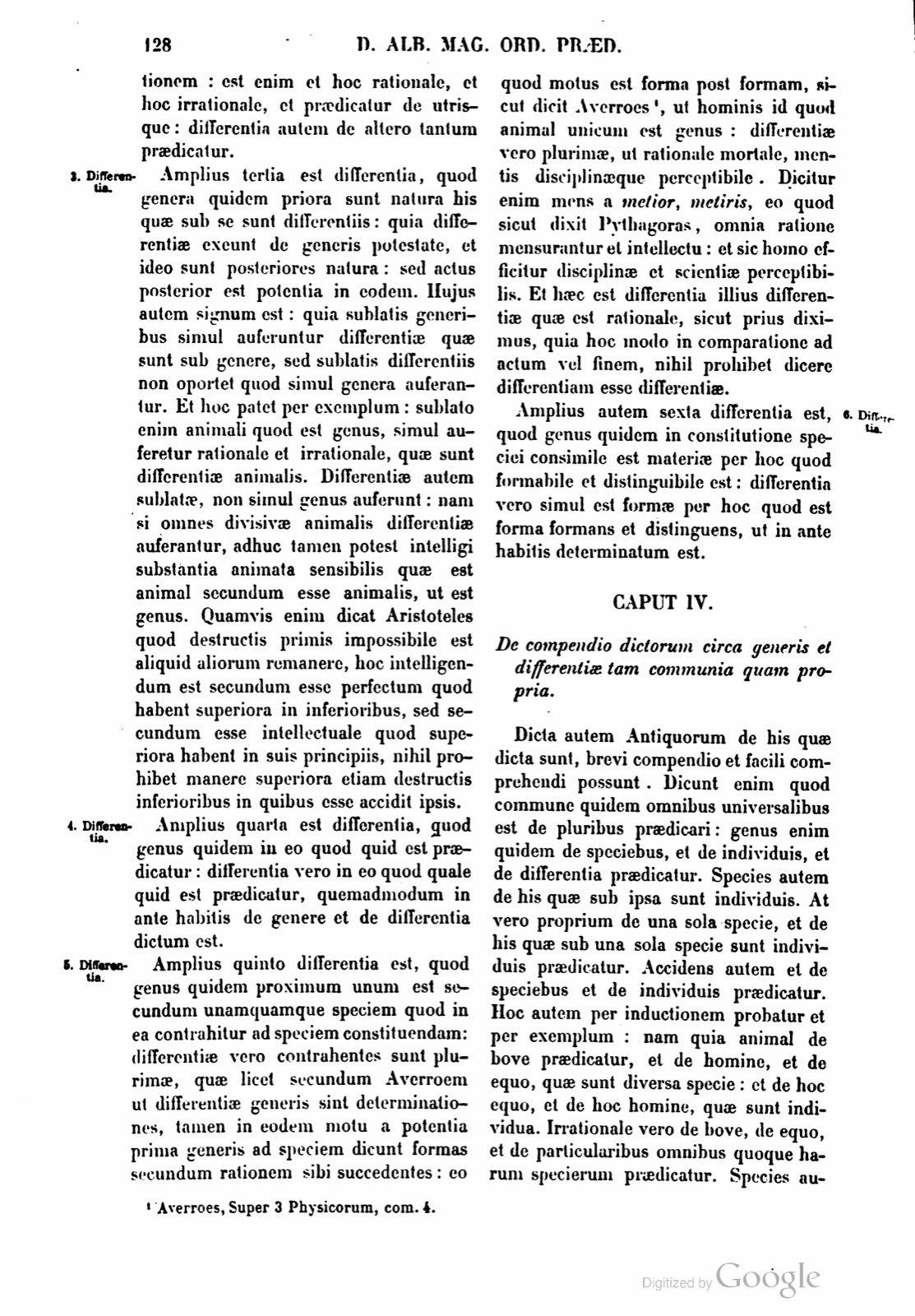
Amplius quarta est differentia, quod genus quidem in eo quod quid est praedicatur: differentia vero in eo quod quale quid est praedicatur, quemadmodum in ante habitis de genere et de differentia dictum est.
Amplius quinto differentia est, quod genus quidem proximum unum est secundum unamquamque speciem quod in ea contrahitur ad speciem constituendam: differentiae vero contrahentes sunt plurimae, quae licet secundum Averroem ut differentiae generis sint determinationes, tamen in eodem motu a potentia prima generis ad speciem dicunt formas secundum rationem sibi succedentes: eo quod motus est forma post formam, sicut dicit Averroes1, ut hominis id quod animal unicum est genus: differentiae vero plurimae, ut rationale mortale, mentis disciplinaeque perceptibile. Dicitur enim mens a metior, metiris, eo quod sicut dixit Pythagoras, omnia ratione mensurantur et intellectu: et sic homo efficitur disciplinae et scientiae perceptibilis. Et haec est differentia illius differentiae quae est rationale, sicut prius diximus, quia hoc modo in comparatione ad actum vel finem, nihil prohibet dicere differentiam esse differentiae.
Amplius autem sexta differentia est, quod genus quidem in constitutione speciei consimile est materiae per hoc quod formabile et distinguibile est: differentia vero simul est formae per hoc quod est forma formans et distinguens, ut in ante habitis determinatum est.
Further, the fourth difference is that genus is predicated in what it is, but difference is predicated in what-sort-of what it is, as was said in the preceding matters about genus and difference.
Further, the fifth difference is that the proximate genus is one according to each species, and in it is narrowed for constituting the species; but the narrowing differences are many. Although according to Averroes, insofar as they are differences of genus, they are determinations, nevertheless in the same motion from the first potency of genus to species they say forms succeeding one another according to reason, because motion is form after form, as Averroes says1. Thus in man, that which is animal is the one genus, but the differences are many, as rational, mortal, receptive of mind and discipline. For mind is said from I measure, you measure, because, as Pythagoras said, all things are measured by reason and understanding; and thus man is made receptive of discipline and knowledge. And this is the difference of that difference which is rational, as we said before, because in this mode, in comparison to act or end, nothing prevents saying that there is a difference of a difference.
Further, the sixth difference is that genus in the constitution of species is like matter through the fact that it is formable and distinguishable; but difference at the same time is like form through the fact that it is a form forming and distinguishing, as was determined in the preceding matters.
Notes
- Averroes, on Physics 3, comment 4. (Averroes, Super 3 Physicorum, com. 4.) ↩
If a page does not appear, its photograph has not been uploaded yet.