Volume 1 · p. 97
Chapter IV. How species exceeds genus through difference, and how genus has differences by power.
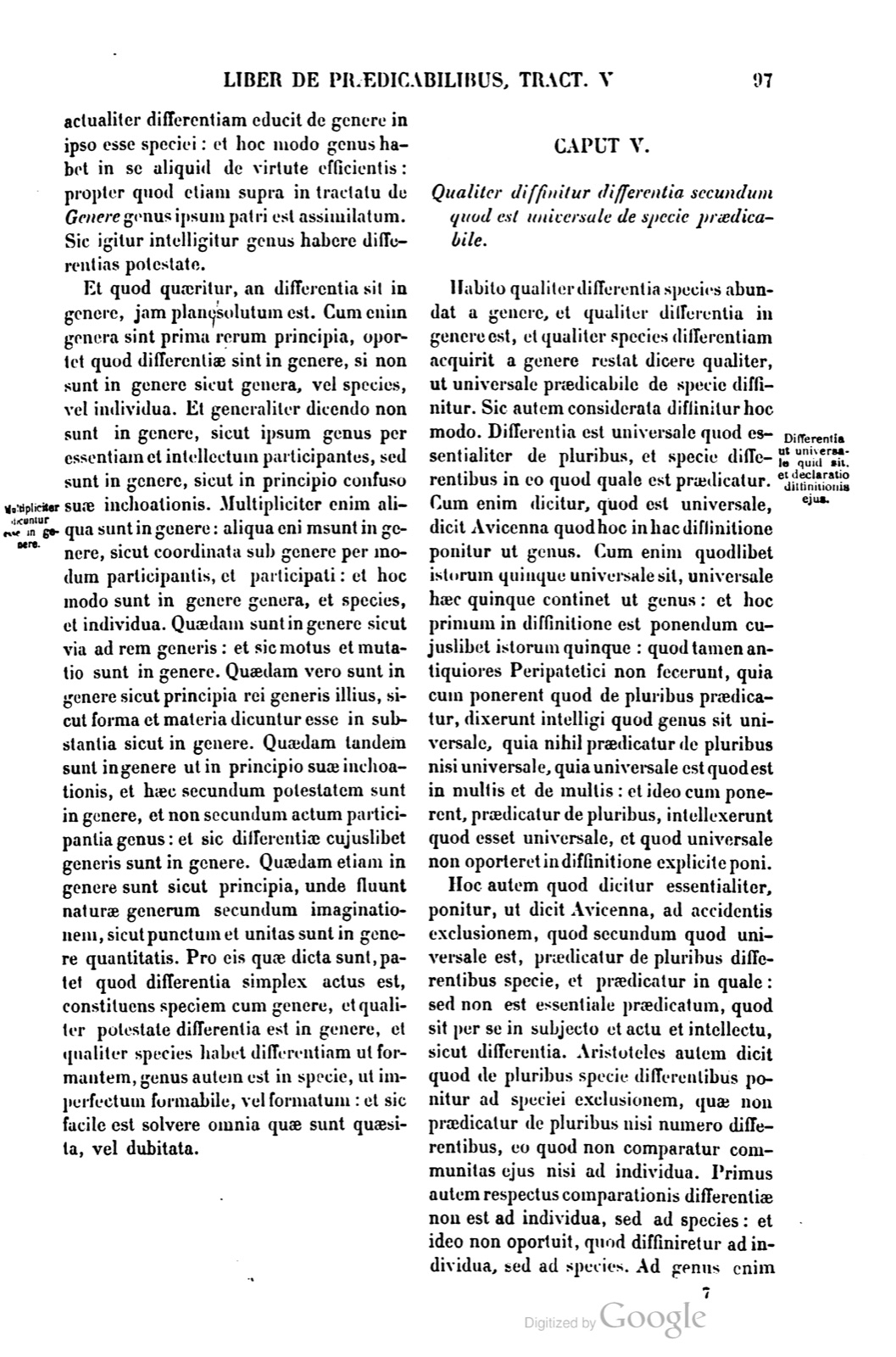
actualiter differentiam educit de genere in ipso esse speciei: et hoc modo genus habet in se aliquid de virtute efficientis: propter quod etiam supra in tractatu de Genere genus ipsum patri est assimilatum. Sic igitur intelligitur genus habere differentias potestate.
Et quod quaeritur, an differentia sit in genere, jam plane solutum est. Cum enim genera sint prima rerum principia, oportet quod differentiae sint in genere, si non sunt in genere sicut genera, vel species, vel individua. Et generaliter dicendo non sunt in genere, sicut ipsum genus per essentiam et intellectum participantes, sed sunt in genere, sicut in principio confuso suae inchoationis. Multipliciter enim aliqua sunt in genere: aliqua enim sunt in genere, sicut coordinata sub genere per modum participantis, et participati: et hoc modo sunt in genere genera, et species, et individua. Quaedam sunt in genere sicut via ad rem generis: et sic motus et mutatio sunt in genere. Quaedam vero sunt in genere sicut principia rei generis illius, sicut forma et materia dicuntur esse in substantia sicut in genere. Quaedam tandem sunt in genere ut in principio suae inchoationis, et haec secundum potestatem sunt in genere, et non secundum actum participantia genus: et sic differentiae cujuslibet generis sunt in genere. Quaedam etiam in genere sunt sicut principia, unde fluunt naturae generum secundum imaginationem, sicut punctum et unitas sunt in genere quantitatis. Pro eis quae dicta sunt, patet quod differentia simplex actus est, constituens speciem cum genere, et qualiter potestate differentia est in genere, et qualiter species habet differentiam ut formantem, genus autem est in specie, ut imperfectum formabile, vel formatum: et sic facile est solvere omnia quae sunt quaesita, vel dubitata.
actually brings difference out from genus into the very being of species; and in this way genus has in itself something of the power of an efficient cause. On account of this, above also in the tractate on Genus, genus itself was likened to a father. Thus therefore genus is understood to have differences by power.
And as to what is asked, whether difference is in genus, it has now been plainly solved. For since genera are first principles of things, differences must be in genus, if they are not in genus as genera, species, or individuals are. And speaking generally, they are not in genus as participating the genus itself through essence and understanding, but they are in genus as in the confused principle of their own beginning. For things are in genus in many ways. Some are in genus as coordinated under genus by the mode of participating and being participated; and in this way genera, species, and individuals are in genus. Some are in genus as a way to the thing of the genus; and thus motion and change are in genus. Some are in genus as principles of the thing of that genus, as form and matter are said to be in substance as in a genus. Finally, some are in genus as in the principle of their own beginning, and these are in genus according to power and not according to act as participating genus; and thus the differences of any genus are in the genus. Some also are in genus as principles from which the natures of genera flow according to imagination, as point and unity are in the genus of quantity. From the things that have been said, it is clear that difference is a simple act constituting species with genus, and in what way difference is in genus by power, and in what way species has difference as forming, while genus is in species as something imperfect, formable or formed; and thus it is easy to solve all that has been asked or doubted.
If a page does not appear, its photograph has not been uploaded yet.