Volume 1 · pp. 44–45
Chapter II. On philosophical genus, and how it is assimilated to the others.
A marker with ≈ is an approximate page boundary, placed by measure of the text; the page photographs remain the authority. In the paired views, clicking a page marker brings that page into view.
CAPUT II.
De genere philosophico, et quomodo assimilatur aliis?
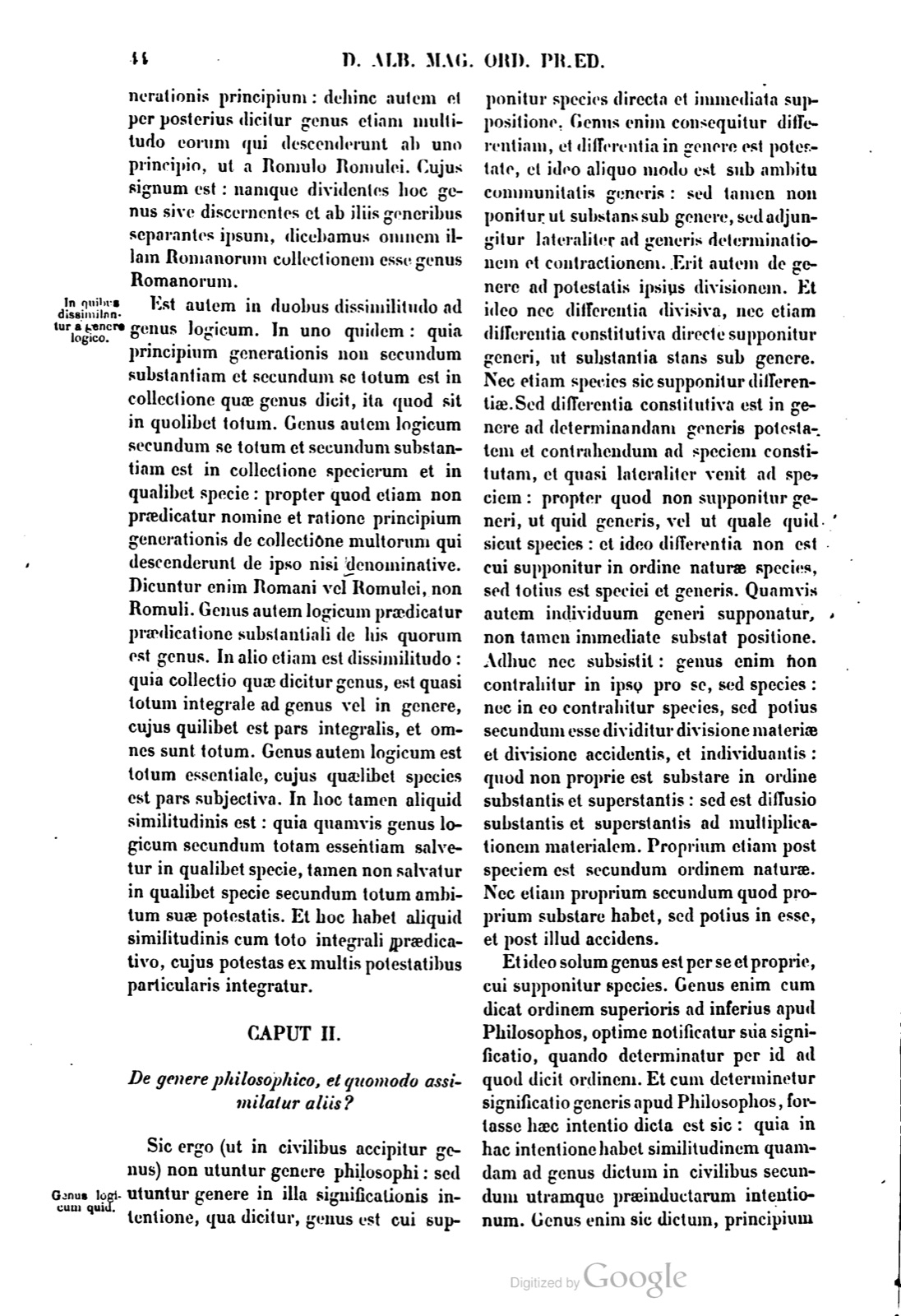
Sic ergo, ut in civilibus accipitur genus, non utuntur genere philosophi: sed utuntur genere in illa significationis intentione, qua dicitur, genus est cui supponitur species directa et immediata suppositione. Genus enim consequitur differentiam, et differentia in genere est potestate, et ideo aliquo modo est sub ambitu communitatis generis: sed tamen non ponitur ut substans sub genere, sed adjungitur lateraliter ad generis determinationem et contractionem. Erit autem de genere ad potestatis ipsius divisionem. Et ideo nec differentia divisiva, nec etiam differentia constitutiva directe supponitur generi, ut substantia stans sub genere. Nec etiam species sic supponitur differentiae. Sed differentia constitutiva est in genere ad determinandam generis potestatem et contrahendum ad speciem constitutam, et quasi lateraliter venit ad speciem: propter quod non supponitur generi, ut quid generis, vel ut quale quid, sicut species: et ideo differentia non est cui supponitur in ordine naturae species, sed totius est speciei et generis. Quamvis autem individuum generi supponatur, non tamen immediate substat positione. Adhuc nec subsistit: genus enim non contrahitur in ipso pro se, sed species: nec in eo contrahitur species, sed potius secundum esse dividitur divisione materiae et divisione accidentis, et individuantis: quod non proprie est substare in ordine substantis et superstantis: sed est diffusio substantis et superstantis ad multiplicationem materialem. Proprium etiam post speciem est secundum ordinem naturae. Nec etiam proprium secundum quod proprium substare habet, sed potius in esse, et post illud accidens.
Et ideo solum genus est per se et proprie, cui supponitur species. Genus enim cum dicat ordinem superioris ad inferius apud Philosophos, optime notificatur sua significatio, quando determinatur per id ad quod dicit ordinem. Et cum determinetur significatio generis apud Philosophos, fortasse haec intentio dicta est sic: quia in hac intentione habet similitudinem quamdam ad genus dictum in civilibus secundum utramque praeinductarum intentionum. Genus enim sic dictum, principium quoddam est specierum quae sunt sub ipso, non quidem materiale, sed etiam effectivum, ut pater. Pater enim est, ut dicit Aristoteles 1, qui aliquid sui habet in filio. Id enim quod aliquid sui habet in filio formali effectivo, est totus pater: pater enim totius secundum principium formativum est in semine, ut artifex in artificiato. Propter quod etiam Plato opinatur semen esse parvum animal, quod egreditur a generante, et quod est ut parvus pater quantitate, sed totus et integer pater virtute. Et similiter genus est totum in specie secundum substantiam: a quo etiam producitur differentia formans speciem et constituens in esse formato. Et sic genus est sicut generationis principium, quod in ante habitis principalem dicimus esse generis significationem in civilibus. Est autem etiam principium ut locus speciei, in quo fundatur species secundum substantiam: et ex eo determinatur species ad quid et substantiam per se substantem, et in alio quodam fundatam: sicut res fundatur in loco suae generationis et salvatur. Propterea differentia non habet loci similitudinem: quia ipsa constitutiva existens fundatur in alio quodam, et magis proprium, et accidens. Species autem quid locatum in genere, et non locus solum. Genus igitur est ad ipsam se habens ut pater, et ut locus, prout pater et locus generationis sunt principia. Habet autem etiam similitudinem ad genus quod in civilibus secundario dicitur quadammodo habentium se ad aliquid, et ad se invicem, in hoc quod genus in eo quod genus est, necessario continet multitudinem quamdam specierum quae sunt sub eo.
CHAPTER II.
On philosophical genus, and how it is assimilated to the others.
Therefore philosophers do not use genus in the way in which genus is taken in civic matters; rather they use genus in that intention of signification by which it is said: genus is that under which species is placed by direct and immediate supposition. For genus follows upon difference, and difference is in genus in potency, and therefore in some way is under the range of the community of genus; nevertheless it is not posited as standing under genus, but is joined laterally for the determination and contraction of genus. But it will belong to genus for the division of its potency. And therefore neither divisive difference nor also constitutive difference is directly placed under genus as a substance standing under genus. Nor is species placed under difference in this way. But constitutive difference is in genus for determining the potency of genus and contracting it to the constituted species, and it comes as it were laterally to species; on account of which it is not placed under genus as a what of genus, or as a quale quid, as species is. And therefore difference is not that under which species is placed in the order of nature, but it belongs to the whole of species and genus. But although the individual is placed under genus, nevertheless it does not stand immediately beneath by position. Further, it does not subsist; for genus is not contracted in it for itself, but species is. Nor is species contracted in it, but rather according to being it is divided by the division of matter and by the division of accident and of the individuating thing. This is not properly to stand beneath in the order of what stands beneath and what stands above, but is the diffusion of what stands beneath and what stands above toward material multiplication. Property also is after species according to the order of nature. Nor does property, insofar as it is property, have standing beneath, but rather in being, and after it accident.
And therefore only genus is per se and properly that under which species is placed. For since genus among the Philosophers states the order of superior to inferior, its signification is best made known when it is determined by that to which it states order. And when the signification of genus among the Philosophers is determined, perhaps this intention is said in this way because in this intention it has a certain likeness to genus said in civic matters according to each of the two intentions brought in before. For genus so called is a certain principle of the species which are under it, not indeed material, but also effective, as a father. For a father is, as Aristotle says 1, one who has something of himself in the son. For that which has something of itself in the son as formal and effective is the whole father: for the father of the whole according to the formative principle is in the seed, as the artisan is in the artifact. On account of this Plato also thought seed to be a little animal which goes out from the generator, and which is as a small father in quantity, but the whole and entire father in power. And similarly genus is whole in species according to substance; from it also is produced the difference forming the species and constituting it in formed being. And thus genus is like the principle of generation, which above we said is the principal signification of genus in civic matters. It is also a principle as the place of species, in which species is founded according to substance; and from it species is determined to whatness and to substance standing by itself and founded in some other thing, just as a thing is founded and preserved in the place of its generation. Therefore difference does not have the likeness of place, because it, existing as constitutive, is founded in some other thing; and property and accident still more so. But species is the what located in genus, and not place alone. Therefore genus has itself toward species as father and as place, insofar as father and place of generation are principles. It also has likeness to genus which is said secondarily in civic matters, of those having themselves in some way to something and to one another, in this, that genus insofar as it is genus necessarily contains a certain multitude of species which are under it.
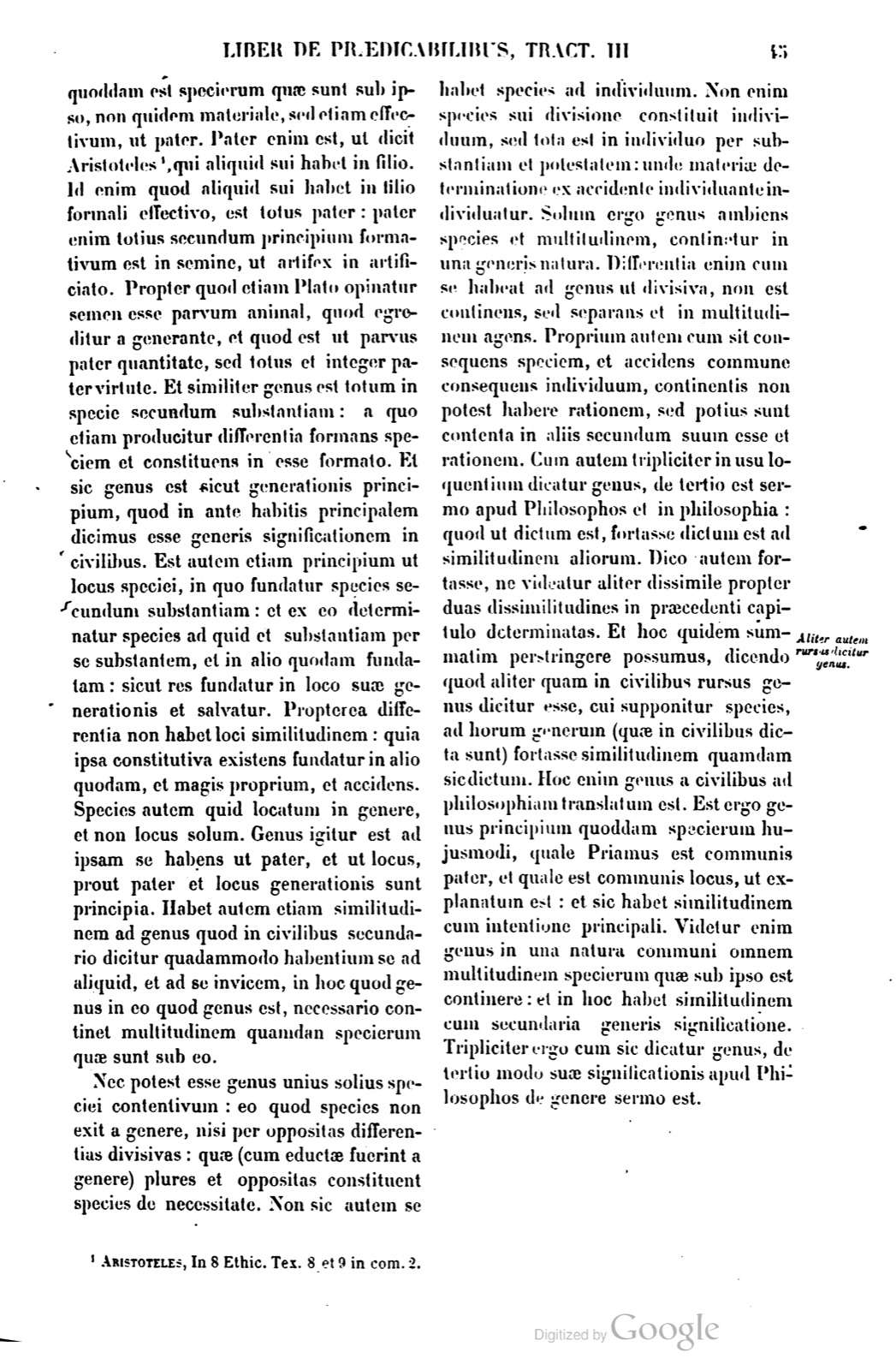
Nec potest esse genus unius solius speciei contentivum: eo quod species non exit a genere, nisi per oppositas differentias divisivas: quae, cum eductae fuerint a genere, plures et oppositas constituent species de necessitate. Non sic autem se habet species ad individuum. Non enim species sui divisione constituit individuum, sed tota est in individuo per substantiam et potestatem: unde materiae determinatione ex accidente individuante individuatur. Solum ergo genus ambiens species et multitudinem, continetur in una generis natura. Differentia enim cum se habeat ad genus ut divisiva, non est continens, sed separans et in multitudinem agens. Proprium autem cum sit consequens speciem, et accidens commune consequens individuum, continentis non potest habere rationem, sed potius sunt contenta in aliis secundum suum esse et rationem. Cum autem tripliciter in usu loquentium dicatur genus, de tertio est sermo apud Philosophos et in philosophia: quod ut dictum est, fortasse dictum est ad similitudinem aliorum. Dico autem fortasse, ne videatur aliter dissimile propter duas dissimilitudines in praecedenti capitulo determinatas. Et hoc quidem summatim perstringere possumus, dicendo quod aliter quam in civilibus rursus genus dicitur esse, cui supponitur species, ad horum generum quae in civilibus dicta sunt fortasse similitudinem quamdam sic dictum. Hoc enim genus a civilibus ad philosophiam translatum est. Est ergo genus principium quoddam specierum hujusmodi, quale Priamus est communis pater, et quale est communis locus, ut explanatum est: et sic habet similitudinem cum intentione principali. Videtur enim genus in una natura communi omnem multitudinem specierum quae sub ipso est continere: et in hoc habet similitudinem cum secundaria generis significatione. Tripliciter ergo cum sic dicatur genus, de tertio modo suae significationis apud Philosophos de genere sermo est.
Nor can genus contain one species alone, because species does not go out from genus except through opposed divisive differences; when these have been drawn out from genus, they will constitute several and opposed species of necessity. But species does not have itself in this way toward the individual. For species does not constitute the individual by division of itself, but is whole in the individual through substance and potency; whence it is individuated by the determination of matter from individuating accident. Therefore genus alone, surrounding species and multitude, is contained in one nature of genus. For difference, since it has itself toward genus as divisive, is not containing, but separating and acting into multitude. But property, since it follows species, and common accident, since it follows the individual, cannot have the notion of containing, but rather they are contained in others according to their own being and notion. Since therefore genus is said triply in the use of speakers, among Philosophers and in philosophy the discourse is concerning the third; and this, as has been said, was perhaps said by likeness to the others. But I say perhaps lest it seem otherwise unlike because of the two unlikenesses determined in the preceding chapter. And we can indeed touch this summarily by saying that, otherwise than in civic matters, genus is again said to be that under which species is placed, perhaps so called according to some likeness to these genera which were mentioned in civic matters. For this genus has been transferred from civic matters to philosophy. Therefore genus is a certain principle of species of this sort, such as Priam is a common father, and such as a common place is, as has been explained; and thus it has likeness with the principal intention. For genus seems to contain in one common nature the whole multitude of species which is under it; and in this it has likeness with the secondary signification of genus. Therefore since genus is said triply in this way, among Philosophers the discourse about genus concerns the third mode of its signification.
Notes
- Aristotle, in Ethics VIII, texts 8 and 9, in commentary 2. (Aristoteles, In 8 Ethic. Tex. 8 et 9 in com. 2.) ↩
If a page does not appear, its photograph has not been uploaded yet.