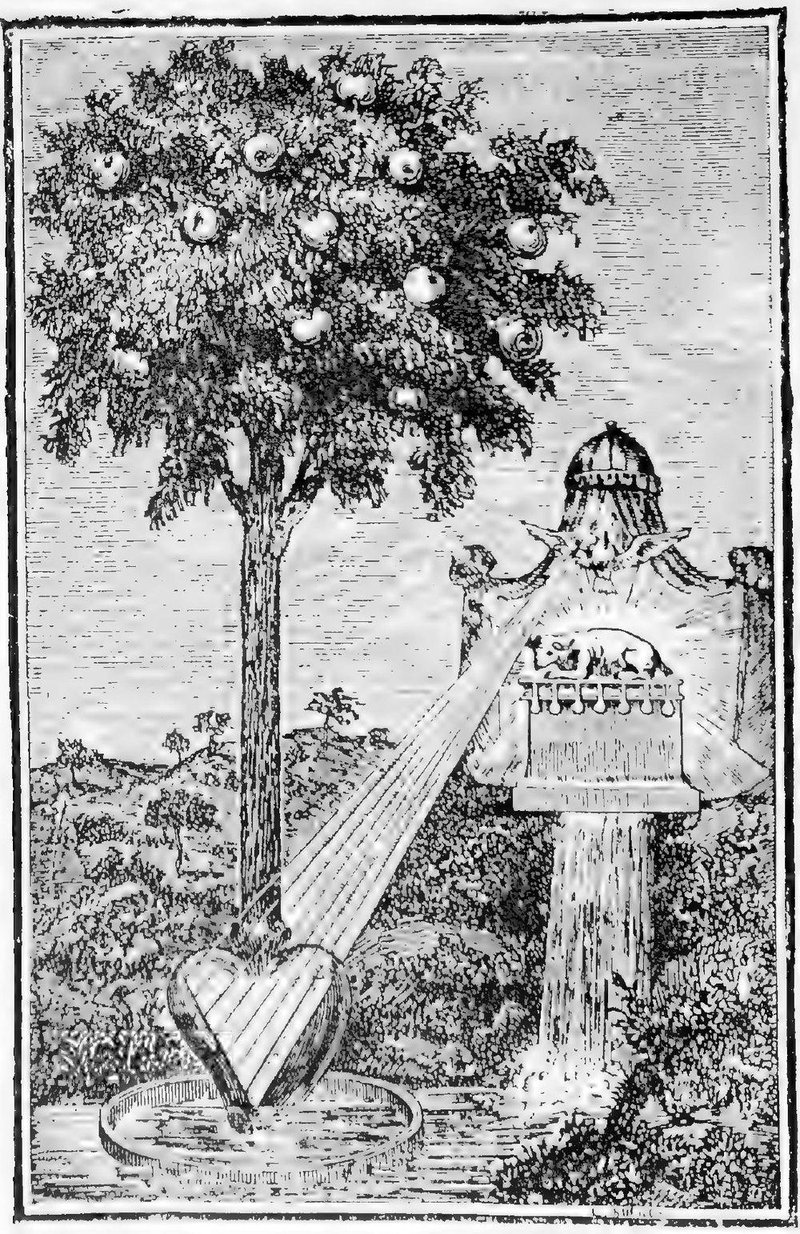
Plate XXXIX. The fruits of the Holy Ghost. The river that flows from the altar of the Lamb. A tree planted near the running waters. The Holy Ghost gives it warmth.
My son, this plate shows the throne of God and of the Lamb. St. John saw a river of water of life flowing from it, and beside its stream a tree bearing twelve fruits (Apoc. 22:1–2), all of which you see represented there. With this authority St. Thomas proves the twelve fruits of the Holy Ghost, which I am going to explain to you, taking this angelic master and other authors as my guide.
Do you see at the foot of the tree that heart with a triangle in the middle, a figure of the soul in its unity of substance and trinity of powers? It symbolizes a good Christian, who is like a fertile soil that repays the cultivation given it. From the heart grows a tree that bears twelve fruits. The seed it came from comes from the Holy Ghost, and so its fruits are called fruits of the Holy Ghost. You know already that man has nothing he has not received from God (1 Cor. 4:7); that by the grace of God he is what he is (1 Cor. 15:10); and that the charity of God is poured forth in our hearts, by the Holy Ghost, who is given to us (Rom. 5:5). Well then, that tree planted in fertile soil, watered by graces and given life by the divine Sun, the love of the Holy Ghost, must of necessity give ripe and very sweet fruits to the person who cultivates it. These fruits, as the apostle St. Paul says (Gal. 5:22–23), are the following twelve: Charity, Spiritual Joy, Peace, Patience, Long-suffering, Goodness, Benignity, Mildness, Faith, Modesty, Continency and Chastity.
I want you to know, my son, that according to St. Thomas these fruits are not habitual or permanent perfections. They are certain actual and passing movements of the soul, which come from the supernatural virtues that dwell in it. In the exercise of those virtues they give the soul a particular relish or a very choice delight. This is what the tree signifies: the tree is constant and lasting, and its fruit is passing.
Charity, the first fruit, consists in that spiritual relish that comes from the love with which the good love God. This relish is greater or less according to the love with which they love him, for God communicates himself to them according to the disposition with which they receive him.
Joy, the second fruit, consists in an inward gladness of the soul which the good have in being friends of God and in having left off sinning. It surpasses beyond comparison all the honest
joys of the world. Among other things its cause is the hope of salvation, as St. Paul says (Rom. 12:12). It brings with it such gladness that whoever has it begins already in this world to taste beforehand the delights of glory. That is why Christ said to his disciples: Rejoice in this, that your names are written in heaven (Luke 10:20), or, as St. John says, in the book of life (Apoc. 21:27).
Peace is the third fruit. It consists in that tranquility and quiet of mind with which the good live. It is the effect of a good conscience, clean of all mortal sin, and this peace is above every other calm. This tranquility is greater or less according to the cleanness of conscience, even from venial sins. Only those who live in grace enjoy this peace: Much peace have they that love thy law (Ps. 118:165). There is no peace to the wicked, saith the Lord (Isa. 48:22).
Patience, the fourth fruit, is that resignation and relish with which the good conform themselves entirely to the will of God in any tribulation. Sometimes it is so great that, as though beside themselves, they go in search of pains. This relish is born of the great love they have for God. This fruit shines in a special way in the Martyrs, who in the midst of pains and horrible torments leapt for joy at the love they had for Jesus, for whom they suffered. We read this too of the Apostles: they went from the presence of the council, rejoicing that they were accounted worthy to suffer reproach for the name of Jesus (Acts 5:41).
Long-suffering, the fifth fruit, is a firmness or constancy of mind that the good have. They do not grow weary or distressed at the length of the trials and pains of this life, nor lose heart because the attainment of the goods of glory they hope for is delayed. Rather they desire that God’s will be always done in everything and through everything.
Goodness, the sixth fruit, consists in a good will and desire the good have to do good to their neighbor. They feel a special joy whenever an occasion of practicing charity presents itself to them.
Benignity, the seventh fruit, consists in the affectionate and friendly way in which the good do good to their neighbor. They do it not by force, or unwillingly, or with a frown, but with a certain affectionate and pleasant feeling that gives them a special satisfaction.
Mildness, the eighth fruit, consists in that evenness of mind with which the good bear injuries without indignation, as masters of themselves. This gives the soul a certain satisfaction at seeing itself treated as its Redeemer was.
Faith, the ninth fruit, is the faithfulness the good keep toward God and toward men. So this fruit concerns both God and neighbor. With regard to God, faith is not considered here as a theological virtue. It is a very great and lofty moral certainty that just souls sometimes experience about some mystery of faith, and this new knowledge gives the soul an inexpressible relish or pleasure. With regard to our neighbor, it consists in a great faithfulness the just keep toward all men, so that deceit and hidden motives never have any place in them.
Modesty, the tenth fruit, is a very careful attention the just give to see that all their actions are done in due measure, without going the least bit too far in words, gestures or actions. That is why the Apostle exhorts us: Let your modesty be known to all men (Phil. 4:5).
Continency, the eleventh fruit, is the absolute and universal renouncing of sensual pleasures, both unlawful and lawful. Souls that have this fruit get from it a special relish that surpasses infinitely that which the voluptuous enjoy wallowing in the pleasures of the flesh. Human language has no words to express the joy of a soul endowed with continence and virginity: only one who enjoys it knows it.
Chastity, the twelfth fruit, is that inward purity the good keep according to their state, virginal, married or widowed. They abhor unseemly or disordered things and flee the occasions that could tempt them to stain their chastity. So the persons who taste this fruit enjoy such sweetness and inward joy that it is given to them alone to know it, though not to explain it. And this satisfaction grows in them, and they prize it more, whenever they happen to see the restlessness, miseries and fatal diseases of those who wallow like swine in the mire of impurity, as St. Peter says (2 Pet. 2:22). For these unhappy people are in every way hateful to God and men, unworthy of heaven and deserving of hell. The chaste, on the contrary, are the object of God’s delight and of men’s veneration, and have heaven almost assured.
Ah, my son! If the sweetness of these fruits of the Holy Ghost is great and inexpressible even in this world, what will it be to enjoy them there in heaven? Take courage, then. Try earnestly to obtain them, which you will no doubt achieve by living in keeping with Christian doctrine. Yes: the chaste and devout are temples of the Holy Ghost. He adorns and enriches them. And would he not do as much with you, if you dispose yourself rightly?
Q. How many are the fruits of the Holy Ghost?
A. Twelve: Charity, Joy, Peace, and the rest, as listed above.
Q. Why are they called fruits of the Holy Ghost?
A. Because they are what is most perfect in the virtues, which is the work of a special movement of the Holy Ghost.
Q. What is the fruit Charity?
A. It is that love with which the good love God.
Q. What is the fruit Joy?
A. It is that gladness the good enjoy in being friends of God and in having left sin.
Q. What is the fruit Peace?
A. It is that tranquility and quiet of mind with which the good live.
Q. What is the fruit Patience?
A. It is that resignation and relish with which the good conform themselves entirely to the will of God in any tribulation.
Q. What is the fruit Long-suffering?
A. It is that great spirit the good have, who are troubled by nothing and find contentment in nothing but God our Lord.
Q. What is the fruit Goodness?
A. It is that will and desire the good have to do good to their neighbor.
Q. What is the fruit Benignity?
A. It is that pleasantness with which the good treat all men, devoting themselves to serving them.
Q. What is the fruit Mildness?
A. It is that evenness of mind with which the good bear injuries without indignation.
Q. What is the fruit Faith?
A. It is that faithfulness the just keep toward God, believing all he has revealed, and deceiving no one.
Q. What is the fruit Modesty?
A. It is that care the good take that all their actions be done in due measure.
Q. What is the fruit Continency?
A. It is that aim the good have of restraining disordered passions.
Q. What is the fruit Chastity?
A. It is that inward purity the good keep, abhorring unseemly things and fleeing the occasions.