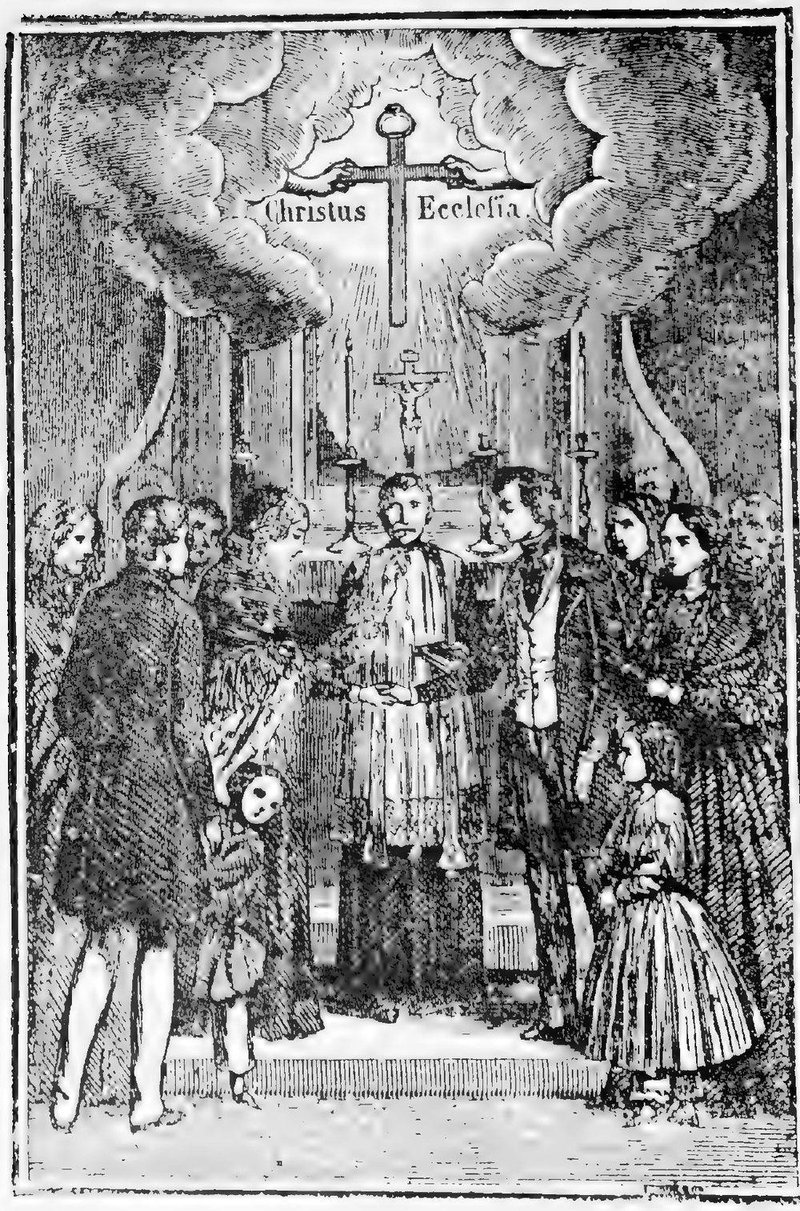
Plate XXXVI. The sacrament of Matrimony. “A great sacrament in Christ and in the Church” (Eph. 5:32). The parish priest and the couple being married.
If you look at the plate, my son, you will see that it shows the administration and reception of the sacrament of Matrimony. This is the indissoluble bond which spouses free of any impediment contract by words of present consent before the parish priest, or another priest authorized by him, and witnesses. It is true, my son, that if God had chosen to create in an instant all the men there are to be until the end of the world, as he created the Angels; or to create them one after another without generation, as he creates souls; or at least to form them with his own hands, as he did Adam and Eve, marriage would not be necessary. But since he willed none of that, and willed instead that the human race should be preserved and propagated by the succession of parents and children, marriage is necessary with respect to society as a whole. It does not, however, bind each person in particular, for everyone is free to marry or remain single, as pleases and suits him. So what matters to each individual is to take the state to which he feels inclined and to which God calls him. Whichever he takes, whether marriage or celibacy, he should use it as a means of attaining more easily his last end, which is the chief object we must always keep before our eyes.
My son, this world is like a great theater in which each must play his part. In a real theater the one who deserves applause is he who performs best and most perfectly the part entrusted to him, and the audience does not stop to ask whether it is an honorable part or not. If someone plays a king badly he will be hissed, and if afterwards he plays a servant well he will be applauded. In the same way, he who best fulfils his duties, whether in the single or the married state, will be the one to deserve the applause of God, who will give him his reward, though here below one state may be thought less excellent than the other. It is important, therefore, that one who is to choose a state of life should not rush into it or act from passion. He should reflect maturely on which may be more useful to him for passing this miserable life in peace and attaining his salvation more easily. So I will give you a brief account of the advantages and drawbacks of each, so that, after meditating on them before God, you may choose the one that seems best to you.
There are, as I said, two states between which one must choose: the single state, or continence; and the married state, or matrimony. The first consists in a holy purity of body and soul, as St. Paul says (1 Cor. 7:34), which is lost by any thought, word, deed or desire consented to. This state is as old as the Church herself. From her birth a great multitude of persons of every class and of both sexes consecrated their virginity to God. Since then there have never been lacking those who kept it intact, not only in deserts and cloisters but also amid the business and dangers of the world. And this will last until the consummation of the world, because Jesus Christ will raise up and ensure that there are always souls who follow him in the practice of this noble and angelic virtue. It is so pleasing to God that, when he willed to become incarnate, he chose for the purpose a most chaste Virgin. His precursor was a virgin; a virgin was the disciple he loved most and to whom he entrusted the greatest secrets; and of virgins is composed the chief choir that sings his praises without ceasing (Apoc. 14:3–4).
The holy Fathers all vie in praising this virtue as highly as they can. St. Cyprian says: “Virginity is the flower of the Church’s fruits, the grace and ornament of the gifts of the spirit, the delight of nature, the perfect and incorrupt work of honor, the praise and image of God in which his immense holiness is reflected.” St. Ambrose exclaims: “Oh, how great is the grace of virginity, which deserved to be chosen as the bodily temple of God, in which the fullness of the divinity should dwell!” And elsewhere he adds: “Virginity, rising above the condition of human nature, makes Angels of men; and the victory of virgin souls is even greater than that of the Angels, because the Angels live without flesh, while virgins triumph over the flesh.” This is how these Fathers, among others, praise virginity, my son. It is a heavenly virtue, so hated by the world, which likes to wallow like a pig in the filth of the flesh; so esteemed by pure souls and by the Church; so admired by the Angels; so loved by Jesus; and so pleasing to God.
Writing to the Corinthians St. Paul says to them: I would that all men were even as myself (St. Paul was unmarried): but every one hath his proper gift from God; one after this manner, and another after that. But I say to the unmarried, and to the widows: It is good for them if they so continue, even as I. But if they do not contain themselves, let them marry (1 Cor. 7:7–9), unless they have made a vow of chastity. For matrimony was instituted not only to propagate the human race but also to calm concupiscence. I said “unless they have made a vow of chastity”, because while that binds, the remedy for concupiscence can be sought only in prayer and mortification. But let anyone who wishes to marry not forget the proverb: “Before you marry, look what you are doing.” It warns him to think it over maturely before God, to reflect which of the two states may be better suited to his salvation, and to choose the one he would wish to have chosen at the hour of death. One who feels inclined to marriage should consider, before embracing this state, the obligations it brings with it and whether he can fulfil them; the dangers found in it and whether he will know how to avoid or overcome them. In a matter of such importance, on which temporal and eternal happiness depend, no one should trust his own lights or opinion. So he should first consult his director or confessor, or his own parents, without prejudice, commending himself earnestly to God, the most holy Virgin, the archangel St. Raphael, his holy Guardian Angel and the Saints of his devotion.
If, having taken these steps, he knows that it is God’s will that he should take the married state, let him then beg God for the gift of choosing his companion rightly. For God’s designs must be consulted not only on the state in general but also on the state considered in particular. God may very well want a person to marry, yet not want him to marry this or that person, but some other. So, as he consulted God on whether he wanted him in the married state or not, let him also consult him on whether he wants him married to this person or to that. Peace and union between spouses are the most important thing, since the happiness of married life consists in them. To attain them one should try, as far as possible, to have equality of age, class and condition between them. One should set one’s thoughts on a person who is chaste, prudent, docile, busy with what belongs to his or her duty, God-fearing, charitable and thoroughly virtuous. These and similar qualities are the ones to look for in the person one intends to marry, and not beauty, riches, rank, or, what would be worse, the satisfaction of some brutish passion. But finding such a person cannot be achieved without first giving up every earthly aim and commending the matter to God. So it is indispensable to turn humbly to the Giver of every good, for the Holy Ghost tells us: House and riches are given by parents: but a prudent wife is properly from the Lord (Prov. 19:14). That marriage, and no other, will be happy which the Lord joins. The Sacrament will produce its effect, causing that grace of love and union between the spouses. It gives them strength to bear patiently the hardships, labors and troubles the state brings with it, and fills them with knowledge and prudence to instruct and guide as they should the children with whom God blesses their union. But those whom God does not join, but self-interest, beauty, brutish passion, the devil… alas! Even if they do not suffer the unhappy fate of Sara’s seven husbands, who were killed by the devil on the very night of their ill-fated weddings (Tob. 3:8), they will remain alive only to suffer, and to begin in this world the hell they will afterwards continue for evermore in the next.
Woe to those who, instead of preparing to receive this sacrament of Matrimony with the proper dispositions, profane it by long courtships beforehand! They take liberties with certain things on the promise and hope that they will soon be married, and so insult the Sacrament, which they make an excuse for sinning. What a fountain of misfortunes they bring on themselves! What a seedbed of discord they prepare! Those who want to choose rightly in matters of such importance try to implore the help of God and the most holy Virgin. They abstain from sin, and before contracting marriage they make some
days of spiritual exercises with a general confession. So for them the wedding day is a great and wonderful day, sanctified by the three Sacraments they receive: cleansed and healed by Penance, holily united by Matrimony, and wonderfully assisted by the Lord in holy Communion. Jesus is invited to such weddings in an even more special way than to the wedding at Cana of Galilee. No obscene, unseemly or suggestive words are spoken at them. Indecent actions and signs are banished from them. Dances, and whatever pleases not Jesus and Mary but the devil, have no place there. For the bride and groom, sanctified by the Sacraments received and the exercises that went before, behave like Tobias and Sara, and St. Raphael drives the devil Asmodeus from among them (Tob. 8). What holy and well-begun weddings! Oh, the fruits of such a marriage cannot fail to be well ripened, for the public good as much as for the glory of God and the benefit of the spouses. For the others, whose weddings were preceded by a thousand sins and accompanied by a thousand more on the wedding day itself, what can be hoped? Can trees worm-eaten from the day they were planted give any fruit but wild and bitter? Alas! Infidelities, separations, quarrels, scandals, unruly children, and a thousand other evils that unfortunately we see every day, to the discredit of Religion and the harm of society. These are the sorry fruits of marriages made under the auspices of the devil, because made under those of sin.
It is very easy to get married, but not to make a good marriage. So it should be thought over carefully beforehand, for this union is to last the whole life of both spouses. Besides signifying the union of Jesus Christ with the Church, as you see in the plate, which will never be separated (Eph. 5:32), it rests on natural reason itself. Reason teaches that it is the parents who must see not only to the procreation of children but also to their becoming perfect men in stature, instruction and settlement in some class of society. For who but they could take on this obligation? And how could they fulfil it completely if they were not united? And if there were no one to fulfil it… oh, who could reckon the evils that would follow? If, despite the care of parents who by common accord seek to bring up their children in a holy and sociable way, we still see so many dissolute and libertine people, what would happen if each spouse went his own way and abandoned them? And this union of the spouses must be perpetual not only for the sake of the education, support and settlement of the children, but also with regard to the spouses themselves. It is not right that a union on which the well-being of the children, of the spouses and of society itself depends should contain even the fear that one of the spouses may be abandoned. In that case love would grow cold and the door would open to whims. Foreseeing a possible break could divide the family’s interests. And the fear of being abandoned in old age, after serving faithfully in youth, would lead to the crimes that society now laments in those not lawfully united. How distressing for a mother to think that after spending her freshness and vigor in bearing and feeding the children, she might see herself abandoned by the father in her old age!
Ah! This marriage contract is not like those men make on their own account, which they undo today what they did yesterday, out of fickleness or because it suits their whims or interests. No, this one has been made before God, who with his blessing shields it and withdraws it from man’s jurisdiction, sanctioning its duration until the death of one of the spouses. So from the day the two spouses lawfully celebrated and consummated the marriage, God makes this union his own and forbids any breaking of it, for any cause whatever, since it is a sacred thing. Man may defend it, but never attack it: such is the intrinsic condition of the marriage contract. Perpetuity belongs to it, then, by natural and divine law. That is why Jesus Christ in the holy Gospel, to give us to understand it, did not say that such a union was human but divine, and that therefore man may not touch it: Quod Deus conjunxit, homo non separet [What God hath joined together, let no man put asunder] (Matt. 19:6). The man and the woman were free to give their consent. But as soon as they had spoken their “yes”, it was taken up by God, who therefore remains sole owner and lord of it. Whichever of the spouses afterwards tried to dissolve this bond would be attacking God’s property. That is why it is not said in vain: “Look on the separated spouse as already damned.”
This damnation would be certain not only if one attempted to dissolve the bond, but also if a temporary or permanent separation took place not approved by the lawful authority, which can allow it in certain cases. For then the spouses would no longer love each other as they should. They would fail in the fidelity they have sworn to each other and form unlawful relationships with other persons, and adulteries would corrupt society. Adulteries!… Oh, this horrible crime, as irreligious as it is antisocial, has always been regarded, and rightly, as one of the offenses deserving the greatest penalties. It is a theft, an infamous unfaithfulness, a beginning of injustices, a poison destructive of the peace and union of families, and an unfailing spring of scandals that undermines society at its foundations. That is why such a crime has always been regarded with horror, and laws have punished it with the greatest severity. God himself, in Deuteronomy, chapter 22, verse 22, decreed against adulterers the penalty of death by stoning. The Julian law of the Romans also decreed capital punishment against them. Lycurgus imposed on them the penalty of parricides. The Saxons burned the adulteress alive, raised a gallows over her ashes and hanged the adulterer from it; and I could cite you many other laws of this sort. And if in our times some human legislation is unfortunately negligent in punishing so great a crime, adulterers will not for that reason go unpunished. For, as the Apostle says, God will take it on himself to judge and punish this horrible offense, which men have not punished (Heb. 13:4).
My son, I have explained to you what marriage is, and what must be done and avoided to live in it holily, as well as the advantages and praises of celibacy. I have done so in order that, when you are of age to choose a state of life, you may meditate maturely on both, and ask God to make known to you in which of the two he wants you. After you have chosen, try to fulfil exactly the duties it imposes. In this way you will be happy in this world and the next, which is the wish that moves me.
Q. What is the sacrament of Matrimony?
A. It is a Sacrament instituted to sanctify the union of husband and wife.
Q. Must those who marry be instructed in Christian doctrine?
A. Yes, because they are Christians, and so that they may afterwards teach it to their children.
Q. Must they be in the grace of God?
A. Yes, because it is a Sacrament of the living, and otherwise they would commit a sacrilege.
Q. What is needed for the Sacrament to be valid?
A. The free consent of the parties, that they have no impediment, and the presence of the parish priest and two witnesses.
Q. What effects does it cause?
A. It gives grace and helps to the married so that they may live in peace and union and bring up their children well.
Q. What do the obligations of the married come down to?
A. To representing, by their union, the union of Jesus with his Church.
Q. How do they represent it?
A. By their holiness, their mutual charity, their care in bringing up their children, and their inviolable fidelity until death.