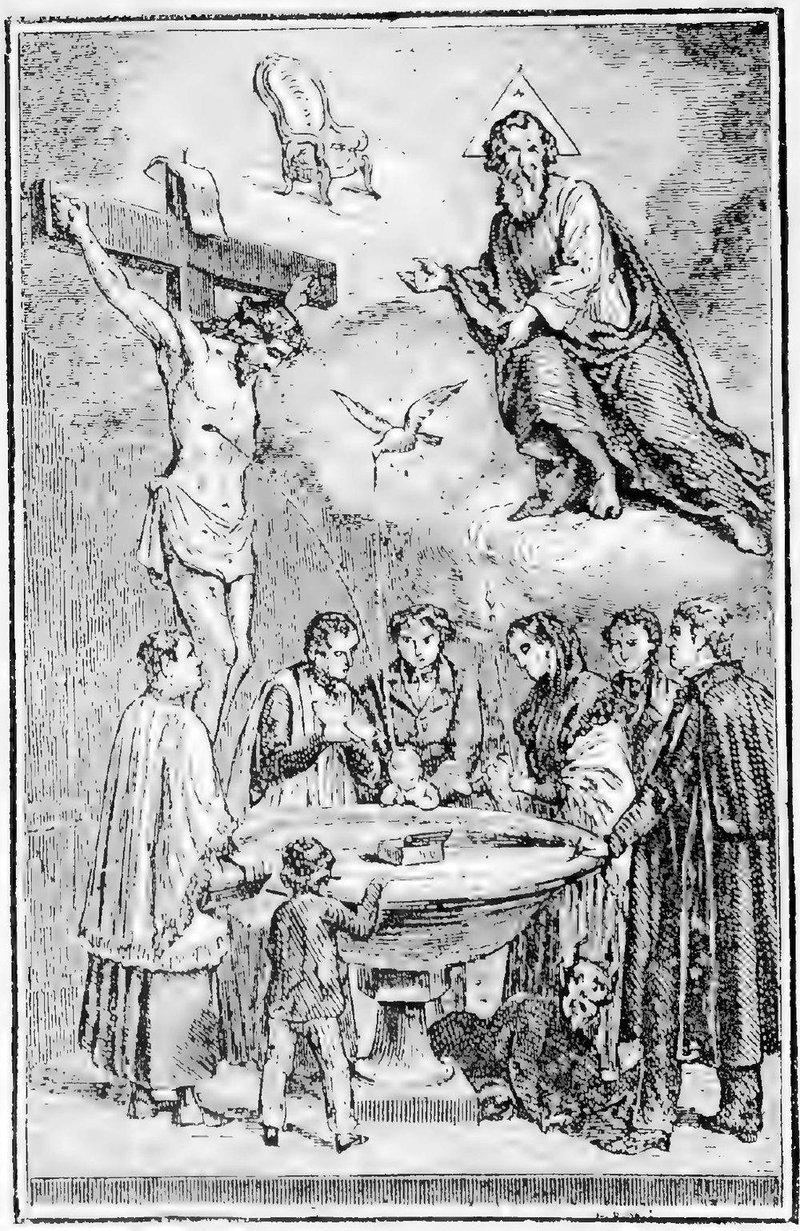
Plate XXIX. The sacrament of Baptism. The most holy Trinity. Chair for the one being baptized. The baptismal font. Priest baptizing.
Section Two. Good Works
The Sacraments of the Catholic Church are those most pure fountains which spring from the side of Jesus Christ and pour out healing and most precious waters of grace. They heal our souls of the diseases of sin and relieve and supply for our miseries. In this sense the holy Council of Trent says that, though at birth we are deprived of grace, we obtain it by Baptism. If we lose this baptismal grace, we recover it by means of the sacrament of Penance. And if we preserve and increase it, we owe it to the Sacraments, for the strength they give us for this. Oh my son! How grateful we should be to Jesus Christ for having made the inexhaustible treasures of the Sacraments available to us! How highly we should value them! And how often we should desire to receive those of Penance and the Eucharist! If a doctor offered a sick man the surest and most effective remedy, would he not be mad not to accept it, and, being able to get well, to prefer suffering his ailments? If a gentleman handed over a great sum of money to ransom a slave, and the slave, instead of showing gratitude, told him he preferred slavery to freedom, should we not say he had lost his mind?… And what should we say of a poor man dying of hunger, thirst, nakedness and other miseries, who despised the more than sufficient help a generous and charitable hand offered him to remedy them all?
Know, then, my son, that those sick men, those slaves and those poor men are ourselves. And the gentleman who wants to remedy our ills is Jesus Christ, by means of the Sacraments. They are the most effective remedies for curing all the diseases contracted through sin, and even sin itself, and the means of freeing us from slavery to the devil. The Sacraments are a most rich and abundant mine which, well worked, can enrich our souls with graces and merits. But do not forget, my son, that a remedy or medicine, however excellent and effective in itself, does not heal unless it is applied to the sick man at the right time. So too the Sacraments do not heal our souls unless they are received with the proper disposition.
This is a truth so important, and unfortunately so forgotten, that to make you see its importance I will put this comparison to you. Suppose that a king, the most powerful and the most loving toward his subjects, had set up well-stocked cash-boxes of money in all the towns of his kingdom, giving all his subjects leave to present themselves at the
treasurers to draw large sums, not only to pay their debts but also to increase their fortunes… Who would not praise the unheard-of generosity of such a monarch? And if his subjects, out of disdain or negligence, did not go to draw the money, but went on living in poverty and weighed down with debts, would anyone not say they were unworthy of pity, since if they suffered it was their own fault? Let us come, then, to the application, my son, and no longer to suppositions but to reality. Jesus Christ, King of kings, and Lord of lords (Apoc. 19:16), has deposited his merits, which are a treasure of infinite value, in the holy Sacraments. For the greater convenience of his subjects he has set up treasuries in each parish. So no one is obliged any longer to go to Rome, the capital and court of his kingdom, to draw on them. Everyone will find in his own town a treasury that will hand him the sums he needs to pay the debts of his sins, however great they are; and if he has no debts, those sums will serve him to increase his wealth of grace. What generous charity is that of Jesus Christ! And what black and guilty ingratitude is ours if we disdain it! Ah! Such immense graces are let pass unnoticed. While we cry to heaven about the miseries that afflict us and the debts that weigh us down, we fail to profit from a treasure offered us so generously and so easily obtained. Unhappy children of Adam! They prefer to die of hunger rather than take the trouble to stretch out their hand and take the morsel that would give them life. But since I suspect that in many this indolence comes perhaps from not knowing such divine dispensations, I have decided to explain them to you in order.
First of all you must know that the Sacraments are seven, neither more nor less. All were instituted by Jesus Christ, as is clear from tradition and was defined by the Council of Trent already cited. Not all are to be received in the same state; or, what comes to the same thing, not all require the same disposition in the person who is to receive them. Some are for giving grace to one who has not yet had it, or who, having had it, has unfortunately lost it. These are Baptism and Penance. For this reason they are called Sacraments of the dead, since they suppose the soul dead through sin, or without the life of grace. The others, the remaining five, increase grace or give new grace to one who already has it, and for the same reason they are called Sacraments of the living. Penance also causes this increase of grace when the person receiving it has not lost grace, for in that case it is a Sacrament of the living for him too. This being supposed, let us now treat of each in particular, and first of
Baptism. Baptism is the first Sacrament, and as it were the door to all the others, so that none can be received without first receiving this one. It is true that St. John the Baptist administered a kind of baptism before, but this was not the Sacrament of which we speak. It was a spur to penance, and a means he used to prepare people to receive the Redeemer. It was Jesus Christ who instituted this sacrament of Baptism, and he it was who commanded the Apostles to teach all nations, baptizing them in the name of the Father, and of the Son, and of the Holy Ghost (Matt. 28:19). Such is the necessity of this Sacrament that without it one cannot become a member of the Church or enter heavenly glory. The exception is someone who, unable to receive it, desires it and makes a supernatural act of contrition and love of God, or who suffers martyrdom. In such a case that desire and that martyrdom, called baptism of fire and of blood respectively, would supply for baptism of water.
For this and every other Sacrament three things are indispensable: matter, form, and a minister with intention. The matter of Baptism is water, and only natural water, such as rain, sea, river, well or spring water. Water that is not natural is therefore generally not fit matter, and still less any other liquid. The form is these words: I baptize thee in the name of the Father, and of the Son, and of the Holy Ghost. Amen. The minister is the parish priest, or any other priest with his leave. But in case of necessity any person at all is the minister, even if he is a heretic or an unbeliever.
The effects of this Sacrament are to forgive original sin and any other sins the person receiving it has committed before, and also all the punishments of the next life they deserved. By it a grace is given to the one receiving it which takes him out of slavery to the devil. For this reason the devil is shown in the plate under the baptismal font in an attitude of despair. It makes him a child of the Church, a friend of God and an heir of heaven. This is the meaning of the chair prepared at the top of the plate, where he will live for all eternity if in this world he lives as a good Christian. It makes him an adopted son of the eternal Father, whom from then on he calls father, saying: Our Father, who art in heaven; and a brother of Jesus Christ. His soul is made the spouse of the Holy Ghost, and his whole self filled with the grace of the most holy Trinity, which, as you see, takes delight in holy Baptism.
Before receiving Baptism the soul is not worthy to go to heaven, because there everything is beautiful, pure and perfect, and it is impure and ugly because of original sin at least. But as soon as through the sacrament it has been made a sharer in the redemption of our Lord Jesus Christ, it is freed from slavery to the devil, entirely purified, and most beautiful like the heavenly spirits. Ah! If only one could keep this beauty and purity without ever committing any sin! Besides what has been said, by Baptism the theological virtues and the gifts and fruits of the Holy Ghost are infused into the soul. It is sealed with the character, a mark or badge that shines in the soul, for greater glory in heaven if it is saved, and greater shame in hell if it is damned. Because it is sealed in this way, this Sacrament cannot be received more than once.
If you look at the plate you will see that besides the priest there is also the godfather holding the infant. Because the child cannot speak, the godfather asks in his name for Baptism and all that comes from it, and promises that he will fulfil what Baptism requires. Minors must abide by what their guardians do for their benefit. In the same way the baptized must fulfil all that the godparents promised in their name at Baptism. Since they profit from the advantages or benefits that result from it, they must likewise bear the burdens. So they must keep the promises made in their name to follow the faith and law of Jesus Christ, and to flee from what they have renounced.
In Baptism one renounces Satan, protesting that one will never serve him. One renounces his evil works, which are sins and what leads to them: forbidden games, or even games lawful in themselves if there is excess in the amount staked or the time spent. Likewise works of Satan are the dances, shows, theaters, flirtations, feasts and so on where improper actions are commonly committed, indecent words spoken, or gluttony stirred up. The devil uses all of these as snares to catch souls. Finally, one renounces the pomps, vanities and luxury in dress and furniture, in eating and drinking; for all this fills the Christian with pride, and Satan goes after the proud man. These are the promises made by all Christians in the presence of God, of heaven and of earth, at the time of receiving Baptism. Some keep them, but unfortunately more forget them and fail in them.
Those who are faithful to what they promised imitate Jesus Christ in humility, detachment from the things of the world, mortification, meekness, patience, chastity and the other virtues, keeping the commandments of his holy law and the maxims of the holy Gospel. A thousand times happy are they if they persevere! For they will have eternal life secure, as was promised them in Baptism.
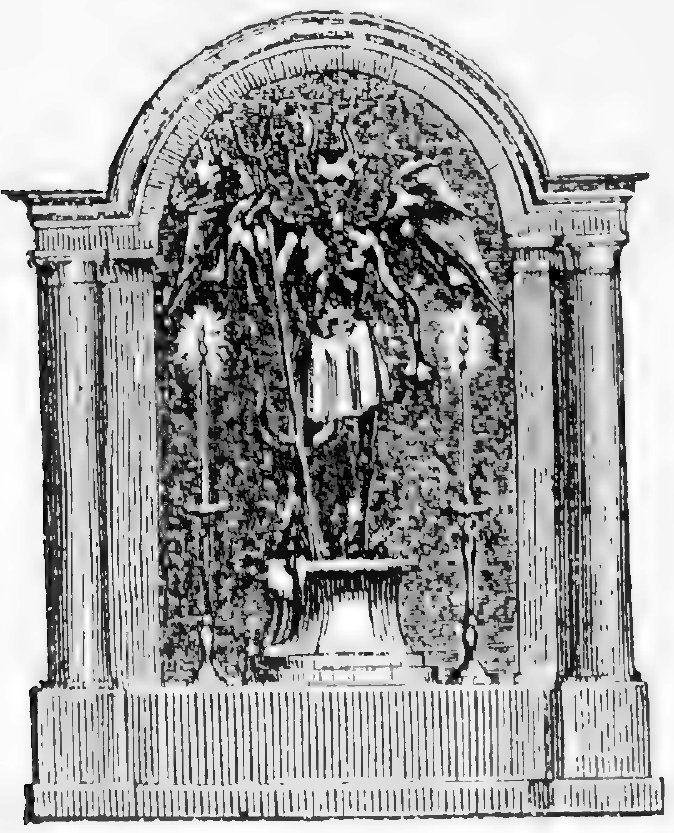
Plate XXX, figure 1. The devil honored with two candles: the works and the pomps of the bad Christian.
Others, however, behave in a way wholly contrary to what they promised. If they had bound themselves to follow Satan, they could not do more to serve him than they do. They blaspheme God, Jesus Christ and the Saints, but not the devil, whom they venerate by their works and pomps, as this figure expresses. One of the candles stands for the works, I mean sins and what leads to sin; the other stands for the pomps and vanities with which the bad Christian dishonors Jesus Christ and pays homage to the devil. Woe to those who do this! How certain and infallible is their damnation!
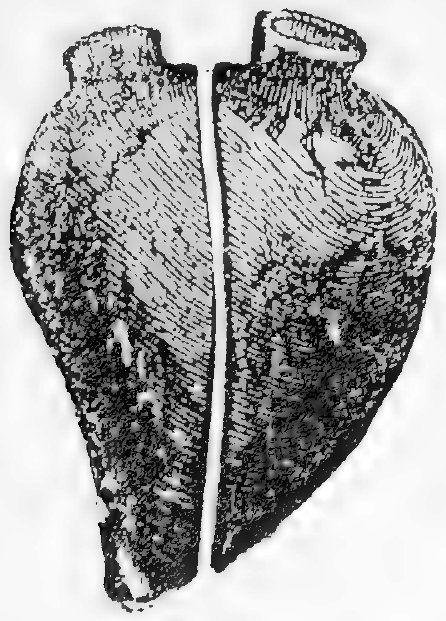
Plate XXX, figure 2. The divided heart.
There are some who have a divided heart, as is shown in this figure. With one half they claim to love Jesus Christ and keep what they promised him in Baptism, and with the other to follow the works and pomps of Satan. Plainly they attempt the impossible, for no man can serve two masters (Matt. 6:24), above all when they are opposed, as God and the devil are. What would you say of someone who claimed to serve at the same time in two armies or parties entirely opposed to each other?
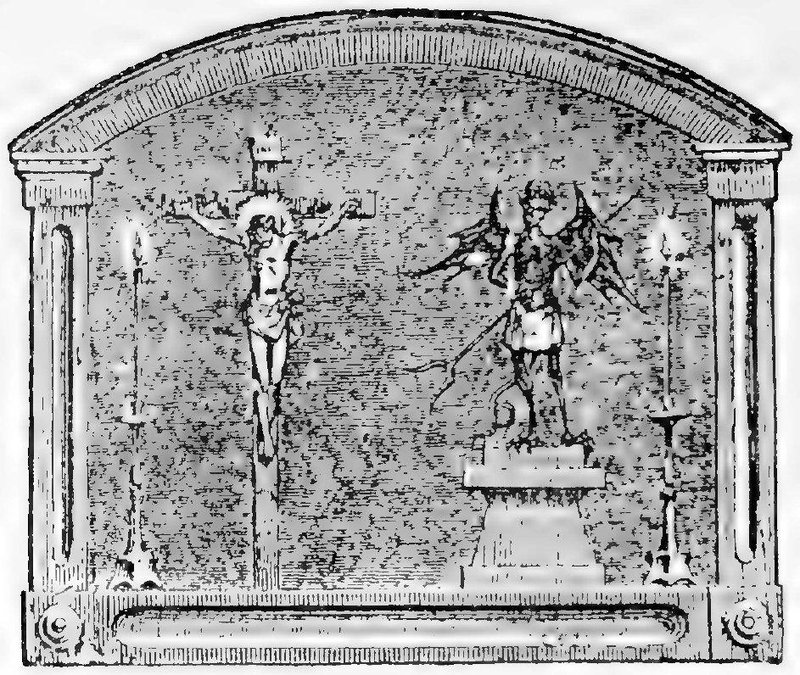
Plate XXX, figure 3. One candle to Jesus, another to the devil.
The way of life of most Christians is the one this figure shows: they burn one candle to Jesus and another to the devil. The one stands for the Mass, the Rosary, the Sacraments and the other Christian works they practice more or less often to honor Jesus Christ. The other stands for the sins they commit: gambling, dances, flirtations, immodest dress and so on. In the morning they go to Mass and to confession, and in the afternoon or evening to the dance, the theater and so on, where they commit mortal sins with full advertence and will. Woe to such people! No, my son, do not imitate them. Be a good Christian. Renew often the vows or promises made at Baptism, and keep them, so that you may go to heaven. For if you imitated them you would be damned with them, whether you think about it or not, whether you believe it or not.
Q. How are the merits of Jesus Christ applied to us?
A. By means of the Sacraments.
Q. What is a Sacrament?
A. It is a sensible thing which by divine institution has the power to signify and produce the grace it signifies.
Q. How many are the Sacraments of the Church?
A. Seven. The first, etc. (see the First Catechism above).
Q. Who instituted these Sacraments?
A. Christ our Lord, to give us his grace.
Q. What is grace?
A. A supernatural gift or divine being which makes us children of God and heirs of heaven.
Q. How many things are needed to make a Sacrament?
A. Three: matter, form, and a minister with the intention of doing what the Church does.
Q. How many kinds of Sacraments are there?
A. Two: of the living and of the dead.
Q. Which are those of the dead?
A. Baptism and Penance.
Q. Why are Baptism and Penance Sacraments of the dead?
A. Because they were instituted for those who are dead to the life of grace through original sin, or through mortal sin committed after Baptism.
Q. And if the soul receiving them is already in grace, what use are they to it?
A. They serve to increase it.
Q. Which are the Sacraments of the living?
A. The remaining five.
Q. Why are they called of the living?
A. Because they were instituted for those who are alive through grace.
Q. Would one who received a Sacrament of the living unworthily obtain the increase of grace?
A. No; he would commit a horrible sacrilege.
Q. Do the Sacraments, both of the living and of the dead, always give grace to those who receive them?
A. They always give it to those who receive them with the proper dispositions.
Q. Can all the Sacraments be received many times?
A. Not all, for Baptism, Confirmation and Orders can be received only once.
Q. Why?
A. Because they imprint a character.
Q. What is a sacramental character?
A. It is a spiritual and indelible seal imprinted on the soul.
Q. What use is the character in the next life?
A. In heaven it serves for honor and glory, and in hell for shame and torment.
Q. Are all the Sacraments equally necessary?
A. No. To enter heaven Baptism is absolutely necessary for all, and Penance for those who have sinned mortally after Baptism.
Q. What is the sacrament of Baptism?
A. It is a Sacrament by which we are born spiritually and are made Christians, children of God and of his Church.
Q. What is the matter of Baptism?
A. In ordinary Baptism, consecrated water; and in case of necessity, natural water.
Q. What is the form?
A. The words: I baptize thee in the name of the Father, and of the Son, and of the Holy Ghost.
Q. By whom and when must these words be spoken?
A. They must be spoken by the person baptizing, at the same time as he pours the water on the child’s head.
Q. Who is the ordinary minister of Baptism?
A. The parish priest, and any priest with his leave.
Q. And in case of necessity, who may baptize?
A. Any man or woman who knows how to do it; and he must have the intention of doing what the Church does.
Q. What effects does Baptism produce?
A. It makes the person become a child of God and heir of heaven; and all sins are taken from him, original sin, and actual sins if he is an adult.
Q. What further effects does Baptism produce?
A. The soul is adorned with grace, virtues and heavenly gifts; and moreover a character is imprinted on it.
Q. When Baptism takes away original sin, does it also take away the effects that concern the body?
A. No, because God wants the baptized person to remain subject to them, so that he may be humble, practice the virtues and have a constant reminder of original sin.
Q. What are the effects of original sin on the body?
A. Miseries, illnesses and death.
Q. Can one who is not baptized receive the other Sacraments?
A. No, because Baptism is as it were the door of the Church.
Q. What did you bind yourself to in the act of receiving Baptism?
A. To follow or imitate Jesus Christ, to profess his faith and to keep his holy law, even at the risk, if need be, of losing my life, as so many Martyrs have done.
Q. And what things did you renounce?
A. Through my godparents I renounced Satan, all his works and all his pomps.
Q. Are we obliged to keep the promises our godparents made for us?
A. Yes, because God received us into his friendship and grace on this condition.
Q. Why are children not allowed into the church before they are baptized?
A. Because through original sin they are slaves of Satan.
Q. Why is the one to be baptized given the name of some Saint?
A. So that he may have him as patron and imitate his virtues.
Q. What does the salt put in his mouth signify?
A. That the grace of Baptism preserves from the corruption of sin.
Q. What does the water signify?
A. That the grace of Baptism washes us from all sin.
Q. What does the white cap signify?
A. The purity of life we must keep.
Q. What does the lighted candle signify?
A. The light of good example we must give.
Q. What do the crosses made with the holy oils signify?
A. That we must live as Christians.