Works › The Paradise of the Soul
Volume 37 · ≈ pp. 505–506
Chapter XXXVIII. On Maceration.
A marker with ≈ is an approximate page boundary, placed by measure of the text; the page photographs remain the authority. In the paired views, clicking a page marker brings that page into view.
Caput XXXVIII.
De Maceratione.
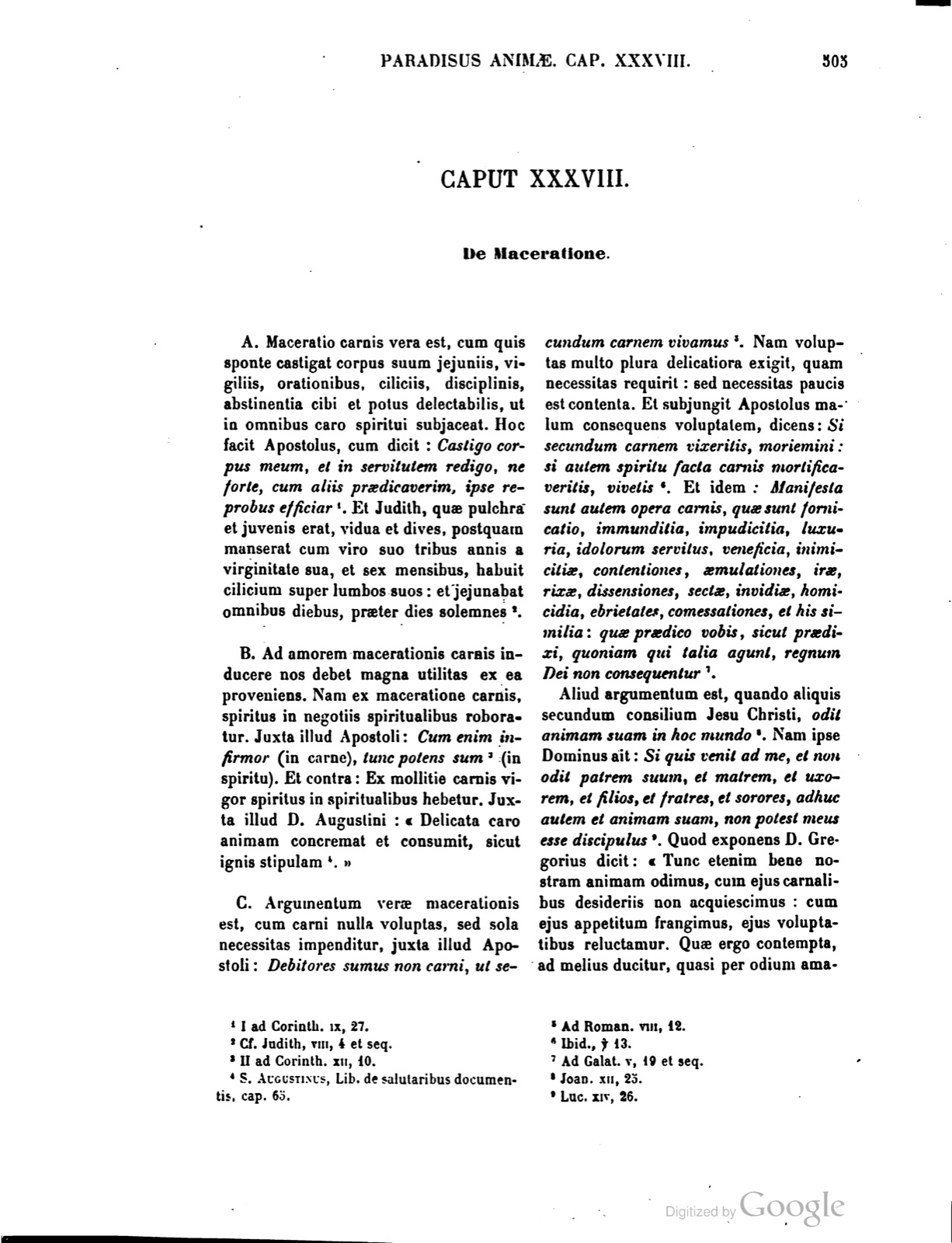
A. Maceratio carnis vera est, cum quis sponte castigat corpus suum jejuniis, vigiliis, orationibus, ciliciis, disciplinis, abstinentia cibi et potus delectabilis, ut in omnibus caro spiritui subjaceat. Hoc facit Apostolus, cum dicit: Castigo corpus meum, et in servitutem redigo, ne forte, cum aliis praedicaverim, ipse reprobus efficiar 1. Et Judith, quae pulchra et juvenis erat, vidua et dives, postquam manserat cum viro suo tribus annis a virginitate sua, et sex mensibus, habuit cilicium super lumbos suos: et jejunabat omnibus diebus, praeter dies solemnes 2.
B. Ad amorem macerationis carnis inducere nos debet magna utilitas ex ea proveniens. Nam ex maceratione carnis, spiritus in negotiis spiritualibus roboratur. Juxta illud Apostoli: Cum enim infirmor, in carne, tunc potens sum, in spiritu 3. Et contra: Ex mollitie carnis vigor spiritus in spiritualibus hebetur. Juxta illud D. Augustini: "Delicata caro animam concremat et consumit, sicut ignis stipulam 4."
C. Argumentum verae macerationis est, cum carni nulla voluptas, sed sola necessitas impenditur, juxta illud Apostoli: Debitores sumus non carni, ut secundum carnem vivamus 5. Nam voluptas multo plura delicatiora exigit, quam necessitas requirit: sed necessitas paucis est contenta. Et subjungit Apostolus malum consequens voluptatem, dicens: Si secundum carnem vixeritis, moriemini: si autem spiritu facta carnis mortificaveritis, vivetis 6. Et idem: Manifesta sunt autem opera carnis, quae sunt fornicatio, immunditia, impudicitia, luxuria, idolorum servitus, veneficia, inimicitiae, contentiones, aemulationes, irae, rixae, dissensiones, sectae, invidiae, homicidia, ebrietates, comessationes, et his similia: quae praedico vobis, sicut praedixi, quoniam qui talia agunt, regnum Dei non consequentur 7.
Chapter XXXVIII.
On Maceration.
A. True maceration of the flesh exists when someone voluntarily chastises his body with fasts, vigils, prayers, hair-shirts, disciplines, abstinence from delightful food and drink, so that in all things the flesh may be subject to the spirit. The Apostle does this when he says: I chastise my body and reduce it into servitude, lest perhaps, when I have preached to others, I myself should be made reprobate 1. And Judith, who was beautiful and young, widowed and rich, after she had remained with her husband three years from her virginity and six months, had a hair-shirt over her loins and fasted on all days except solemn days 2.
B. The great usefulness arising from it ought to induce us to love of maceration of the flesh. For from maceration of the flesh the spirit is strengthened in spiritual business. According to that saying of the Apostle: For when I am weak, in the flesh, then I am powerful, in the spirit 3. And conversely, from softness of the flesh the vigor of the spirit is dulled in spiritual things. According to that saying of St. Augustine: "Delicate flesh burns up and consumes the soul, as fire consumes straw 4."
C. The proof of true maceration is when no pleasure but only necessity is expended upon the flesh, according to that saying of the Apostle: We are debtors not to the flesh, that we should live according to the flesh 5. For pleasure demands many more delicate things than necessity requires, but necessity is content with few. And the Apostle adds the evil following upon pleasure, saying: If you live according to the flesh, you will die; but if by the spirit you put to death the deeds of the flesh, you will live 6. And the same says: The works of the flesh are manifest, which are fornication, uncleanness, immodesty, luxury, service of idols, sorceries, enmities, contentions, rivalries, angers, quarrels, dissensions, sects, envies, homicides, drunkennesses, feastings, and things similar to these; I proclaim these to you, as I have foretold, that those who do such things will not obtain the kingdom of God 7.
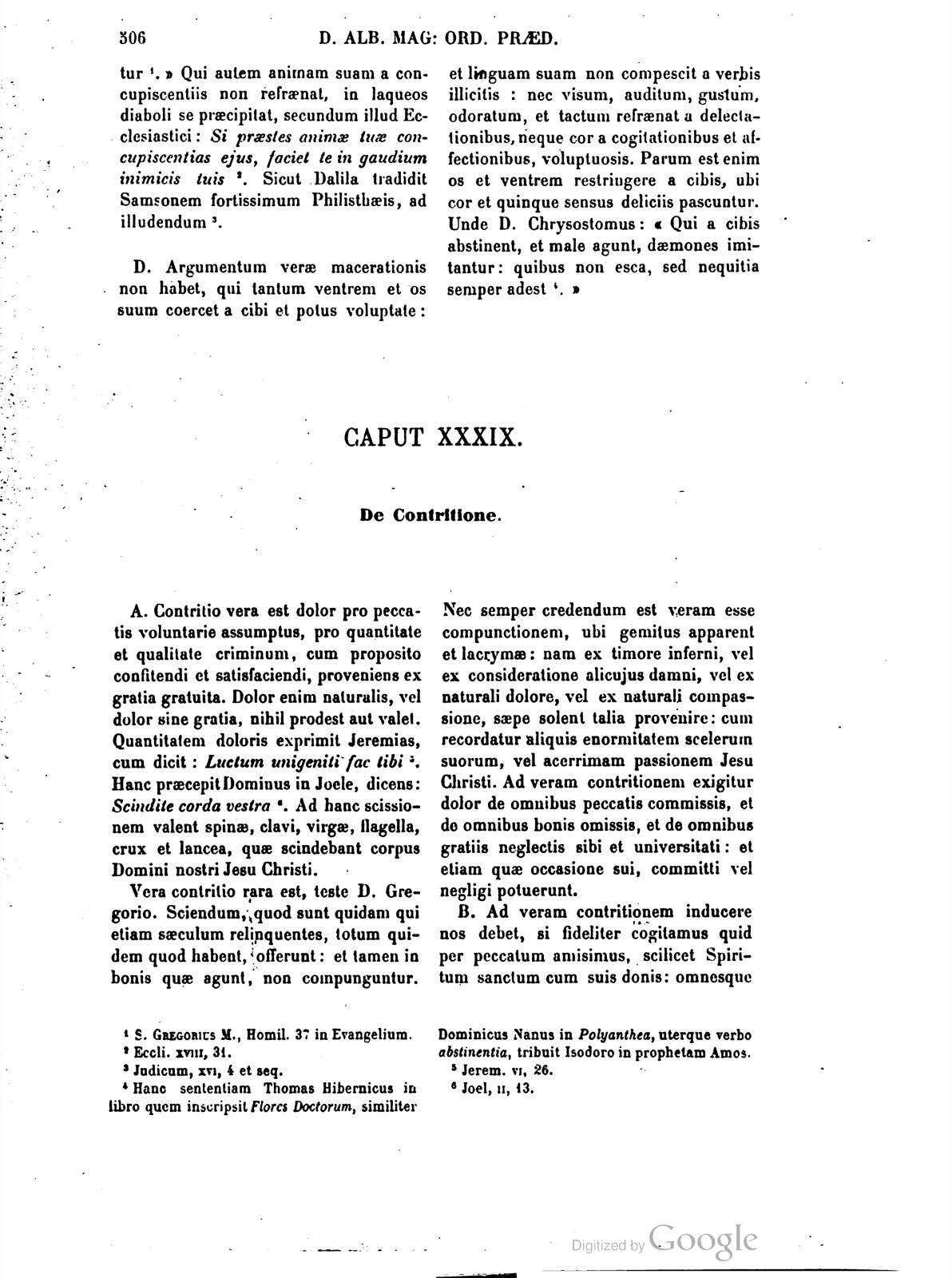
Aliud argumentum est, quando aliquis secundum consilium Jesu Christi, odit animam suam in hoc mundo 8. Nam ipse Dominus ait: Si quis venit ad me, et non odit patrem suum, et matrem, et uxorem, et filios, et fratres, et sorores, adhuc autem et animam suam, non potest meus esse discipulus 9. Quod exponens D. Gregorius dicit: "Tunc etenim bene nostram animam odimus, cum ejus carnalibus desideriis non acquiescimus: cum ejus appetitum frangimus, ejus voluptatibus reluctamur. Quae ergo contempta, ad melius ducitur, quasi per odium amatur 10." Qui autem animam suam a concupiscentiis non refraenat, in laqueos diaboli se praecipitat, secundum illud Ecclesiastici: Si praestes animae tuae concupiscentias ejus, faciet te in gaudium inimicis tuis 11. Sicut Dalila tradidit Samsonem fortissimum Philisthaeis, ad illudendum 12.
D. Argumentum verae macerationis non habet, qui tantum ventrem et os suum coercet a cibi et potus voluptate: et linguam suam non compescit a verbis illicitis: nec visum, auditum, gustum, odoratum, et tactum refraenat a delectationibus, neque cor a cogitationibus et affectionibus, voluptuosis. Parum est enim os et ventrem restringere a cibis, ubi cor et quinque sensus deliciis pascuntur. Unde D. Chrysostomus: "Qui a cibis abstinent, et male agunt, daemones imitantur: quibus non esca, sed nequitia semper adest 13."
Another proof exists when someone, according to the counsel of Jesus Christ, hates his soul in this world 8. For the Lord himself says: If anyone comes to me and does not hate his father and mother and wife and children and brothers and sisters, and still also his own soul, he cannot be my disciple 9. St. Gregory, explaining this, says: "For then we hate our soul well, when we do not acquiesce in its carnal desires, when we break its appetite and resist its pleasures. Therefore it, being despised, is led to what is better, and is, as it were, loved through hatred 10." But he who does not restrain his soul from concupiscences throws himself into the snares of the devil, according to that saying of Ecclesiasticus: If you grant your soul its concupiscences, it will make you a joy to your enemies 11. Thus Delilah handed over the strongest Samson to the Philistines to be mocked 12.
D. He does not have the proof of true maceration who restrains only his belly and mouth from the pleasure of food and drink, and does not restrain his tongue from illicit words; nor restrains sight, hearing, taste, smell, and touch from delights, nor the heart from voluptuous thoughts and affections. For it is little to restrict mouth and belly from foods where the heart and five senses are fed with delights. Hence St. Chrysostom says: "Those who abstain from foods and act badly imitate demons, to whom food is not present, but wickedness is always present 13."
Notes
- 1 Corinthians 9:27. (I ad Corinth. IX, 27.) ↩
- Compare Judith 8:4 and following. (Cf. Judith VIII, 4 et seq.) ↩
- 2 Corinthians 12:10. (II ad Corinth. XII, 10.) ↩
- St. Augustine, Book on Saving Teachings, chapter 65. (S. Augustinus, Lib. de salutaribus documentis, cap. 65.) ↩
- Romans 8:12. (Ad Roman. VIII, 12.) ↩
- The same, verse 13. (Ibid., v. 13.) ↩
- Galatians 5:19 and following. (Ad Galat. V, 19 et seq.) ↩
- John 12:25. (Joan. XII, 25.) ↩
- Luke 14:26. (Luc. XIV, 26.) ↩
- St. Gregory the Great, Homily 37 on the Gospel. (S. Gregorius M., Homil. 37 in Evangelium.) ↩
- Ecclesiasticus 18:31. (Eccli. XVIII, 31.) ↩
- Judges 16:4 and following. (Judicum XVI, 4 et seq.) ↩
- Thomas Hibernicus, in the book he entitled Flowers of the Doctors, and similarly Dominicus Nanus in the Polyanthea, both under the word abstinence, attribute this sentence to Isidore on the prophet Amos. (Hanc sententiam Thomas Hibernicus in libro quem inscripsit Flores Doctorum, similiter Dominicus Nanus in Polyanthea, uterque verbo abstinentia, tribuit Isidoro in prophetam Amos.) ↩
If a page does not appear, its photograph has not been uploaded yet.