Works › The Paradise of the Soul
Volume 37 · ≈ pp. 500–501
Chapter XXXV. On Congratulation.
A marker with ≈ is an approximate page boundary, placed by measure of the text; the page photographs remain the authority. In the paired views, clicking a page marker brings that page into view.
Caput XXXV.
De Congratulatione.
A. Congratulatio vera ad Deum est congaudere Deo in omni beatitudine et perfectione sibi innata aeternaliter. Videlicet de omnipotentia, sapientia, bonitate, etc. Et quod nullius indiget, sed quod sibi ipsi sufficit, et omnibus creaturis.
Item, Congaudere Deo de ordinatione coeli et terrae, et omnium quae in eis sunt: et de omnibus operibus suis, a principio mundi usque ad finem saeculi: praecipue de operibus incarnationis ejus, circumcisionis, passionis, resurrectionis, ascensionis, Spiritus sancti missionis. Et de omnibus judiciis, manifestis et occultis, circa daemones, circa animas in inferno, in limbo, in purgatorio, et circa malos homines in mundo.
Item, Congaudere Deo quidquid laudis et reverentiae habet ab Angelis et sanctis in caelo, et ab hominibus in terra.
Item, Vera congratulatio ad proximos est congaudere singulis Angelis et sanctis de gloria in coelo. Item, peccatoribus de conversione: justis de confortatione et gratiarum conservatione: Ecclesiae de sacramentis et donis Spiritus sancti. Et congaudere omnibus sanctis hominibus in Ecclesia et in terra: scilicet B. V. Mariae, Patriarchis et Prophetis, Apostolis et singulis electis, de donis perceptis et percipiendis singulis a Deo.
B. Ad veram congratulationem inducere nos debet maxima utilitas ex ea proveniens. Nam quidquid Deus omnipotens perfectionis, bonitatis, et beatitudinis in se naturaliter habet: quidquid gloriae Angeli et sancti in caelo: quidquid gratiae et virtutis in Ecclesia, et fideles habent in ea, hoc totum proprium fit unicuique per congratulationem.
Chapter XXXV.
On Congratulation.
A. True congratulation toward God is to rejoice together with God in every blessedness and perfection innately his eternally: namely concerning omnipotence, wisdom, goodness, and so on, and that he needs no one, but suffices for himself and for all creatures.
Likewise, to rejoice together with God concerning the ordering of heaven and earth and of all things which are in them, and concerning all his works from the beginning of the world until the end of the age, especially concerning the works of his incarnation, circumcision, passion, resurrection, ascension, and the sending of the Holy Spirit, and concerning all judgments, manifest and hidden, about demons, about souls in hell, in limbo, in purgatory, and about evil human beings in the world.
Likewise, to rejoice together with God over whatever praise and reverence he has from angels and saints in heaven, and from human beings on earth.
Likewise, true congratulation toward neighbors is to rejoice together with individual angels and saints concerning glory in heaven. Likewise, with sinners concerning conversion; with the just concerning strengthening and the preservation of graces; with the Church concerning the sacraments and gifts of the Holy Spirit. And to rejoice together with all holy human beings in the Church and on earth, namely the blessed Virgin Mary, the Patriarchs and Prophets, the Apostles and each of the elect, concerning gifts received and to be received by each from God.
B. The greatest usefulness arising from it ought to induce us to true congratulation. For whatever of perfection, goodness, and blessedness almighty God naturally has in himself, whatever of glory the angels and saints have in heaven, whatever of grace and virtue in the Church and the faithful have in it, all this becomes proper to each person through congratulation.
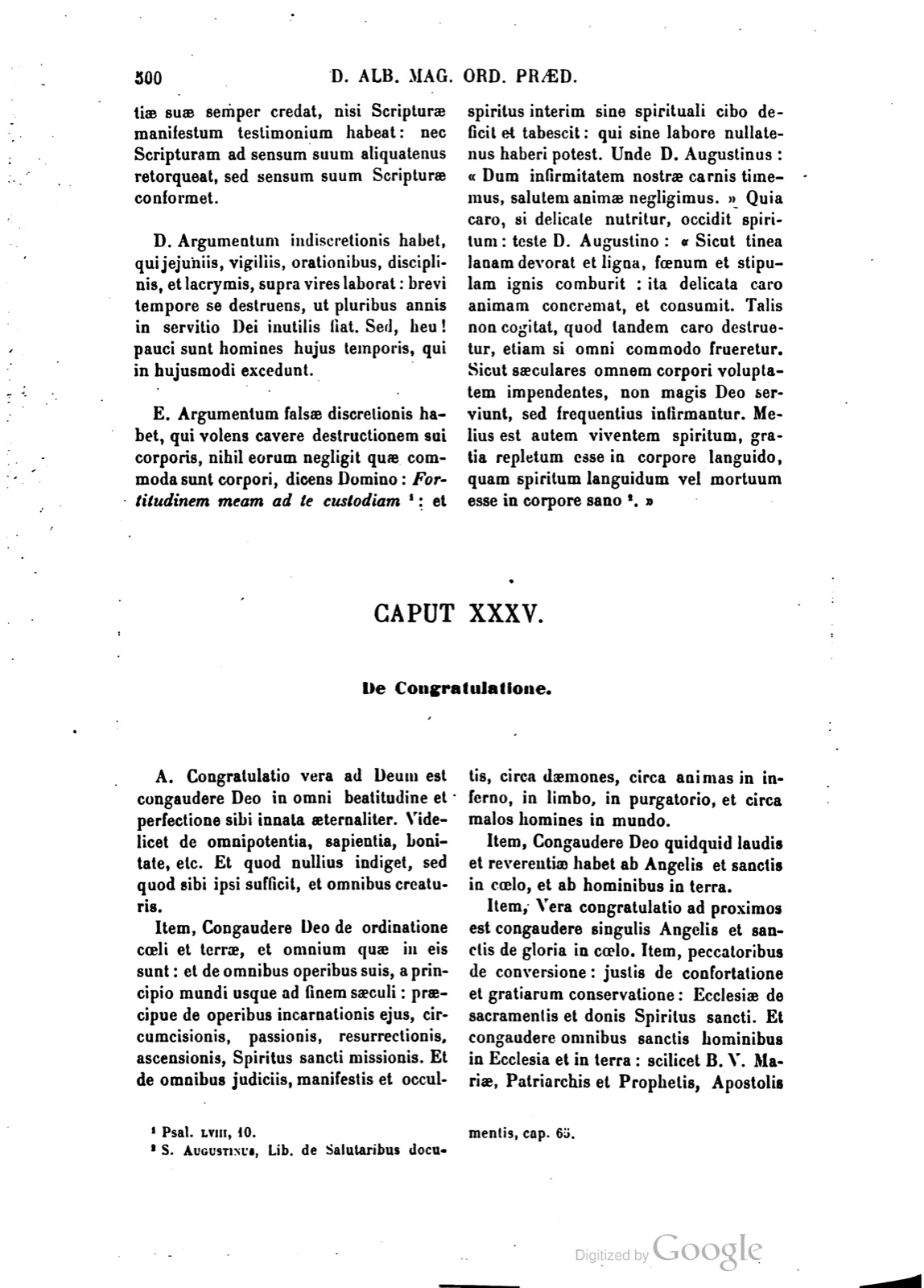
Ad idem nos inducere debet, quod congratulatio Patris, Filii, et Spiritus sancti, origo est omnium creaturarum. Et semper fuit, et nunc est principium omnium operum divinorum.
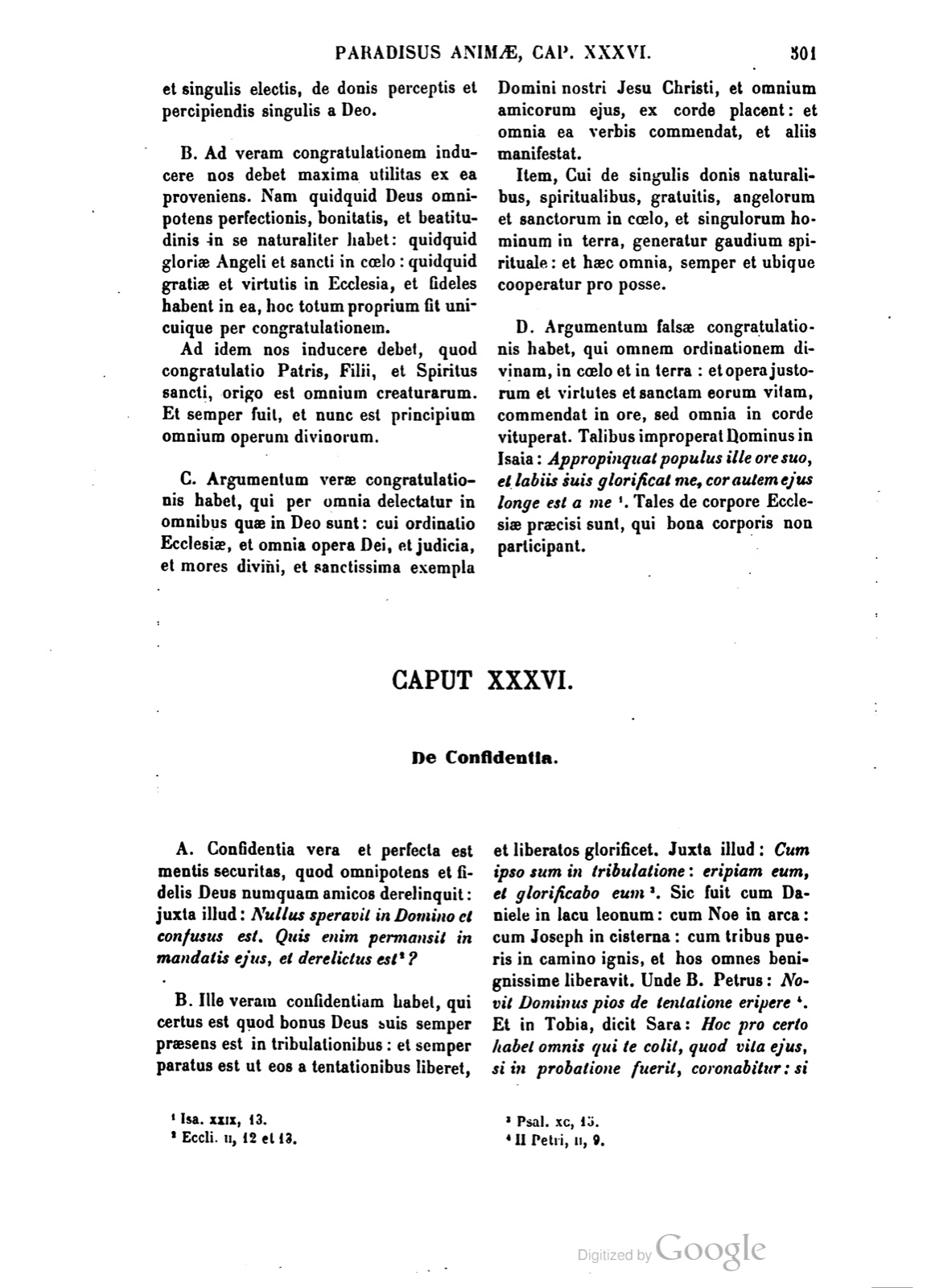
C. Argumentum verae congratulationis habet, qui per omnia delectatur in omnibus quae in Deo sunt: cui ordinatio Ecclesiae, et omnia opera Dei, et judicia, et mores divini, et sanctissima exempla Domini nostri Jesu Christi, et omnium amicorum ejus, ex corde placent: et omnia ea verbis commendat, et aliis manifestat.
Item, Cui de singulis donis naturalibus, spiritualibus, gratuitis, angelorum et sanctorum in caelo, et singulorum hominum in terra, generatur gaudium spirituale: et haec omnia, semper et ubique cooperatur pro posse.
D. Argumentum falsae congratulationis habet, qui omnem ordinationem divinam, in caelo et in terra: et opera justorum et virtutes et sanctam eorum vitam, commendat in ore, sed omnia in corde vituperat. Talibus improperat Dominus in Isaia: Appropinquat populus ille ore suo, et labiis suis glorificat me, cor autem ejus longe est a me 1. Tales de corpore Ecclesiae praecisi sunt, qui bona corporis non participant.
This ought to induce us to the same, that the congratulation of the Father, Son, and Holy Spirit is the origin of all creatures. And it always has been, and now is, the beginning of all divine works.
C. He has the proof of true congratulation who delights through all things in all things that are in God; to whom the ordering of the Church, all the works of God, judgments, divine manners, and the most holy examples of our Lord Jesus Christ and of all his friends are pleasing from the heart; and he commends all these things in words and manifests them to others.
Likewise, he to whom spiritual joy is generated from each natural, spiritual, and gratuitous gift of angels and saints in heaven, and of individual human beings on earth; and he always and everywhere cooperates with all these things as far as he can.
D. He has the proof of false congratulation who commends with the mouth every divine ordering in heaven and on earth, and the works of the just and their virtues and holy life, but reviles all these things in the heart. The Lord reproaches such persons in Isaiah: That people draws near with its mouth, and with its lips glorifies me, but its heart is far from me 1. Such persons are cut off from the body of the Church, and they do not share in the goods of the body.
Notes
- Isaiah 29:13. (Isa. XXIX, 13.) ↩
If a page does not appear, its photograph has not been uploaded yet.