Works › The Paradise of the Soul
Volume 37 · ≈ pp. 457–459
Chapter VI. On Chastity.
A marker with ≈ is an approximate page boundary, placed by measure of the text; the page photographs remain the authority. In the paired views, clicking a page marker brings that page into view.
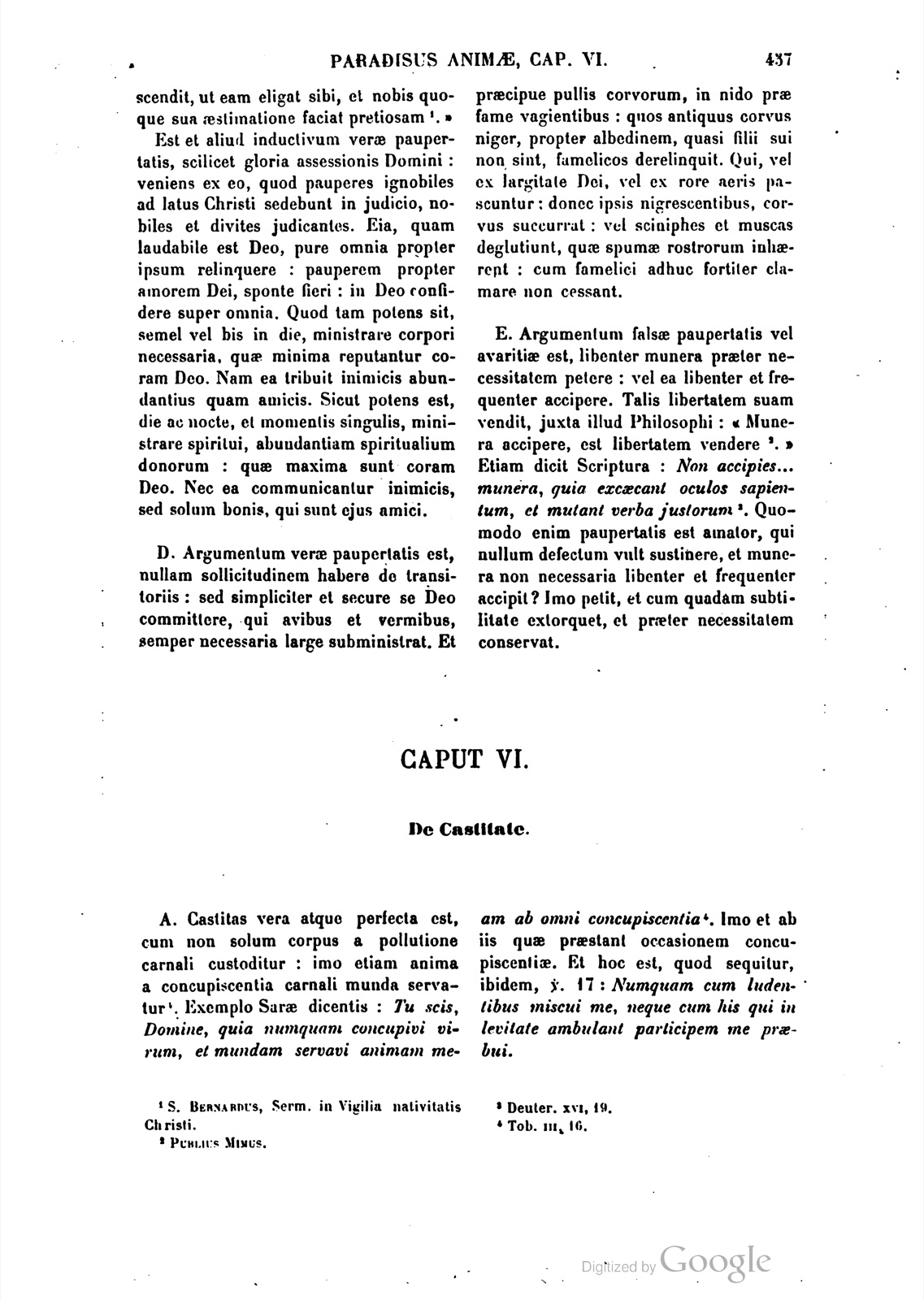
Caput VI.
De Castitate.
A. Castitas vera atque perfecta est, cum non solum corpus a pollutione carnali custoditur: imo etiam anima a concupiscentia carnali munda servatur 18. Exemplo Sarae dicentis: Tu scis, Domine, quia numquam concupivi virum, et mundam servavi animam meam ab omni concupiscentia 19. Imo et ab iis quae praestant occasionem concupiscentiae. Et hoc est, quod sequitur, ibidem, x, 17: Numquam cum ludentibus miscui me, neque cum his qui in levitate ambulant participem me praebui.
B. Ille vere castitatem amat, qui potius per castitatem virginalem (si possibile esset) modicam eligeret gratiam in praesenti, et gloriam in futuro propter conformitatem Christi Jesu: quam si mereri posset gratiam et gloriam majorem per debitum conjugale.
C. Ad amorem castitatis inducere nos debet exemplum Domini nostri Jesu Christi, matris ejus, et sanctarum virginum: quae olim pro conservatione castitatis, regna mundi contempserunt, et vitam sponte perdiderunt. Sicut B. Agnes, Catharina, Agatha, et aliae innumerabiles his similes. Et praecipue castitas mulierum ac virginum paganorum, de quibus scribit D. Hieronymus, quod mortem elegerunt, ut pudicitiam servarent 20. Item, munditia et libertas, castitatem sequentes, inducere nos debent et invitare ad castitatem. Item, gloria castitati a Domino nostro Jesu Christo promissa. Qui vicerit, inquit, (scilicet carnis concupiscentiam) dabo ei sedere mecum in throno meo: sicut et ego vici, et sedi cum Patre meo in throno ejus 21. Nam incorruptio facit esse proximum Deo 22.
Chapter VI.
On Chastity.
A. True and perfect chastity exists when not only the body is guarded from carnal pollution, but indeed also the soul is kept clean from carnal concupiscence 18. After the example of Sarah saying: You know, Lord, that I have never desired a man, and I have kept my soul clean from all concupiscence 19. Indeed also from those things that provide occasion for concupiscence. And this is what follows in the same place, 10:17: I never mixed myself with those playing, nor did I make myself a participant with those who walk in levity.
B. He truly loves chastity who, through virginal chastity, if it were possible, would rather choose a moderate grace in the present and glory in the future because of conformity to Christ Jesus than if he could merit greater grace and glory through the debt of marriage.
C. The example of our Lord Jesus Christ, of his mother, and of the holy virgins ought to induce us to love of chastity; they formerly, for the preservation of chastity, despised the kingdoms of the world and of their own accord lost life. Such were blessed Agnes, Catherine, Agatha, and countless others like these. And especially the chastity of pagan women and virgins, concerning whom D. Jerome writes that they chose death so that they might preserve modesty 20. Likewise, the cleanness and liberty following chastity ought to induce and invite us to chastity. Likewise, the glory promised to chastity by our Lord Jesus Christ: He who conquers, he says, namely the concupiscence of the flesh, I will grant to sit with me on my throne, as I also conquered and sat with my Father on his throne 21. For incorruption makes one be next to God 22.
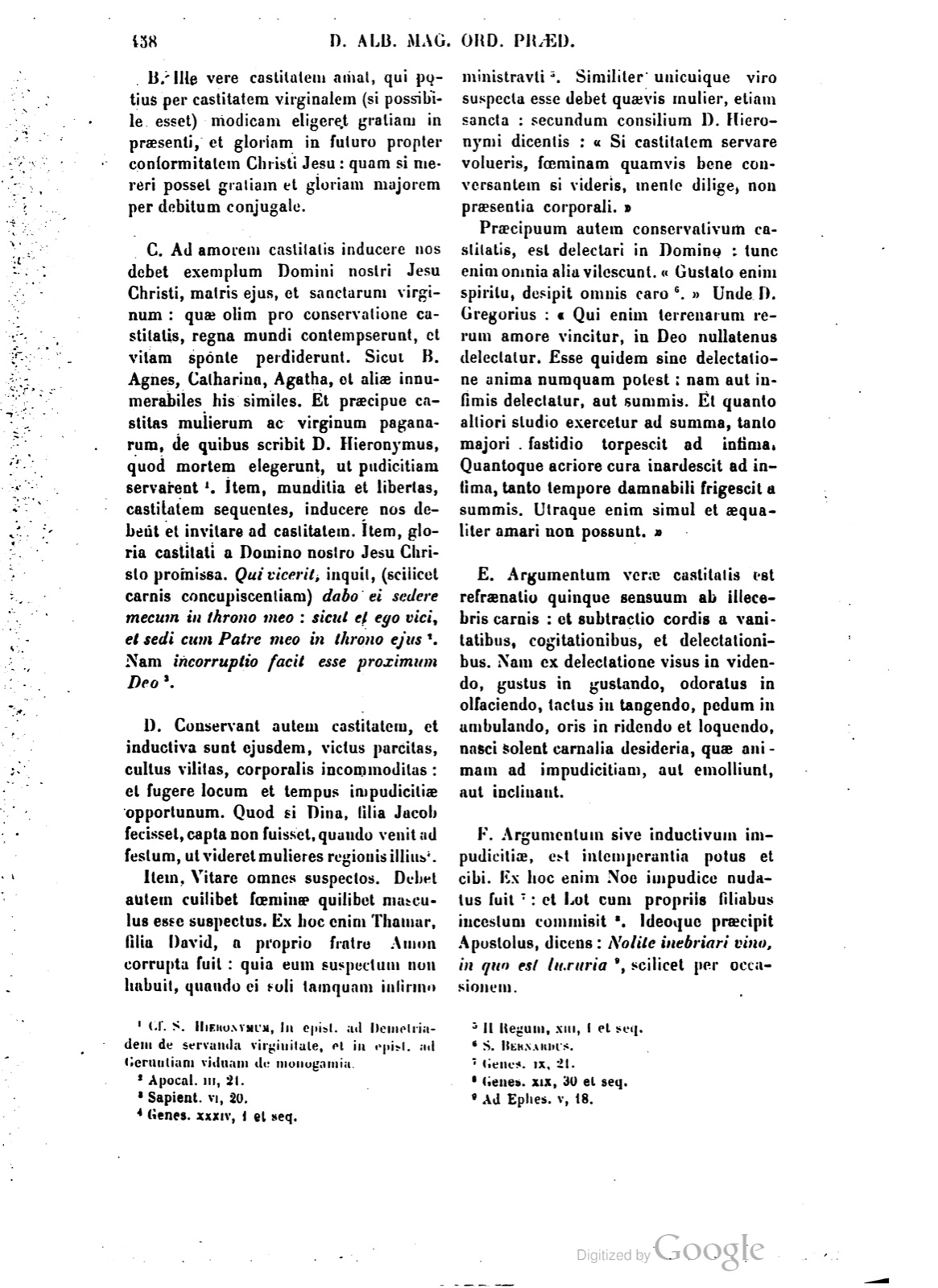
D. Conservant autem castitatem, et inductiva sunt ejusdem, victus parcitas, cultus vilitas, corporalis incommoditas: et fugere locum et tempus impudicitiae opportunum. Quod si Dina, filia Jacob fecisset, capta non fuisset, quando venit ad festum, ut videret mulieres regionis illius 23. Item, Vitare omnes suspectos. Debet autem cuilibet foeminae quilibet masculus esse suspectus. Ex hoc enim Thamar, filia David, a proprio fratre Amon corrupta fuit: quia eum suspectum non habuit, quando ei soli tamquam infirmo ministravit 24. Similiter unicuique viro suspecta esse debet quaevis mulier, etiam sancta: secundum consilium D. Hieronymi dicentis: « Si castitatem servare volueris, foeminam quamvis bene conversantem si videris, mente dilige, non praesentia corporali. »
Praecipuum autem conservativum castitatis, est delectari in Domino: tunc enim omnia alia vilescunt. « Gustato enim spiritu, desipit omnis caro 25. » Unde D. Gregorius: « Qui enim terrenarum rerum amore vincitur, in Deo nullatenus delectatur. Esse quidem sine delectatione anima numquam potest: nam aut infimis delectatur, aut summis. Et quanto altiori studio exercetur ad summa, tanto majori fastidio torpescit ad infima. Quantoque acriore cura inardescit ad infima, tanto tempore damnabili frigescit a summis. Utraque enim simul et aequaliter amari non possunt. »
E. Argumentum verae castitatis est refraenatio quinque sensuum ab illecebris carnis: et subtractio cordis a vanitatibus, cogitationibus, et delectationibus. Nam ex delectatione visus in videndo, gustus in gustando, odoratus in olfaciendo, tactus in tangendo, pedum in ambulando, oris in ridendo et loquendo, nasci solent carnalia desideria, quae animam ad impudicitiam, aut emolliunt, aut inclinant.
D. What preserve chastity, and are inducements of the same, are spareness of food, vileness of dress, bodily discomfort, and fleeing place and time opportune for immodesty. If Dinah, daughter of Jacob, had done this, she would not have been captured when she came to the feast to see the women of that region 23. Likewise, one must avoid all suspect persons. Every male ought to be suspect to any female. For from this Tamar, daughter of David, was corrupted by her own brother Amnon, because she did not suspect him when she ministered to him alone as though to a sick man 24. Similarly any woman, even a holy one, ought to be suspect to each man, according to the counsel of D. Jerome saying: "If you wish to keep chastity, if you see a woman, however well-conducted, love her in mind, not by bodily presence."
But the chief preservative of chastity is to delight in the Lord; for then all other things grow worthless. "For once the spirit has been tasted, all flesh loses savor 25." Hence D. Gregory says: "For one who is conquered by love of earthly things is by no means delighted in God. Indeed the soul can never be without delight; for it is delighted either in the lowest things or in the highest. And the more it is exercised with higher zeal toward the highest things, the more it grows dull with greater distaste toward the lowest. And the more sharply it burns with care toward the lowest, the more in a damnable time it grows cold from the highest. For both cannot be loved simultaneously and equally."
E. The proof of true chastity is the restraint of the five senses from the enticements of the flesh, and the withdrawal of the heart from vanities, thoughts, and delights. For from delight of sight in seeing, of taste in tasting, of smell in smelling, of touch in touching, of feet in walking, of mouth in laughing and speaking, carnal desires are accustomed to be born, which either soften or incline the soul toward immodesty.
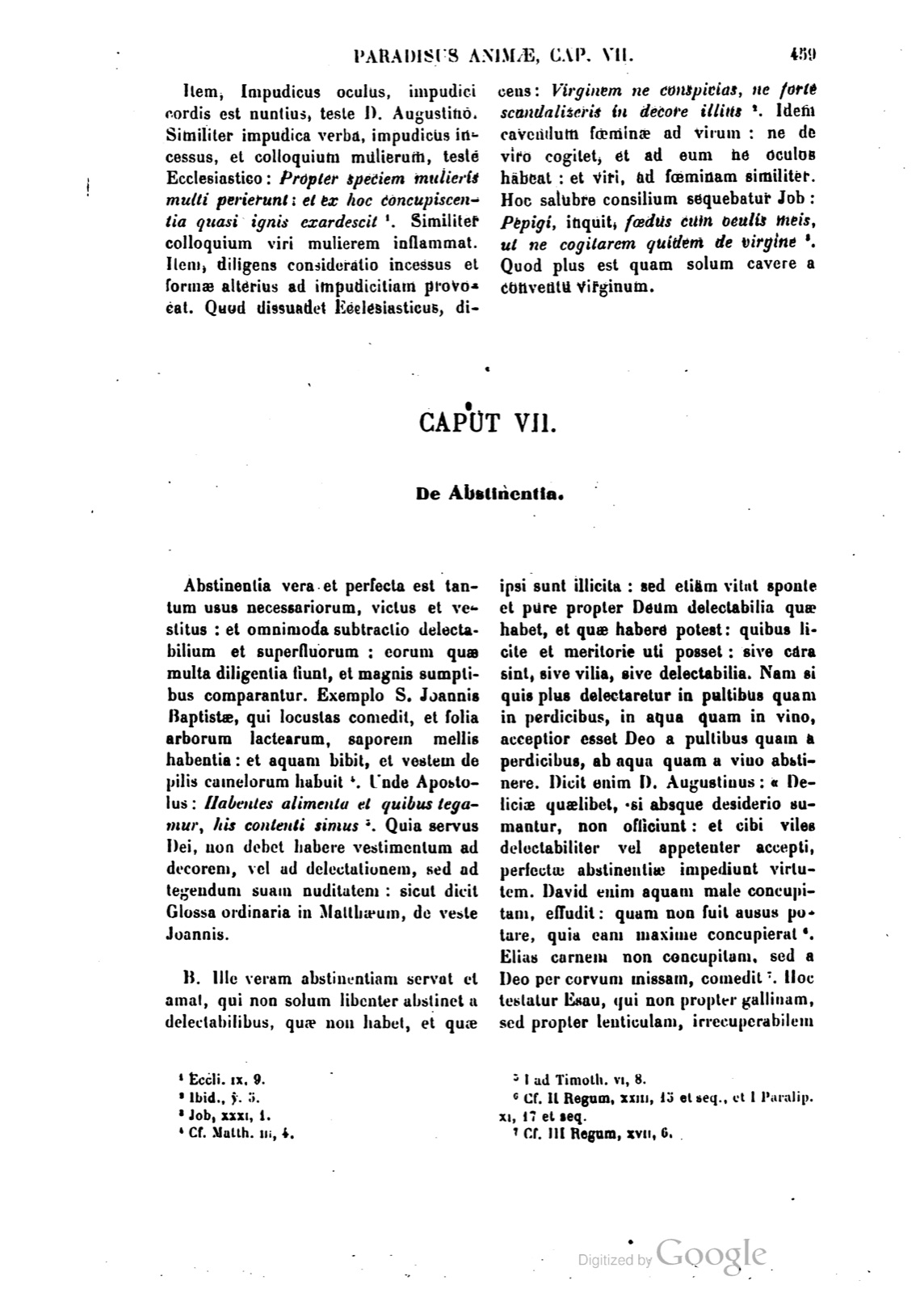
F. Argumentum sive inductivum impudicitiae, est intemperantia potus et cibi. Ex hoc enim Noe impudice nudatus fuit 26: et Lot cum propriis filiabus incestum commisit 27. Ideoque praecipit Apostolus, dicens: Nolite inebriari vino, in quo est luxuria 28, scilicet per occasionem.
Item, Impudicus oculus, impudici cordis est nuntius, teste D. Augustino. Similiter impudica verba, impudicus incessus, et colloquium mulierum, teste Ecclesiastico: Propter speciem mulieris multi perierunt: et ex hoc concupiscentia quasi ignis exardescit 15. Similiter colloquium viri mulierem inflammat.
Item, diligens consideratio incessus et formae alterius ad impudicitiam provocat. Quod dissuadet Ecclesiasticus, dicens: Virginem ne conspicias, ne forte scandalizeris in decore illius 16. Idem cavendum foeminae ad virum: ne de viro cogitet, et ad eum ne oculos habeat: et viri, ad foeminam similiter. Hoc salubre consilium sequebatur Job: Pepigi, inquit, foedus cum oculis meis, ut ne cogitarem quidem de virgine 17. Quod plus est quam solum cavere a conventu virginum.
F. The proof or inducement of immodesty is intemperance of drink and food. For from this Noah was immodestly made naked 26, and Lot committed incest with his own daughters 27. Therefore the Apostle commands, saying: Do not be drunk with wine, in which there is luxury 28, namely by occasion.
Likewise, an immodest eye is the messenger of an immodest heart, as D. Augustine testifies. Similarly immodest words, an immodest gait, and conversation with women, as Ecclesiasticus testifies: Because of the appearance of a woman many have perished, and from this concupiscence blazes up like fire 15. Similarly, conversation of a man inflames a woman.
Likewise, diligent consideration of the gait and form of another provokes to immodesty. Ecclesiasticus dissuades this, saying: Do not gaze at a virgin, lest perhaps you be scandalized by her beauty 16. The same thing must be guarded by a woman toward a man: that she not think about the man, and that she not have her eyes toward him; and likewise by a man toward a woman. Job followed this saving counsel: I made, he says, a covenant with my eyes, so that I would not even think about a virgin 17. This is more than merely guarding against the company of virgins.
Notes
- Matthew 5:46 and 47. (Matth. v, 46 et 47.) ↩
- Ecclesiasticus 13:19. (Eccli. XIII, 19.) ↩
- John 15:10. (Joan. XV, 10.) ↩
- Tobit 3:16. (Tob. III, 16.) ↩
- Tobit 3:16. (Tob. III, 16.) ↩
- Compare St. Jerome, in the letter to Demetrias on preserving virginity, and in the letter to the widow Geruntia on monogamy. (Cf. S. Hieronymum, In epist. ad Demetriadem de servanda virginitate, et in epist. ad Geruntiam viduam de monogamia.) ↩
- Revelation 3:21. (Apocal. III, 21.) ↩
- Wisdom 6:20. (Sapient. VI, 20.) ↩
- Genesis 34:1 and following. (Genes. XXXIV, 1 et seq.) ↩
- 2 Samuel 13:1 and following. (II Regum, XIII, 1 et seq.) ↩
- St. Bernard. (S. Bernardus.) ↩
- Genesis 9:21. (Genes. IX, 21.) ↩
- Genesis 19:30 and following. (Genes. XIX, 30 et seq.) ↩
- Ephesians 5:18. (Ad Ephes. V, 18.) ↩
- Ecclesiasticus 9:9. (Eccli. IX, 9.) ↩
- The same, verse 3. (Ibid., v. 3.) ↩
- Job 31:1. (Job, XXXI, 1.) ↩
- 1 Corinthians 10:32 and 33. (I ad Corinth. X, 32 et 33.) ↩
- Psalm 47, and 144:3. (Psal. XLVII, et CXLIV, 3.) ↩
- St. Augustine, Confessions, book 1, chapter 4. (S. Augustinus, Lib. I Confessionum, cap. 4.) ↩
- Genesis 16:12. (Genes. XVI, 12.) ↩
- Compare Zechariah 2:8. (Cf. Zachar. II, 8.) ↩
- Compare Matthew 27:51 and following. (Cf. Matth. XXVII, 51 et seq.) ↩
- 2 Corinthians 11:29. (II ad Corinth. XI, 29.) ↩
- Isaiah 53:4. (Isa. LIII, 4.) ↩
- 1 Corinthians 12:26. (I ad Corinth. XII, 26.) ↩
- Ecclesiasticus 7:38 and 39. (Eccli. VII, 38 et 39.) ↩
- 2 Timothy 2:12. (II ad Timoth. II, 12.) ↩
If a page does not appear, its photograph has not been uploaded yet.