Works › The Mariale: Questions on “Missus est”
Volume 37 · p. 174
Question 120. Whether it belongs to her that she is a Prophetess?
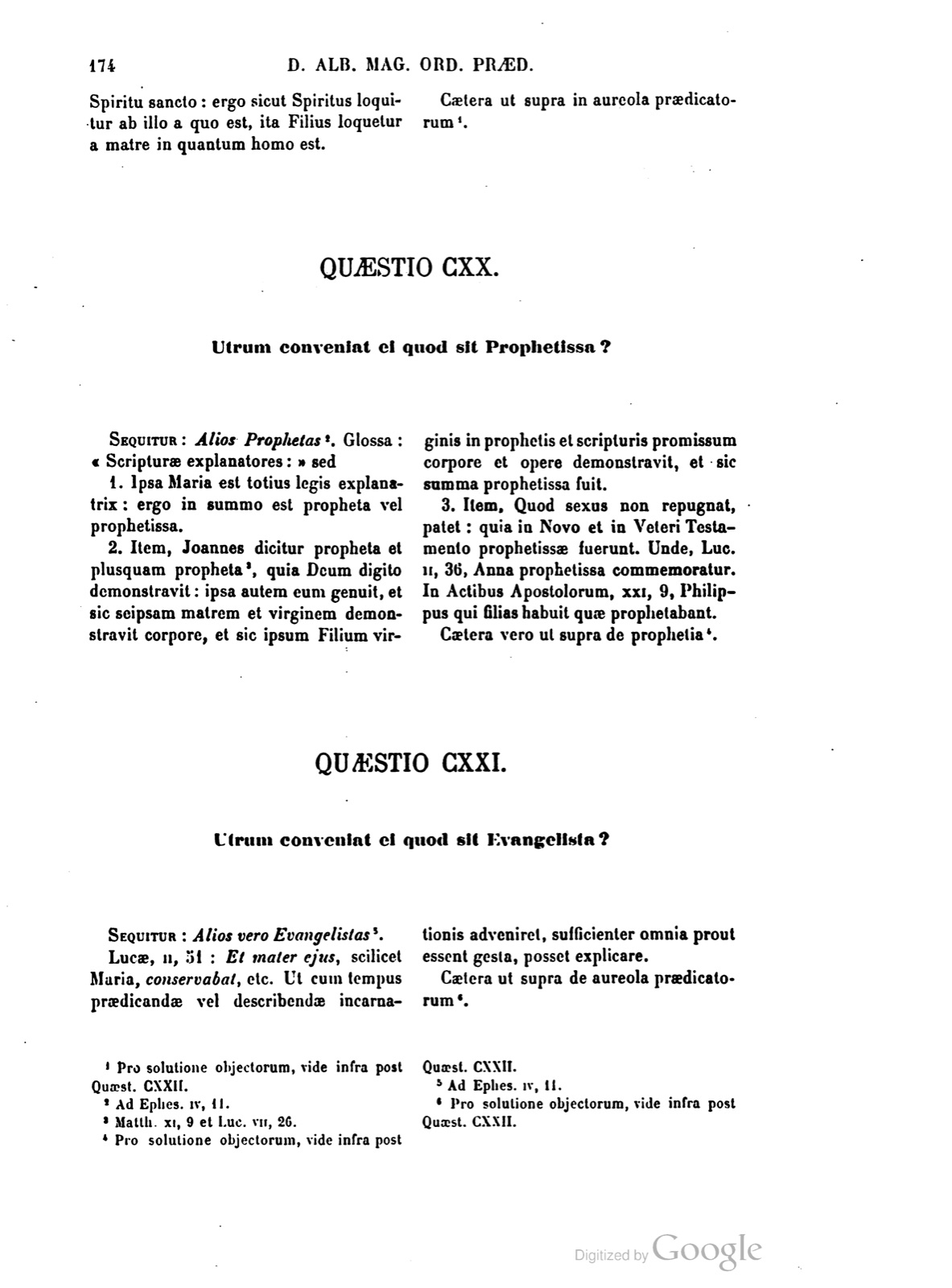
QUAESTIO CXX. Utrum conveniat ei quod sit Prophetissa?
Sequitur: Alios Prophetas 1. Glossa: « Scripturae explanatores: » sed
1. Ipsa Maria est totius legis explanatrix: ergo in summo est propheta vel prophetissa.
2. Item, Joannes dicitur propheta et plusquam propheta 2, quia Deum digito demonstravit: ipsa autem eum genuit, et sic seipsam matrem et virginem demonstravit corpore, et sic ipsum Filium virginis in prophetis et scripturis promissum corpore et opere demonstravit, et sic summa prophetissa fuit.
3. Item, Quod sexus non repugnat, patet: quia in Novo et in Veteri Testamento prophetissae fuerunt. Unde, Luc. II, 36, Anna prophetissa commemoratur. In Actibus Apostolorum, XXI, 9, Philippus qui filias habuit quae prophetabant.
Caetera vero ut supra de prophetia 3.
QUESTION 120. Whether it belongs to her that she is a Prophetess?
There follows: Others as Prophets 1. The Gloss says: “Expositors of Scripture.” But:
1. Mary herself is the expositor of the whole law. Therefore in the highest degree she is prophet or prophetess.
2. Likewise, John is called a prophet and more than a prophet 2, because he pointed out God with his finger. But she herself generated him, and so showed herself in body to be mother and virgin, and so in body and work showed the very Son of the virgin promised in the prophets and Scriptures, and thus she was the highest prophetess.
3. Likewise, that sex does not conflict with this is clear, because in the New and Old Testament there were prophetesses. Hence in Luke 2:36 Anna the prophetess is commemorated. In the Acts of the Apostles 21:9, Philip is mentioned, who had daughters who prophesied.
But the rest as above concerning prophecy 3.
If a page does not appear, its photograph has not been uploaded yet.