Works › The Mariale: Questions on “Missus est”
Volume 37 · p. 144
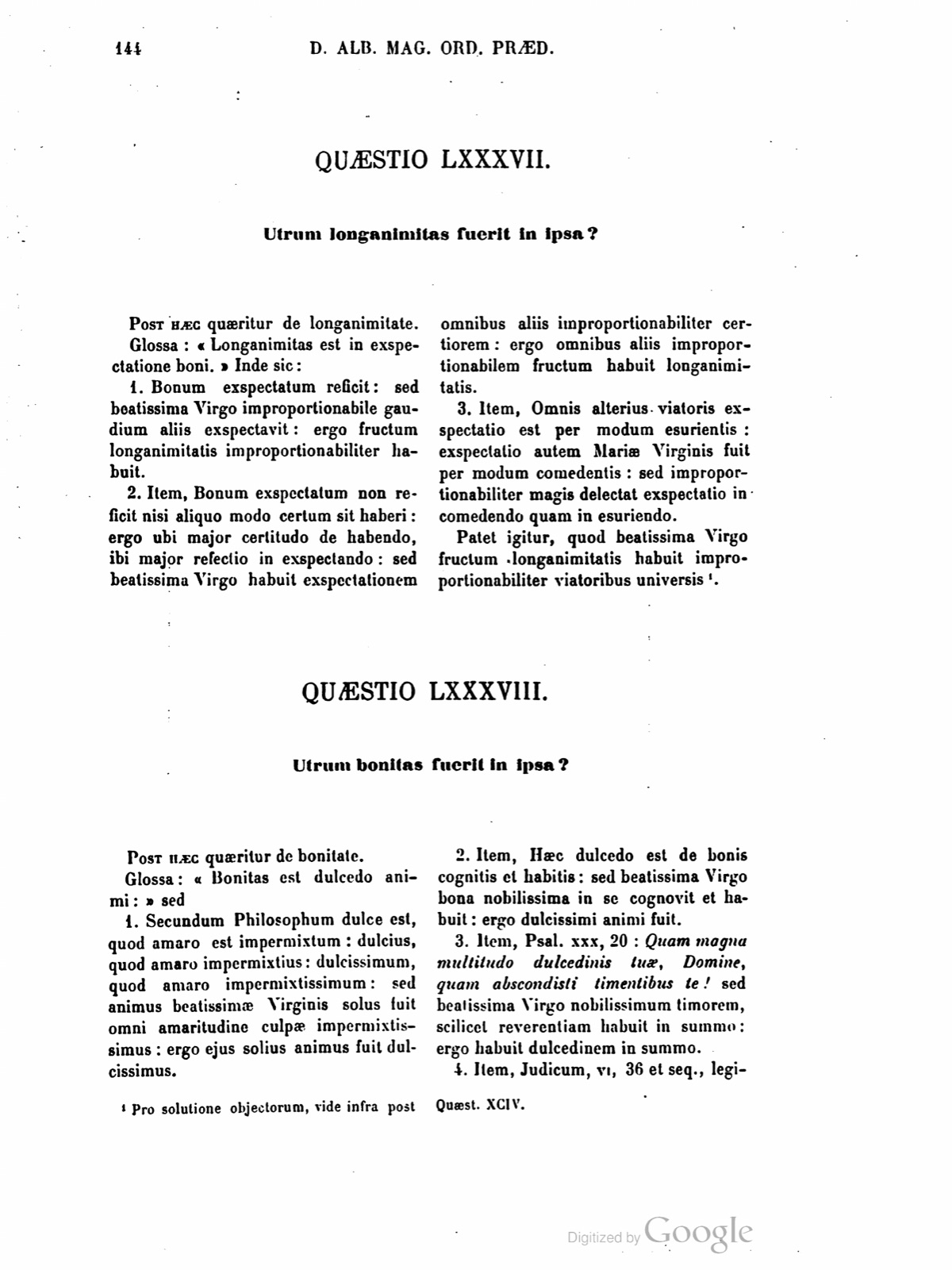
Question 88. Whether goodness was in her
QUAESTIO LXXXVIII.
Utrum bonitas fuerit in ipsa?
Post haec quaeritur de bonitate. Glossa: "Bonitas est dulcedo animi:" sed
1. Secundum Philosophum dulce est, quod amaro est impermixtum: dulcius, quod amaro impermixtius: dulcissimum, quod amaro impermixtissimum: sed animus beatissimae Virginis solus fuit omni amaritudine culpae impermixtissimus: ergo ejus solius animus fuit dulcissimus.
2. Item, Haec dulcedo est de bonis cognitis et habitis: sed beatissima Virgo bona nobilissima in se cognovit et habuit: ergo dulcissimi animi fuit.
3. Item, Psal. XXX, 20: Quam magna multitudo dulcedinis tuae, Domine, quam abscondisti timentibus te! sed beatissima Virgo nobilissimum timorem, scilicet reverentiam habuit in summo: ergo habuit dulcedinem in summo.
4. Item, Judicum, VI, 36 et seq., legitur
QUESTION 88.
Whether goodness was in her.
After these things inquiry is made concerning goodness. The Gloss says: "Goodness is sweetness of soul." But:
1. According to the Philosopher, sweet is what is unmixed with bitter; sweeter, what is more unmixed with bitter; sweetest, what is most unmixed with bitter. But the soul of the most blessed Virgin alone was most unmixed with every bitterness of fault; therefore her soul alone was sweetest.
2. Likewise, this sweetness is from goods known and possessed. But the most blessed Virgin knew and possessed the noblest goods in herself; therefore she was of the sweetest soul.
3. Likewise, Psalm 30:20: How great is the multitude of your sweetness, O Lord, which you have hidden for those who fear you! But the most blessed Virgin had the noblest fear, namely reverence, in the highest degree; therefore she had sweetness in the highest degree.
4. Likewise, Judges 6:36 and following, it is read
If a page does not appear, its photograph has not been uploaded yet.