Volume 37 · pp. 534–535
Chapter XI. How temptations are to be resisted, and how tribulations are to be sustained?
Caput XI. Qualiter tentationibus sit resistendum, et tribulationes qualiter sustinendae?
Proinde nemo accedens ad Deum vero et integro corde est, quin vexationibus et tentationibus probetur.
Idcirco in omnibus tentationibus vel hoc observetur, ut si sentiatur, non consentiatur, et patienter ac aequanimiter cum humilitate et longanimitate portetur. Si vero blasphemiae sint et turpissimae, hoc omnino firmiter teneas, quod nihil melius aut verius contra easdem facere potes, quam omnino hujusmodi phantasias pro nihilo reputare:
Chapter XI. How temptations are to be resisted, and how tribulations are to be sustained?
Therefore there is no one approaching God with a true and whole heart who is not tested by vexations and temptations.
Therefore in all temptations at least this should be observed: that if it is felt, it is not consented to, and that it is borne patiently and with equanimity, with humility and long-suffering. But if they are blasphemies and most foul things, hold this altogether firmly: that you can do nothing better or truer against those same things than wholly to reckon phantasies of this kind as nothing:
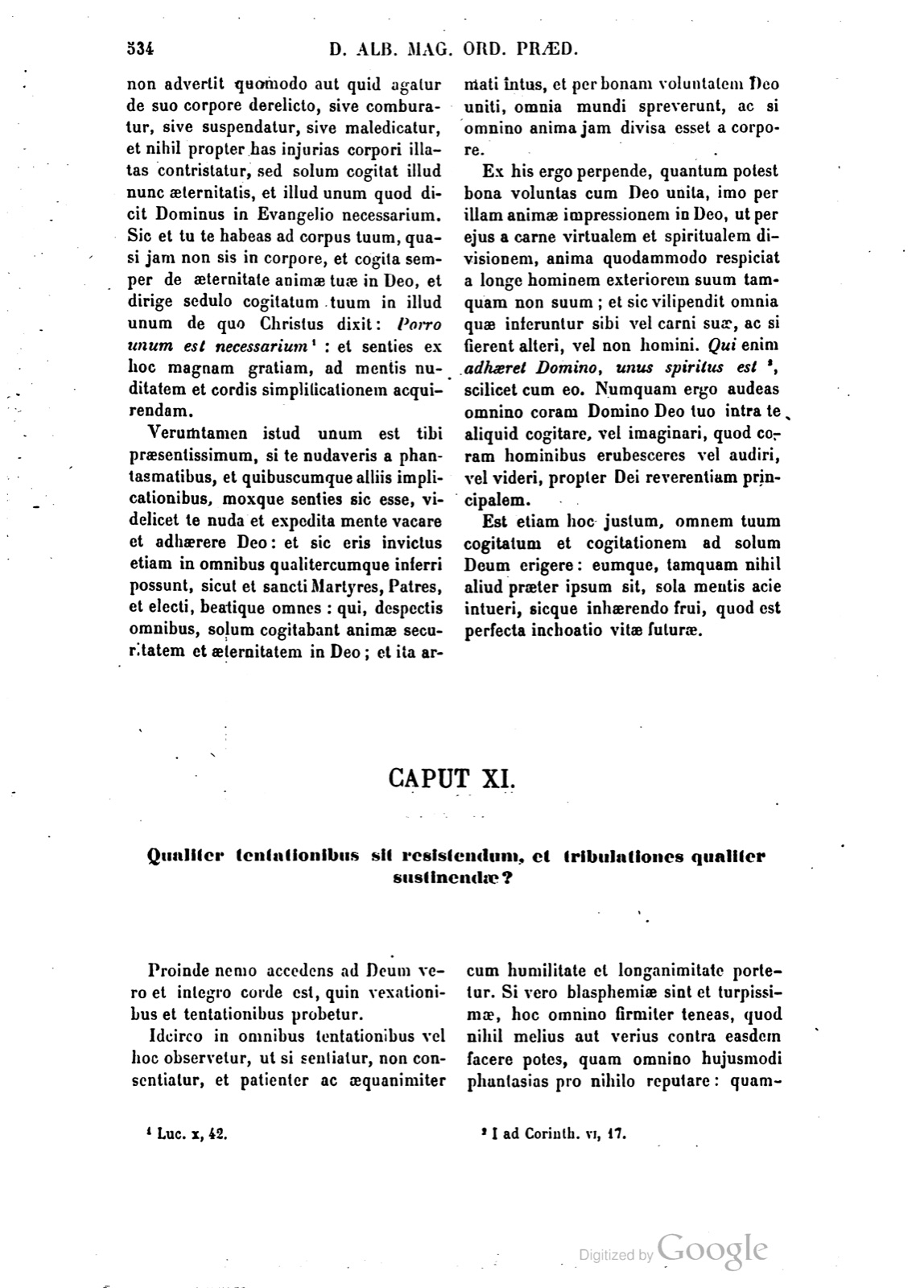
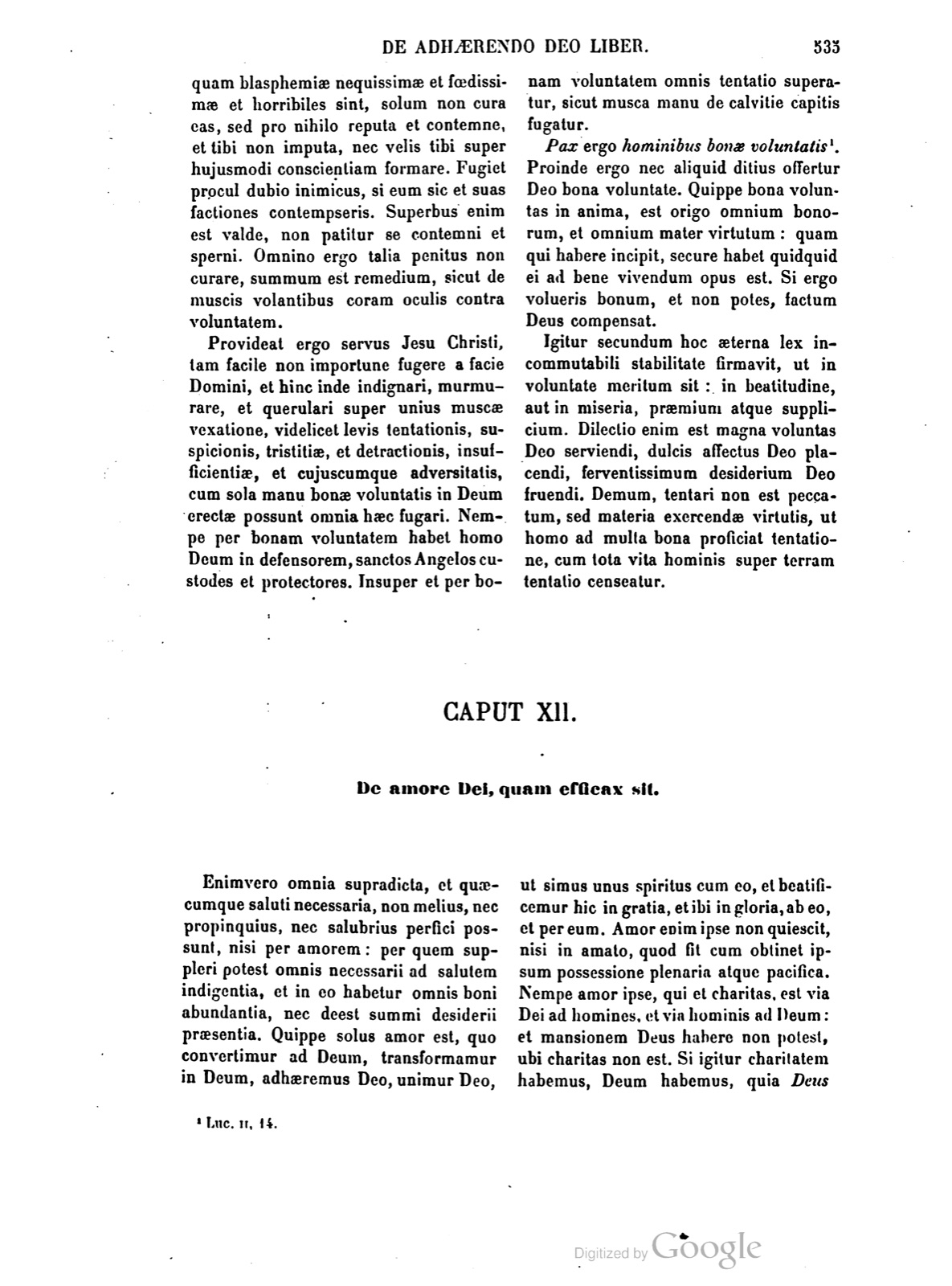
Quamquam blasphemiae nequissimae et foedissimae et horribiles sint, solum non cura eas, sed pro nihilo reputa et contemne, et tibi non imputa, nec velis tibi super hujusmodi conscientiam formare. Fugiet procul dubio inimicus, si eum sic et suas factiones contempseris. Superbus enim est valde, non patitur se contemni et sperni. Omnino ergo talia penitus non curare, summum est remedium, sicut de muscis volantibus coram oculis contra voluntatem.
Provideat ergo servus Jesu Christi, tam facile non importune fugere a facie Domini, et hinc inde indignari, murmurare, et querulari super unius muscae vexatione, videlicet levis tentationis, suspicionis, tristitiae, et detractionis, insufficientiae, et cujuscumque adversitatis, cum sola manu bonae voluntatis in Deum erectae possunt omnia haec fugari. Nempe per bonam voluntatem habet homo Deum in defensorem, sanctos Angelos custodes et protectores. Insuper et per bonam voluntatem omnis tentatio superatur, sicut musca manu de calvitie capitis fugatur.
Pax ergo hominibus bonae voluntatis 1. Proinde ergo nec aliquid ditius offertur Deo bona voluntate. Quippe bona voluntas in anima, est origo omnium bonorum, et omnium mater virtutum: quam qui habere incipit, secure habet quidquid ei ad bene vivendum opus est. Si ergo volueris bonum, et non potes, factum Deus compensat.
Igitur secundum hoc aeterna lex incommutabili stabilitate firmavit, ut in voluntate meritum sit: in beatitudine, aut in miseria, praemium atque supplicium. Dilectio enim est magna voluntas Deo serviendi, dulcis affectus Deo placendi, ferventissimum desiderium Deo fruendi. Demum, tentari non est peccatum, sed materia exercendae virtutis, ut homo ad multa bona proficiat tentatione, cum tota vita hominis super terram tentatio censeatur.
However wicked, most foul, and horrible the blasphemies may be, only do not care about them, but reckon and despise them as nothing, and do not impute them to yourself, nor wish to form for yourself a conscience about things of this kind. Without doubt the enemy will flee far away, if you despise him and his factions in this way. For he is very proud; he does not suffer himself to be despised and scorned. Therefore wholly not to care at all for such things is the highest remedy, as with flies flying before one's eyes against one's will.
Therefore let the servant of Jesus Christ take care not so easily and importunately to flee from the face of the Lord, and then to be indignant here and there, to murmur, and to complain over the vexation of one fly, namely of a light temptation, suspicion, sadness, detraction, insufficiency, and whatever adversity; for with the hand alone of good will raised up into God all these things can be put to flight. Indeed, through good will man has God as defender, and the holy angels as guardians and protectors. Moreover, through good will every temptation is overcome, just as a fly is driven away by the hand from the baldness of the head.
Peace, therefore, to men of good will 1. Therefore nothing richer is offered to God than good will. Indeed, good will in the soul is the origin of all goods and the mother of all virtues; he who begins to have it securely has whatever is necessary for him for living well. Therefore if you have willed the good and cannot do it, God compensates the deed.
Therefore according to this the eternal law has established with unchangeable stability that merit is in the will; in beatitude or in misery there is reward and punishment. For love is a great will of serving God, a sweet affection of pleasing God, a most fervent desire of enjoying God. Finally, to be tempted is not sin, but material for exercising virtue, so that man may advance to many goods by temptation, since the whole life of man upon earth is reckoned as temptation.
Notes
- Luke 2:14. (Luc. II, 14.) ↩
If a page does not appear, its photograph has not been uploaded yet.