Works › Sermons for the Seasons of the Year
Volume 13 · pp. 263–264
Sermon LXVIII. On the Fourteenth Sunday After Trinity, Opening
A marker with ≈ is an approximate page boundary, placed by measure of the text; the page photographs remain the authority. In the paired views, clicking a page marker brings that page into view.
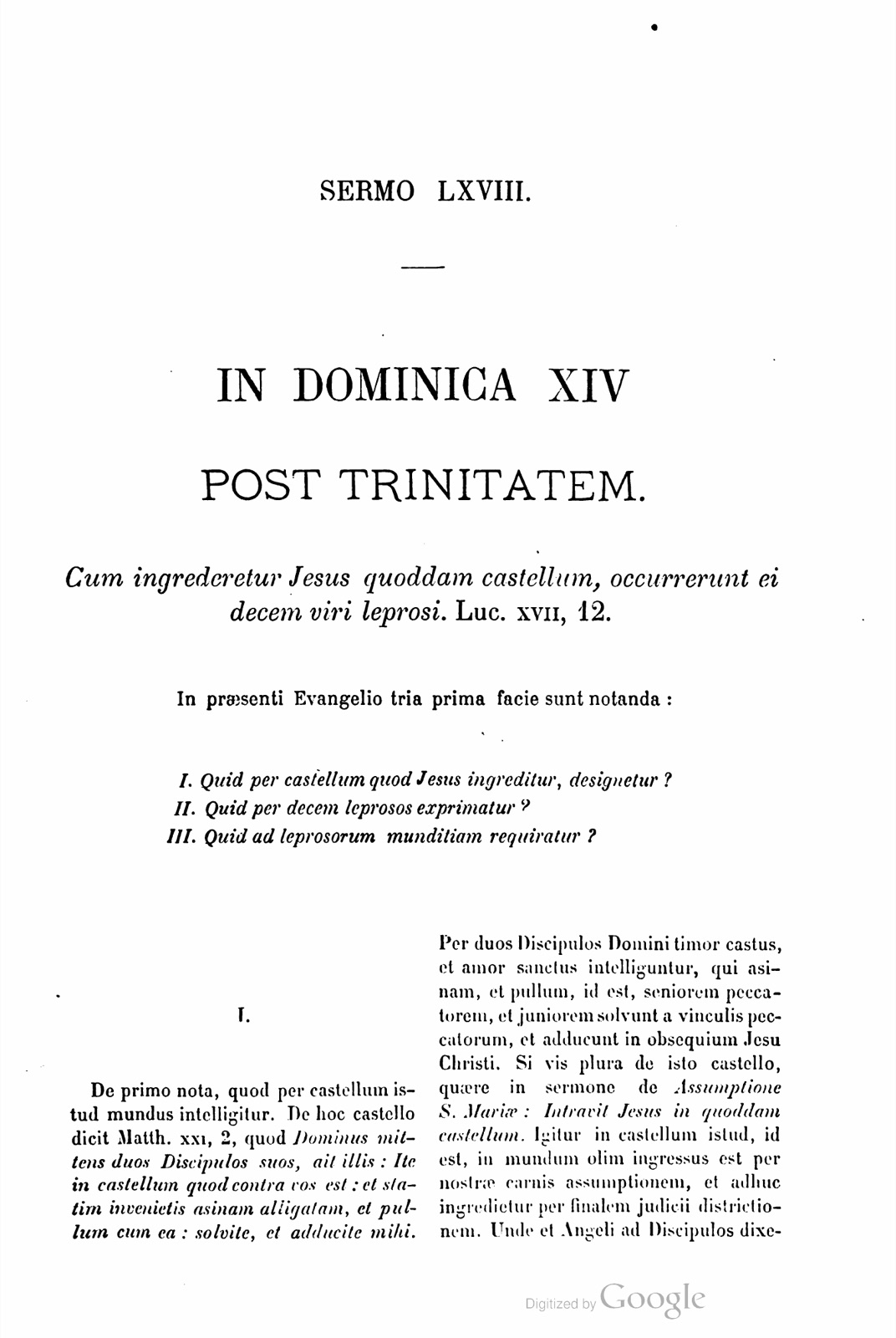
SERMO LXVIII.
IN DOMINICA XIV POST TRINITATEM.
Cum ingrederetur Jesus quoddam castellum, occurrerunt ei decem viri leprosi. Luc. XVII, 12.
In praesenti Evangelio tria prima facie sunt notanda:
I. Quid per castellum quod Jesus ingreditur, designetur? II. Quid per decem leprosos exprimatur? III. Quid ad leprosorum munditiam requiratur?
I.
De primo nota, quod per castellum istud mundus intelligitur. De hoc castello dicit Matth. XXI, 2, quod Dominus mittens duos Discipulos suos, ait illis: Ite in castellum quod contra vos est: et statim invenietis asinam alligatam, et pullum cum ea: solvite, et adducite mihi. Per duos Discipulos Domini timor castus, et amor sanctus intelliguntur, qui asinam, et pullum, id est, seniorem peccatorem, et juniorem solvunt a vinculis peccatorum, et adducunt in obsequium Jesu Christi. Si vis plura de isto castello, quaere in sermone de Assumptione S. Mariae: Intravit Jesus in quoddam castellum. Igitur in castellum istud, id est, in mundum olim ingressus est per nostrae carnis assumptionem, et adhuc ingredietur per finalem judicii districtionem. Unde et Angeli ad Discipulos dixerunt in Ascensione Domini, Act. I, 11: Viri Galilaei quid statis adspicientes in caelum? hic Jesus, qui assumptus est a vobis in caelum, etc.
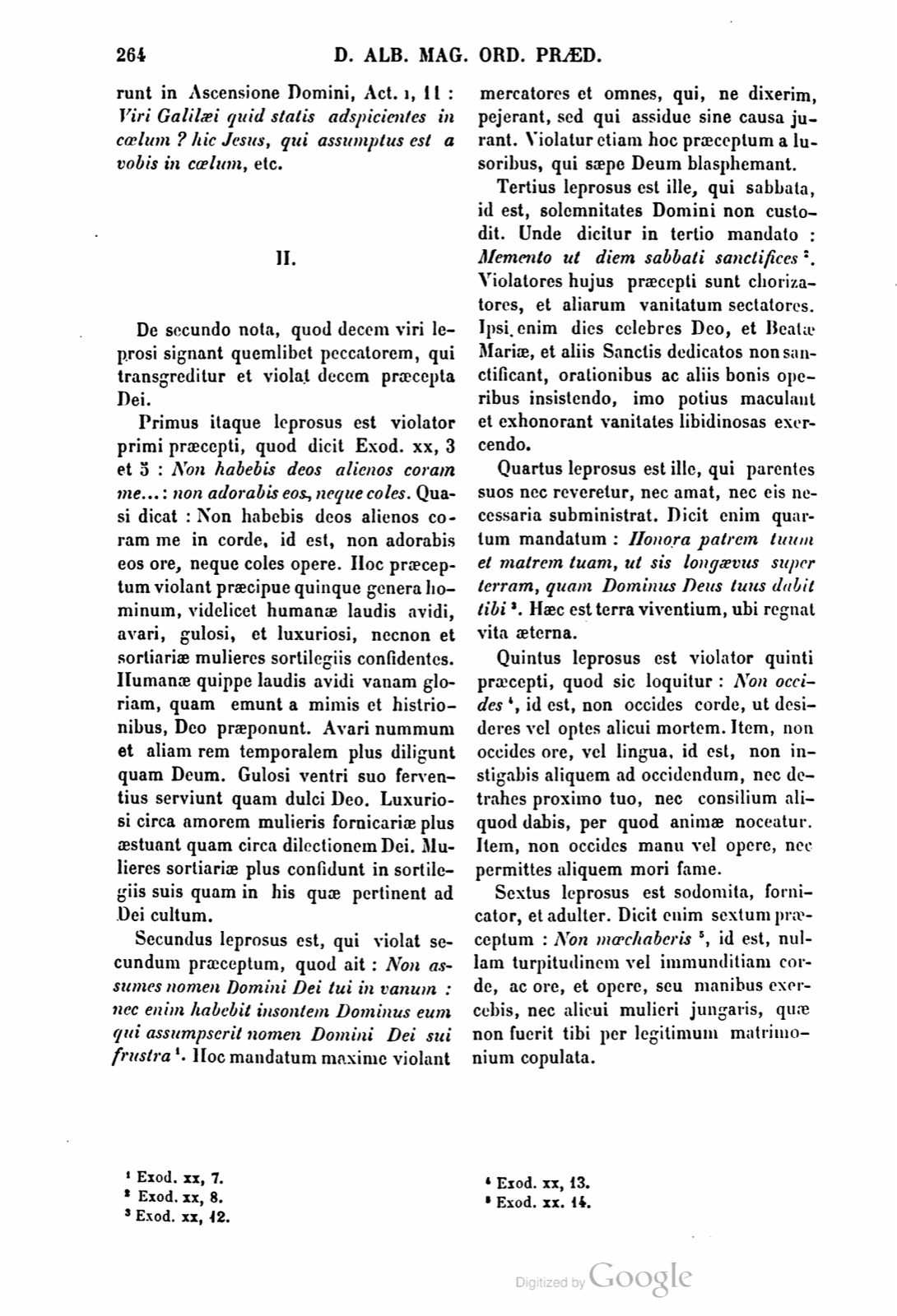
II.
De secundo nota, quod decem viri leprosi signant quemlibet peccatorem, qui transgreditur et violat decem praecepta Dei.
Primus itaque leprosus est violator primi praecepti, quod dicit Exod. XX, 3 et 5: Non habebis deos alienos coram me...: non adorabis eos, neque coles. Quasi dicat: Non habebis deos alienos coram me in corde, id est, non adorabis eos ore, neque coles opere. Hoc praeceptum violant praecipue quinque genera hominum, videlicet humanae laudis avidi, avari, gulosi, et luxuriosi, necnon et sortiariae mulieres sortilegiis confidentes. Humanae quippe laudis avidi vanam gloriam, quam emunt a mimis et histrionibus, Deo praeponunt. Avari nummum et aliam rem temporalem plus diligunt quam Deum. Gulosi ventri suo ferventius serviunt quam dulci Deo. Luxuriosi circa amorem mulieris fornicariae plus aestuant quam circa dilectionem Dei. Mulieres sortiariae plus confidunt in sortilegiis suis quam in his quae pertinent ad Dei cultum.
SERMON LXVIII.
ON THE FOURTEENTH SUNDAY AFTER TRINITY.
When Jesus was entering a certain castle, ten leprous men met him. Luke XVII, 12.
In the present Gospel three things at first view are to be noted:
I. What is designated by the castle which Jesus enters? II. What is expressed by the ten lepers? III. What is required for the cleansing of the lepers?
I.
Concerning the first, note that by that castle the world is understood. Concerning this castle Matthew XXI, 2 says that the Lord, sending his two Disciples, said to them: Go into the castle that is opposite you, and immediately you will find a she-ass tied, and a colt with her; loose them, and bring them to me. By the two Disciples of the Lord chaste fear and holy love are understood, which loose the she-ass and the colt, that is, the older sinner and the younger, from the chains of sins, and bring them to the service of Jesus Christ. If you wish more concerning this castle, seek in the sermon on the Assumption of Saint Mary: Jesus entered into a certain castle. Therefore into that castle, that is, into the world, he once entered through the assumption of our flesh, and he will still enter through the final severity of judgment. Hence also the Angels said to the Disciples at the Ascension of the Lord, Acts I, 11: Men of Galilee, why do you stand looking up into heaven? This Jesus, who has been taken up from you into heaven, etc.
II.
Concerning the second, note that the ten leprous men signify any sinner who transgresses and violates the ten precepts of God.
Therefore the first leper is the violator of the first precept, which says, Exodus XX, 3 and 5: You shall not have strange gods before me...; you shall not adore them, nor worship them. As if he were saying: You shall not have strange gods before me in the heart, that is, you shall not adore them with the mouth, nor worship them by work. Five kinds of human beings especially violate this precept, namely those eager for human praise, the avaricious, the gluttonous, and the lustful, and also sorcerous women trusting in sorceries. For those eager for human praise prefer to God the vain glory which they buy from mimes and actors. The avaricious love money and another temporal thing more than God. The gluttonous serve their belly more fervently than sweet God. The lustful burn more around love of a fornicating woman than around the love of God. Sorcerous women trust more in their sorceries than in those things that pertain to the worship of God.
Secundus leprosus est, qui violat secundum praeceptum, quod ait: Non assumes nomen Domini Dei tui in vanum: nec enim habebit insontem Dominus eum qui assumpserit nomen Domini Dei sui frustra 1. Hoc mandatum maxime violant mercatores et omnes, qui, ne dixerim, pejerant, sed qui assidue sine causa jurant. Violatur etiam hoc praeceptum a lusoribus, qui saepe Deum blasphemant.
Tertius leprosus est ille, qui sabbata, id est, solemnitates Domini non custodit. Unde dicitur in tertio mandato: Memento ut diem sabbati sanctifices 2. Violatores hujus praecepti sunt chorizatores, et aliarum vanitatum sectatores. Ipsi enim dies celebres Deo, et Beatae Mariae, et aliis Sanctis dedicatos non sanctificant, orationibus ac aliis bonis operibus insistendo, imo potius maculant et exhonorant vanitates libidinosas exercendo.
Quartus leprosus est ille, qui parentes suos nec reveretur, nec amat, nec eis necessaria subministrat. Dicit enim quartum mandatum: Honora patrem tuum et matrem tuam, ut sis longaevus super terram, quam Dominus Deus tuus dabit tibi 3. Haec est terra viventium, ubi regnat vita aeterna.
Quintus leprosus est violator quinti praecepti, quod sic loquitur: Non occides 4, id est, non occides corde, ut desideres vel optes alicui mortem. Item, non occides ore, vel lingua, id est, non instigabis aliquem ad occidendum, nec detrahes proximo tuo, nec consilium aliquod dabis, per quod animae noceatur. Item, non occides manu vel opere, nec permittes aliquem mori fame.
Sextus leprosus est sodomita, fornicator, et adulter. Dicit enim sextum praeceptum: Non moechaberis 5, id est, nullam turpitudinem vel immunditiam corde, ac ore, et opere, seu manibus exercebis, nec alicui mulieri jungaris, quae non fuerit tibi per legitimum matrimonium copulata.
The second leper is he who violates the second precept, which says: You shall not take the name of the Lord your God in vain; for the Lord will not hold innocent him who takes the name of the Lord his God in vain 1. Merchants especially violate this command, and all who, lest I say perjure themselves, nevertheless swear continually without cause. This precept is also violated by gamblers, who often blaspheme God.
The third leper is he who does not keep sabbaths, that is, the solemnities of the Lord. Hence it is said in the third commandment: Remember to sanctify the sabbath day 2. Violators of this precept are dancers and followers of other vanities. For they do not sanctify the famous days dedicated to God, and to Blessed Mary, and to other Saints, by applying themselves to prayers and other good works, but rather they stain and dishonor them by exercising lustful vanities.
The fourth leper is he who neither reveres nor loves his parents, nor supplies necessary things to them. For the fourth commandment says: Honor your father and your mother, that you may be long-lived upon the land which the Lord your God will give you 3. This is the land of the living, where eternal life reigns.
The fifth leper is the violator of the fifth precept, which speaks thus: You shall not kill 4, that is, you shall not kill in heart, so that you desire or wish death to someone. Likewise, you shall not kill by mouth or tongue, that is, you shall not instigate someone to killing, nor detract from your neighbor, nor give any counsel through which harm is done to the soul. Likewise, you shall not kill by hand or work, nor permit someone to die from hunger.
The sixth leper is the sodomite, fornicator, and adulterer. For the sixth precept says: You shall not commit adultery 5, that is, you shall exercise no turpitude or uncleanness in heart and mouth and work, or with hands, nor shall you be joined to any woman who has not been joined to you through legitimate matrimony.
If a page does not appear, its photograph has not been uploaded yet.