Works › Sermons for the Seasons of the Year
Volume 13 · pp. 175–177
Sermon XLII. On the Fifth Sunday After Easter
A marker with ≈ is an approximate page boundary, placed by measure of the text; the page photographs remain the authority. In the paired views, clicking a page marker brings that page into view.
SERMO XLII. IN DOMINICA V POST PASCHA.
Exivi a Patre, et veni in mundum: iterum relinquo mundum, et vado ad Patrem. Joan. xvi, 28.
Duo sunt hic notanda: I. Quare Dominus in mundum venerit? II. Quare ad Patrem redierit?
I. Licet multæ causæ possint assignari, quare Filius a Patre egressus venerit in mundum, et quare relinquens mundum venit ad Patrem; propter duo tamen venit in mundum, et propter duo reversus est ad Patrem. Venit enim in mundum, 1. Ut nos, quomodo vivere debeamus, instrueret. 2. Item ut nos ab æterna servitute redimeret.
1. De primo dicit Apostolus ad Titum ii, 11: Apparuit gratia Dei Salvatoris nostri omnibus hominibus, erudiens nos, ut abnegantes impietatem, et sæcularia desideria, sobrie, et juste, et pie vivamus in hoc sæculo. Doctrina igitur Jesu Christi consistit in tribus: in sobrietate, in justitia sive æquitate, et pietate. Sobrietas, prout Glossa testatur, est attendere circa temetipsum. Justitia sive æquitas circa proximum, et pietas circa Deum.
Primo igitur sobrii esse debemus: sed quid est sobrietas? Sobrietas est pura ab illecebris utriusque hominis temperantia. Sobrietas igitur monet nos, ut omnimodam mentis et corporis fugiamus luxuriam, et a gula et ebrietate nobis caveamus.
Secundo justi esse debemus. Justitia vero est, per quam communitatis gratia tenetur, et sua dignitas cuique non denegatur. Monet nos igitur justitia, ut gratiam omnium secundum Deum teneamus, id est, nullum indebite vel verbis vel operibus lædamus et offendamus, et ut unumquemque secundum dignitatem sibi debitam veneremur, videlicet Patrem ut patrem, Sacerdotem ut Sacerdotem, militem ut militem, et quoslibet alios secundum officia vel status Episcoporum. Hinc dicit Apostolus ad Rom. xiii, 7: Reddite omnibus debita: cui tributum, tributum: cui vectigal, vectigal: cui timorem, timorem: cui honorem, honorem.
Tertio pietatem exsequi debemus. Est autem pietas, ut dicit Bernardus: «Jugis Dei memoria et indefessa affectio in amorem ejus.» Et nota, quod ipse Dominus precatur, ut memores sui esse velimus. Ita dicit in Thren. iii, 19: Recordare paupertatis, et transgressionis meæ, absynthii et fellis. Transgressionis, id est, maximæ vilitatis. Hæc itaque tria in memoria cordis nostri jugiter habere debemus, videlicet Dominicam paupertatem, vilitatem, et acerbitatem eorum quæ passus est. Unde etiam respondet ei immediate in Thren. iii, 20 et 21, fidelis anima sic inquiens: Memoria memor ero, et tabescet in me anima mea. Hæc recolens in corde meo, ideo sperabo. Monet etiam I Joan. iii, 18, ut Deum amemus. Filioli mei, non diligamus verbo, neque lingua, supple, tantum, sed opere et veritate. Omnia etiam elementa mundi, et cuncta beneficia Christi monent nos, ut Dominum diligamus.
SERMON XLII. ON THE FIFTH SUNDAY AFTER EASTER.
I went out from the Father and came into the world; again I leave the world and go to the Father. John 16:28.
Two things are to be noted here: I. Why did the Lord come into the world? II. Why did he return to the Father?
I. Although many causes can be assigned why the Son, having gone out from the Father, came into the world, and why, leaving the world, he came to the Father, nevertheless he came into the world for two reasons and returned to the Father for two reasons. For he came into the world, 1. that he might instruct us how we ought to live; 2. likewise that he might redeem us from eternal slavery.
1. Concerning the first the Apostle says to Titus 2:11: The grace of God our Savior has appeared to all human beings, teaching us that, denying impiety and worldly desires, we should live soberly and justly and piously in this age. Therefore the doctrine of Jesus Christ consists in three things: in sobriety, in justice or equity, and in piety. Sobriety, as the Gloss testifies, is to attend to yourself. Justice or equity concerns the neighbor, and piety concerns God.
First, therefore, we ought to be sober; but what is sobriety? Sobriety is temperance of both human beings, pure from enticements. Therefore sobriety admonishes us to flee every luxury of mind and body and to beware of gluttony and drunkenness.
Second, we ought to be just. Justice is that by which the grace of community is maintained and each person's dignity is not denied to him. Therefore justice admonishes us to maintain the grace of all according to God, that is, to harm and offend no one unduly by words or deeds, and to venerate each person according to the dignity owed to him, namely a father as father, a priest as priest, a soldier as soldier, and any others according to offices or states of bishops. Hence the Apostle says in Romans 13:7: Render to all their dues: tax to whom tax is due, tribute to whom tribute, fear to whom fear, honor to whom honor.
Third, we ought to carry out piety. But piety is, as Bernard says, continual memory of God and unwearied affection unto love of him. And note that the Lord himself asks that we be willing to remember him. Thus he says in Lamentations 3:19: Remember my poverty and my transgression, the wormwood and the gall. Transgression, that is, greatest vileness. Therefore we ought continually to have these three things in the memory of our heart, namely the Lord's poverty, vileness, and the bitterness of the things that he suffered. Hence also the faithful soul immediately answers him in Lamentations 3:20 and 21, saying thus: With memory I will remember, and my soul will melt within me. Recalling these things in my heart, therefore I will hope. 1 John 3:18 also admonishes us to love God: My little children, let us not love in word or tongue, supply, only, but in deed and truth. All the elements of the world too, and all the benefits of Christ, admonish us to love the Lord.
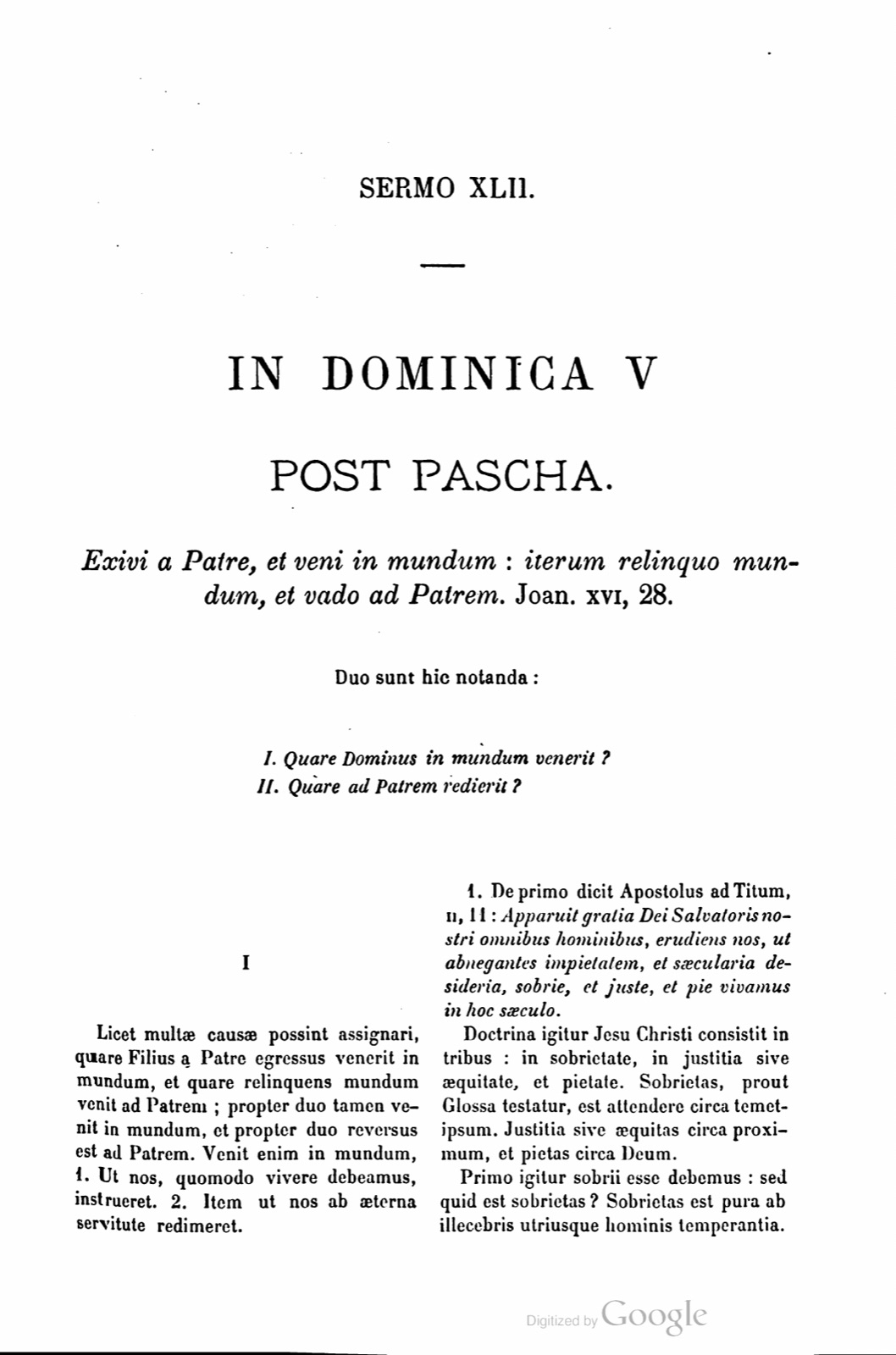
2. Venit etiam Dominus in mundum, ut nos a potestate diaboli redimeret. Unde Isa. xix, 20: Clamabunt ad Dominum a facie tribulantis, et mittet eis salvatorem et propugnatorem, qui liberet eos. Item Apostolus ad Titum ii, 14: Qui dedit semetipsum pro nobis, ut nos redimeret ab omni iniquitate, et mundaret sibi populum acceptabilem, sectatorem bonorum operum. Redemptori igitur nostro tenemur in duobus ad minus. Primum est, ut ad ipsum per veram pœnitentiam revertamur. Unde Isa. xliv, 22: Revertere ad me, quoniam redemi te. Revertere, Glossa, «pœnitendo:» quod si feceris, cælum et terra et omnia elementa in salute tua lætabuntur. Debet igitur quilibet peccator fideliter pœnitere, ne perdatur in ipso fructus passionis Dominicæ. Secundum est, ut intimas ei gratias agamus. Unde scribit Joan. in Apoc. v, 8, 9 et 10, quod quatuor animalia, et viginti quatuor seniores ceciderunt coram Agno, habentes singuli citharas, et phialas aureas plenas odoramentorum, et cantabant canticum novum dicentes: Dignus es Domine accipere librum, et aperire signacula ejus: quoniam occisus es, et redemisti nos Deo in sanguine tuo ex omni tribu, et lingua, et populo, et natione: et fecisti nos Deo nostro regnum, et sacerdotes: et regnabimus super terram, subaudi, viventium. Per quatuor animalia, et per viginti quatuor seniores intelliguntur omnes electi, qui jam sunt, vel erunt in patria: qui omnes cum citharis bonorum operum, et cum phialis cordium per sanctas affectiones suaviter redolentium gratias agunt Filio Dei, qui redemit eos per sanguinem suum fusum in ara crucis, et quoniam redempti tamquam Reges et Pontifices cum Domino regnabunt in æternum.
2. The Lord also came into the world to redeem us from the power of the devil. Hence Isaiah 19:20 says: They will cry to the Lord from the face of the one troubling them, and he will send them a savior and defender, who will free them. Likewise the Apostle to Titus 2:14: He gave himself for us, so that he might redeem us from every iniquity and cleanse for himself an acceptable people, a pursuer of good works. Therefore we are bound to our Redeemer in at least two things. The first is that we return to him through true penance. Hence Isaiah 44:22: Return to me, because I have redeemed you. Return, the Gloss says, by repenting; if you do this, heaven and earth and all the elements will rejoice in your salvation. Therefore every sinner ought faithfully to repent, lest in him the fruit of the Lord's passion be lost. The second is that we give him inward thanks. Hence John writes in Apocalypse 5:8, 9 and 10 that the four living creatures and twenty-four elders fell before the Lamb, each having harps and golden bowls full of fragrances, and they sang a new song, saying: You are worthy, Lord, to receive the book and open its seals, because you were slain and redeemed us to God in your blood from every tribe, tongue, people, and nation; and you made us a kingdom and priests to our God, and we shall reign upon the earth, understand, of the living. By the four living creatures and the twenty-four elders are understood all the elect who already are, or will be, in the homeland; all of them, with harps of good works and with bowls of hearts sweetly fragrant through holy affections, give thanks to the Son of God, who redeemed them by his blood poured out on the altar of the cross, and because, redeemed as Kings and Priests, they will reign with the Lord forever.
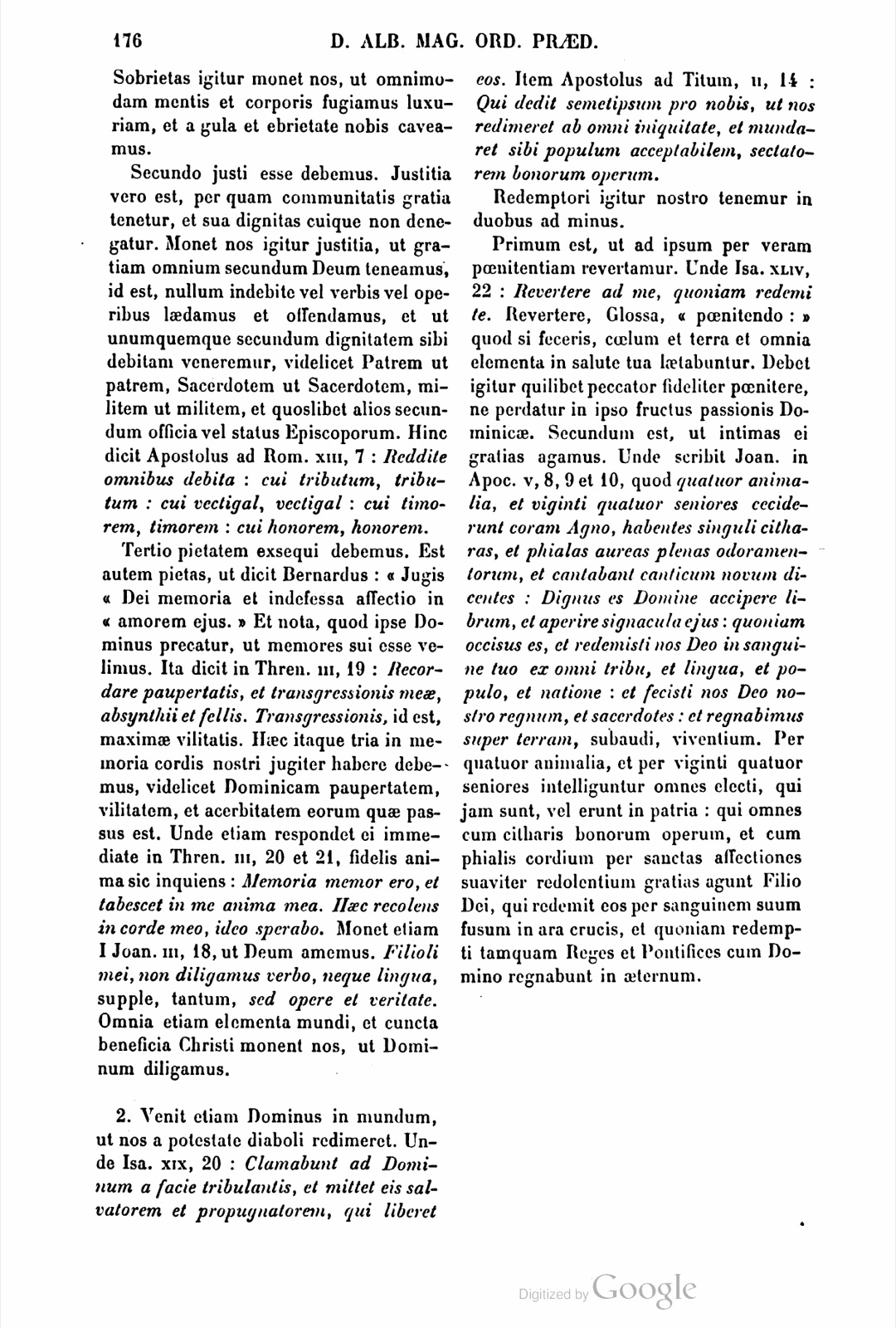
II. De secundo nota, quare Dominus redierit ad Patrem: et est dicendum, quod ad minus propter duo. Primum est, ut sobriis, justis, et piis mansiones delectabiles præpararet. Secundum est, ut pro redemptis Deo Patri signa vulnerum suorum quotidie repræsentaret.
De primo dicit Dominus, Joan. xiv, 2 et 3: Vado parare vobis locum. Et si abiero, et præparavero vobis locum: iterum venio, et accipiam vos ad meipsum, ubi sum ego, et vos sitis. Et nota, quod locus electorum erit mundus, firmus, et in omni bono repletus. Sobrietas meretur munditiam et claritatem, justitia firmitatem, pietas vero bonorum omnium ubertatem.
De secundo dicit Glossa super locum illum Luc. xxiv, 40: Ostendit eis manus, et pedes. «Dominus vulnerum cicatrices servavit, ut Patri pro nobis supplicans, quale genus mortis pro homine pertulit, semper ostendat.» Hinc etiam dicit I Joan. ii, 1 et 2: Advocatum habemus apud Patrem, Jesum Christum justum: et ipse est propitiatio pro peccatis nostris.
Bonum est ergo, charissimi, ut vulnera Jesu Christi veneremur, et peccata totis viribus fugiamus. Conqueritur etiam Dominus in Ps. lxviii, 27, quod multi mali Christiani per peccata turpissima et pessimas iniquitates, rursus recentem dolorem super dolorem vulnerum suorum addiderunt: et certe ad damnationem ipsorum cicatrices vulnerum suorum ostendet in judicio.
Rogate ergo Filium Dei qui ad Patrem jamdudum rediit, ut ipso donante, sic sobrie et juste et pie vivamus in hoc sæculo 1, ut cum hinc nos migrare contigerit, in loco ab ipso præparato recipi mereamur. Quod nobis præstare, etc.
II. On the second, note why the Lord returned to the Father; and it must be said that it was for at least two reasons. The first is that he might prepare delightful dwelling places for the sober, the just, and the pious. The second is that for the redeemed he might daily present to God the Father the signs of his wounds.
Concerning the first the Lord says in John 14:2 and 3: I go to prepare a place for you. And if I go and prepare a place for you, I will come again and receive you to myself, so that where I am, you also may be. And note that the place of the elect will be clean, firm, and filled with every good. Sobriety merits cleanness and clarity; justice, firmness; but piety, abundance of all goods.
Concerning the second the Gloss says on Luke 24:40, He showed them his hands and feet: The Lord kept the scars of his wounds so that, supplicating the Father for us, he may always show what kind of death he bore for the human being. Hence 1 John 2:1 and 2 also says: We have an advocate with the Father, Jesus Christ the just, and he is the propitiation for our sins.
Therefore it is good, dearest ones, that we venerate the wounds of Jesus Christ and flee sins with all our strength. The Lord also complains in Psalm 68:27 that many bad Christians, through most shameful sins and the worst iniquities, have again added fresh pain upon the pain of his wounds; and certainly to their damnation he will show the scars of his wounds in judgment.
Therefore pray to the Son of God who has long since returned to the Father, that by his gift we may so live soberly and justly and piously in this age 1, that when it happens for us to migrate from here, we may deserve to be received in the place prepared by him. May he grant this to us, and so forth.
Notes
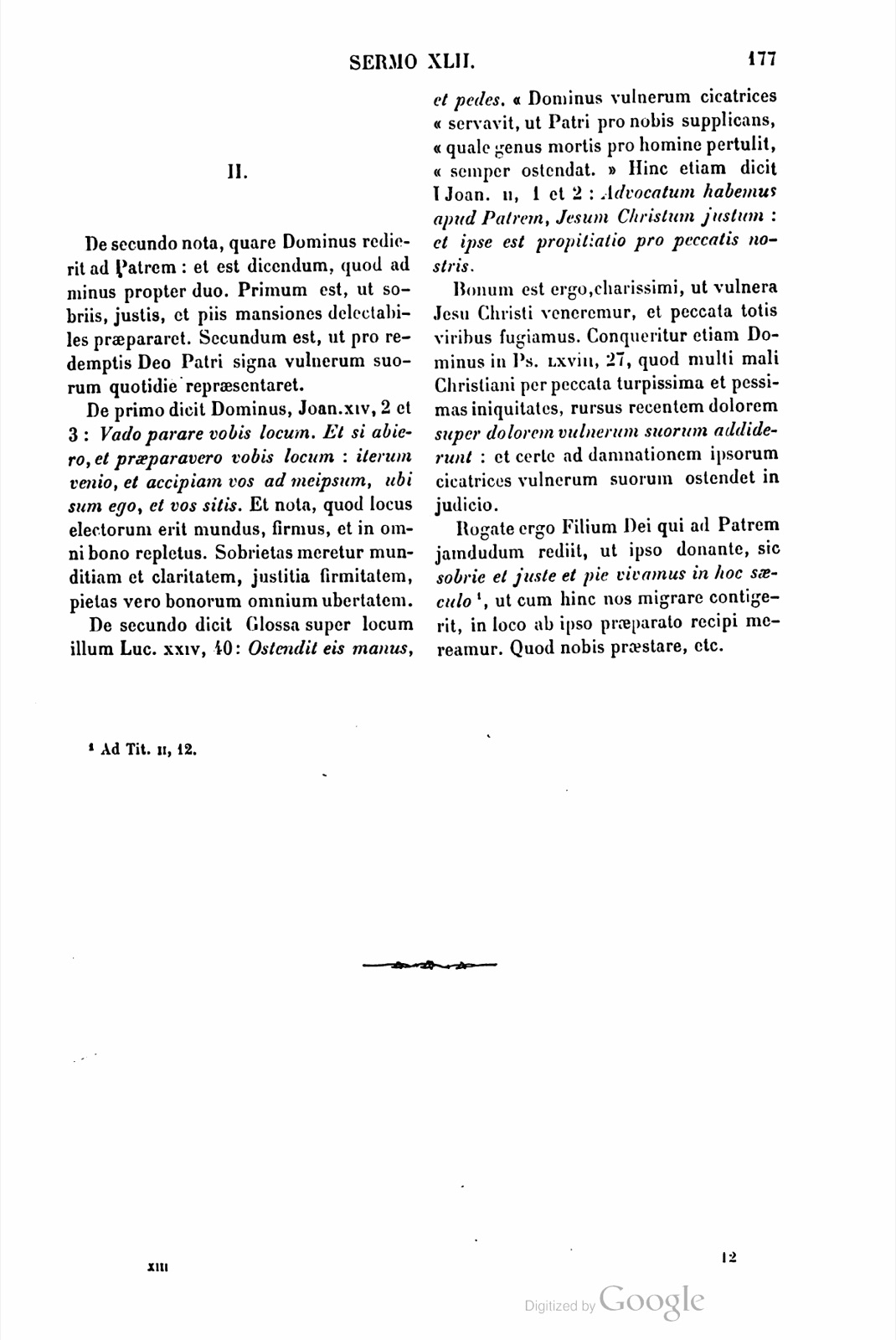
- Titus 2:12. (Ad Tit. ii, 12.) ↩
If a page does not appear, its photograph has not been uploaded yet.