Works › Sermons for the Seasons of the Year
Volume 13 · pp. 137–140
Sermon XXXI. On the Third Sunday of Lent
A marker with ≈ is an approximate page boundary, placed by measure of the text; the page photographs remain the authority. In the paired views, clicking a page marker brings that page into view.
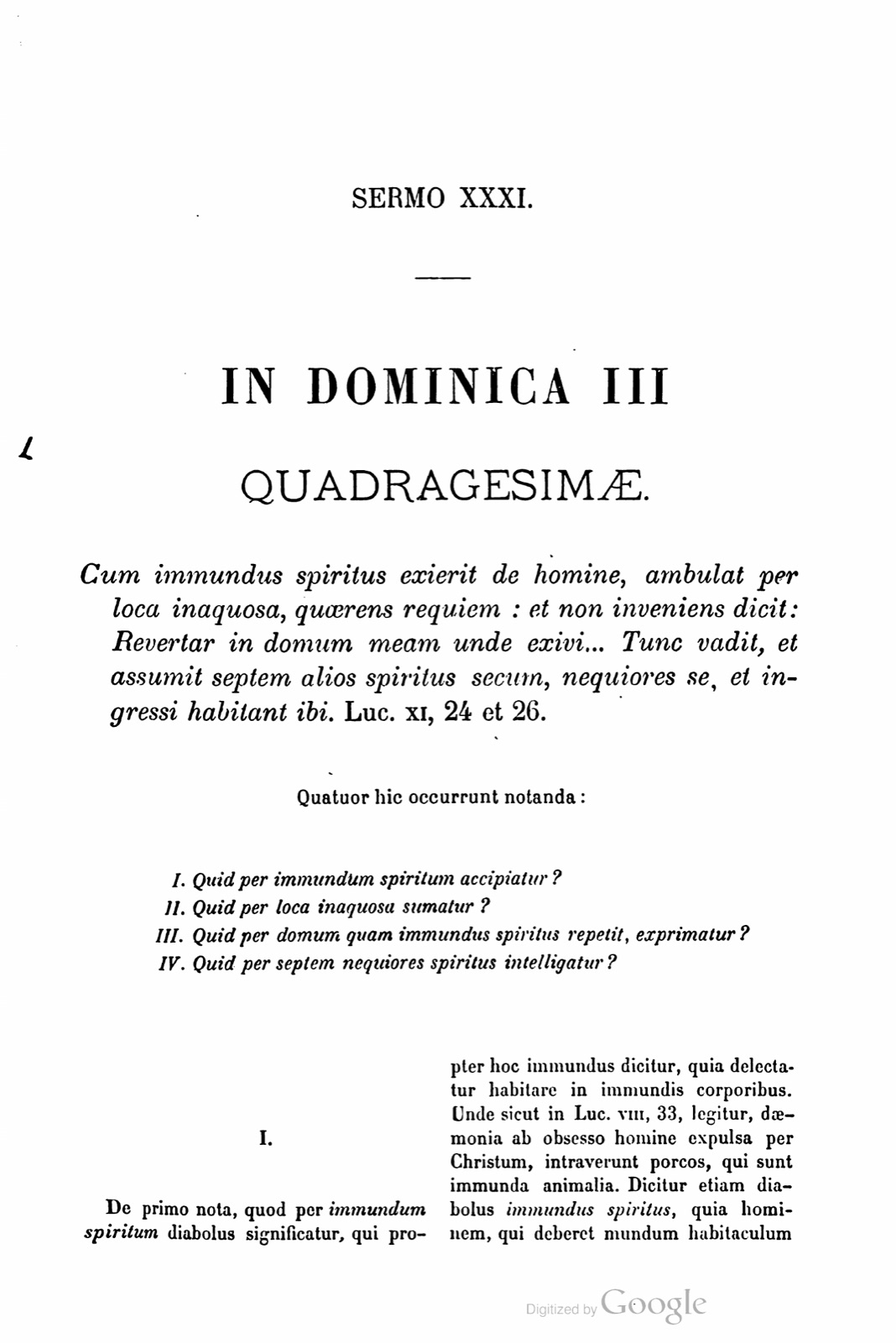
SERMO XXXI. IN DOMINICA III QUADRAGESIMÆ.
Cum immundus spiritus exierit de homine, ambulat per loca inaquosa, quærens requiem: et non inveniens dicit: Revertar in domum meam unde exivi... Tunc vadit, et assumit septem alios spiritus secum, nequiores se, et ingressi habitant ibi. Luc. xi, 24 et 26.
Quatuor hic occurrunt notanda: I. Quid per immundum spiritum accipiatur? II. Quid per loca inaquosa sumatur? III. Quid per domum quam immundus spiritus repetit, exprimatur? IV. Quid per septem nequiores spiritus intelligatur?
I. De primo nota, quod per immundum spiritum diabolus significatur, qui propter hoc immundus dicitur, quia delectatur habitare in immundis corporibus. Unde sicut in Luc. viii, 33, legitur, dæmonia ab obsesso homine expulsa per Christum, intraverunt porcos, qui sunt immunda animalia. Dicitur etiam diabolus immundus spiritus, quia hominem, qui deberet mundum habitaculum esse Spiritus sancti, per peccati immunditiam inquinare laborat. Ipse enim suggerit homini superbiam, iram, invidiam, avaritiam, gulam, et luxuriam, per quæ septem peccata mortalia et capitalia inquinantur corpus, et anima: ubi deberet munda esse sedes Spiritus septiformis.
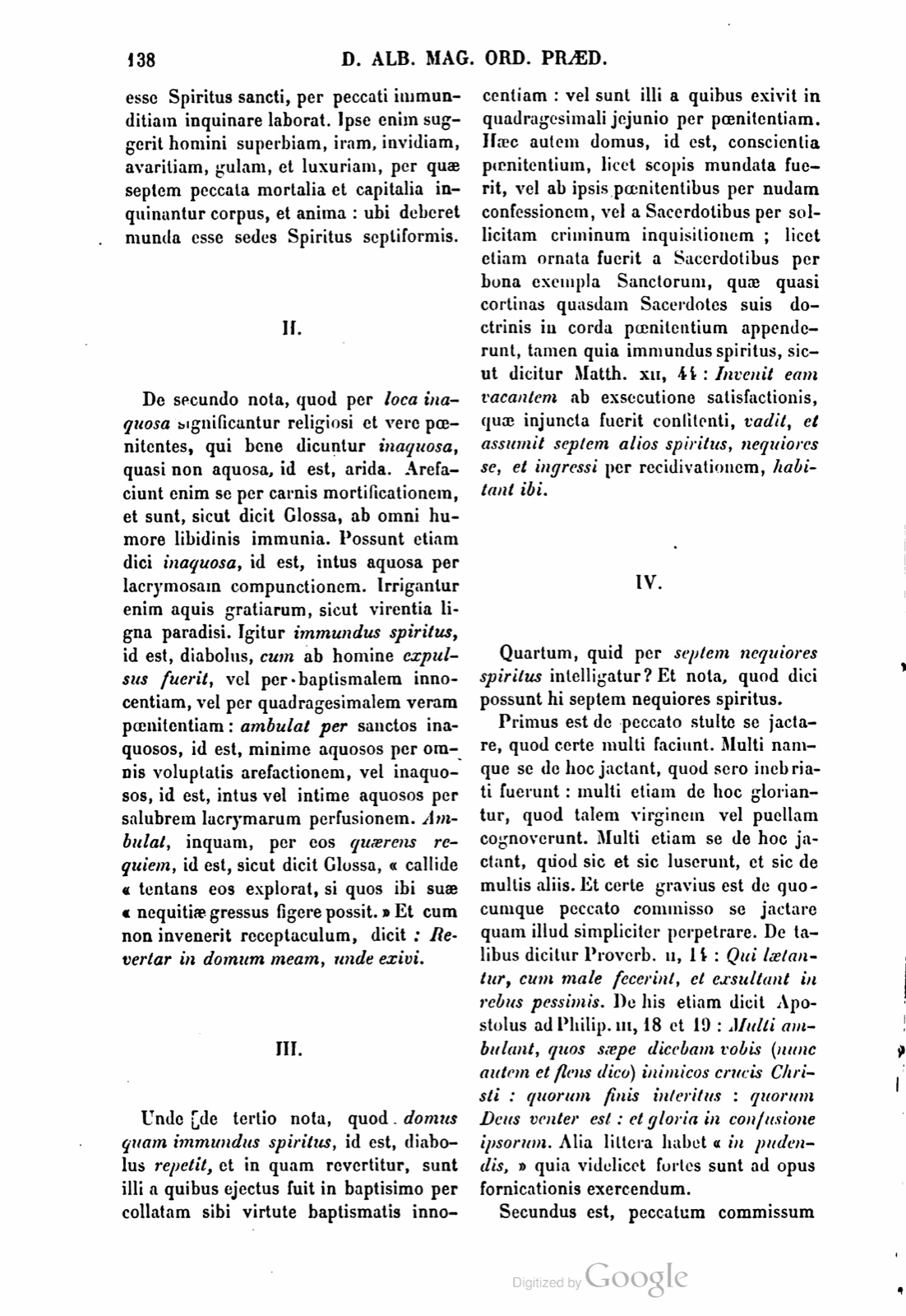
II. De secundo nota, quod per loca inaquosa significantur religiosi et vere pœnitentes, qui bene dicuntur inaquosa, quasi non aquosa, id est, arida. Arefaciunt enim se per carnis mortificationem, et sunt, sicut dicit Glossa, ab omni humore libidinis immunia. Possunt etiam dici inaquosa, id est, intus aquosa per lacrymosam compunctionem. Irrigantur enim aquis gratiarum, sicut virentia ligna paradisi. Igitur immundus spiritus, id est, diabolus, cum ab homine expulsus fuerit, vel per baptismalem innocentiam, vel per quadragesimalem veram pænitentiam: ambulat per sanctos inaquosos, id est, minime aquosos per omnis voluptatis arefactionem, vel inaquosos, id est, intus vel intime aquosos per salubrem lacrymarum perfusionem. Ambulat, inquam, per eos quærens requiem, id est, sicut dicit Glossa, «callide tentans eos explorat, si quos ibi suæ nequitiæ gressus figere possit.» Et cum non invenerit receptaculum, dicit: Revertar in domum meam, unde exivi.
SERMON XXXI. ON THE THIRD SUNDAY OF LENT.
When an unclean spirit has gone out from a man, he walks through waterless places seeking rest; and not finding it he says: I will return to my house from which I went out... Then he goes and takes seven other spirits with him, worse than himself, and entering in they dwell there. Luke 11:24 and 26.
Four things here occur to be noted: I. What is received by the unclean spirit? II. What is taken by the waterless places? III. What is expressed by the house that the unclean spirit seeks again? IV. What is understood by the seven worse spirits?
I. On the first, note that by the unclean spirit the devil is signified, who for this reason is called unclean, because he delights to dwell in unclean bodies. Hence, as is read in Luke 8:33, the demons expelled by Christ from the possessed man entered the swine, which are unclean animals. The devil is also called an unclean spirit because he labors to stain with the uncleanness of sin the human being who ought to be a clean dwelling of the Holy Spirit. For he suggests to a human being pride, anger, envy, avarice, gluttony, and luxury, through which seven mortal and capital sins body and soul are stained, where the clean seat of the sevenfold Spirit ought to be.
II. On the second, note that by the waterless places are signified religious and truly penitent persons, who are rightly called waterless, as it were not watery, that is, dry. For they dry themselves through mortification of the flesh and are, as the Gloss says, free from every moisture of lust. They can also be called waterless, that is, watery within through tearful compunction. For they are watered by the waters of graces, like the green trees of paradise. Therefore the unclean spirit, that is, the devil, when he has been expelled from a human being either through baptismal innocence or through true Lenten penance, walks through holy waterless persons, that is, those least watery through the drying up of every pleasure, or waterless, that is, inwardly or intimately watery through the wholesome pouring out of tears. He walks, I say, through them seeking rest, that is, as the Gloss says, "testing them craftily, he explores whether he might there fix any steps of his wickedness." And when he has not found a lodging, he says: I will return into my house from which I went out.
III. Unde de tertio nota, quod domus quam immundus spiritus, id est, diabolus repetit, et in quam revertitur, sunt illi a quibus ejectus fuit in baptismo per collatam sibi virtute baptismatis innocentiam: vel sunt illi a quibus exivit in quadragesimali jejunio per pænitentiam. Hæc autem domus, id est, conscientia pœnitentium, licet scopis mundata fuerit, vel ab ipsis pœnitentibus per nudam confessionem, vel a Sacerdotibus per sollicitam criminum inquisitionem; licet etiam ornata fuerit a Sacerdotibus per bona exempla Sanctorum, quæ quasi cortinas quasdam Sacerdotes suis doctrinis in corda pænitentium appenderunt, tamen quia immundus spiritus, sicut dicitur Matth. xii, 44: Invenit eam vacantem ab exsecutione satisfactionis, quæ injuncta fuerit confitenti, vadit, et assumit septem alios spiritus, nequiores se, et ingressi per recidivationem, habitant ibi.
IV. Quartum, quid per septem nequiores spiritus intelligatur? Et nota, quod dici possunt hi septem nequiores spiritus.
Primus est de peccato stulte se jactare, quod certe multi faciunt. Multi namque se de hoc jactant, quod sero inebriati fuerunt: multi etiam de hoc gloriantur, quod talem virginem vel puellam cognoverunt. Multi etiam se de hoc jactant, quod sic et sic luserunt, et sic de multis aliis. Et certe gravius est de quocumque peccato commisso se jactare quam illud simpliciter perpetrare. De talibus dicitur Proverb. ii, 14: Qui lætantur, cum male fecerint, et exsultant in rebus pessimis. De his etiam dicit Apostolus ad Philip. i, 18 et 19: Multi ambulant, quos sæpe dicebam vobis (nunc autem et flens dico) inimicos crucis Christi: quorum finis interitus: quorum Deus venter est: et gloria in confusione ipsorum. Alia littera habet «in pudendis,» quia videlicet fortes sunt ad opus fornicationis exercendum.
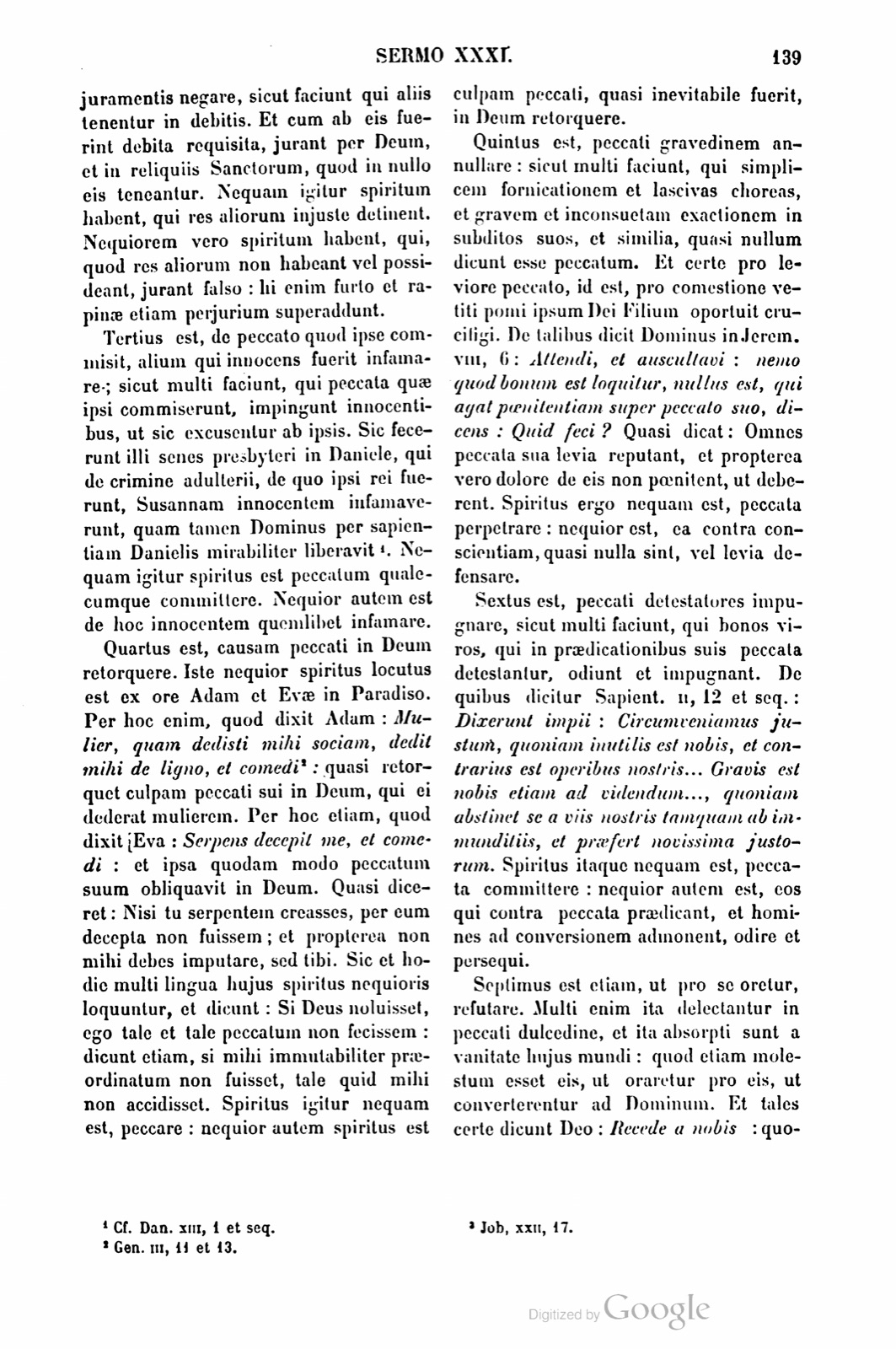
Secundus est, peccatum commissum juramentis negare, sicut faciunt qui aliis tenentur in debitis. Et cum ab eis fuerint debita requisita, jurant per Deum, et in reliquiis Sanctorum, quod in nullo eis teneantur. Nequam igitur spiritum habent, qui res aliorum injuste detinent. Nequiorem vero spiritum habent, qui, quod res aliorum non habeant vel possideant, jurant falso: hi enim furto et rapinæ etiam perjurium superaddunt.
III. Hence on the third note that the house that the unclean spirit, that is, the devil, seeks again and into which he returns, are those from whom he was cast out in baptism through innocence conferred upon him by the power of baptism, or those from whom he went out in the Lenten fast through penance. But this house, that is, the conscience of penitents, although it has been cleansed with brooms either by the penitents themselves through naked confession or by priests through careful inquiry into crimes, and although it has also been adorned by priests through the good examples of the Saints, which the priests by their teachings hung in the hearts of penitents like certain curtains, nevertheless, because the unclean spirit, as is said in Matthew 12:44, finds it vacant from the execution of the satisfaction that had been enjoined upon the one confessing, he goes and takes seven other spirits worse than himself, and entering through relapse they dwell there.
IV. The fourth is what is understood by the seven worse spirits. And note that these seven can be called the worse spirits.
The first is to boast foolishly about sin, which certainly many do. For many boast about this, that they were drunk late; many also glory about this, that they knew such and such a virgin or girl. Many also boast about this, that they played in this way and that way, and so concerning many other things. And certainly it is more serious to boast about any committed sin than simply to perpetrate it. Concerning such people Proverbs 2:14 says: Those who rejoice when they have done evil, and exult in the worst things. Concerning these the Apostle also says to the Philippians 1:18 and 19: Many walk, whom I often told you about, but now I tell you even weeping, enemies of the cross of Christ; whose end is destruction, whose God is the belly, and whose glory is in their confusion. Another reading has "in their shameful parts," because, namely, they are strong for exercising the work of fornication.
The second is to deny by oaths a sin that has been committed, as those do who are bound to others in debts. And when the debts have been demanded from them, they swear by God and upon the relics of the Saints that they are bound to them in nothing. Therefore they have a wicked spirit who unjustly detain the property of others. But they have a worse spirit who swear falsely that they do not have or possess the property of others; for to theft and robbery these add perjury also.
Tertius est, de peccato quod ipse commisit, alium qui innocens fuerit infamare; sicut multi faciunt, qui peccata quæ ipsi commiserunt, impingunt innocentibus, ut sic excusentur ab ipsis. Sic fecerunt illi senes presbyteri in Daniele, qui de crimine adulterii, de quo ipsi rei fuerunt, Susannam innocentem infamaverunt, quam tamen Dominus per sapientiam Danielis mirabiliter liberavit 1. Nequam igitur spiritus est peccatum qualecumque committere. Nequior autem est de hoc innocentem quemlibet infamare.
Quartus est, causam peccati in Deum retorquere. Iste nequior spiritus locutus est ex ore Adam et Evæ in Paradiso. Per hoc enim, quod dixit Adam: Mulier, quam dedisti mihi sociam, dedit mihi de ligno, et comedi 2: quasi retorquet culpam peccati sui in Deum, qui ei dederat mulierem. Per hoc etiam, quod dixit Eva: Serpens decepit me, et comedi: et ipsa quodam modo peccatum suum obliquavit in Deum. Quasi diceret: Nisi tu serpentem creasses, per eum decepta non fuissem; et propterea non mihi debes imputare, sed tibi. Sic et hodie multi lingua hujus spiritus nequioris loquuntur, et dicunt: Si Deus noluisset, ego tale et tale peccatum non fecissem: dicunt etiam, si mihi immutabiliter præordinatum non fuisset, tale quid mihi non accidisset. Spiritus igitur nequam est, peccare: nequior autem spiritus est culpam peccati, quasi inevitabile fuerit, in Deum retorquere.
Quintus est, peccati gravedinem annullare: sicut multi faciunt, qui simplicem fornicationem et lascivas choreas, et gravem et inconsuetam exactionem in subditos suos, et similia, quasi nullum dicunt esse peccatum. Et certe pro leviore peccato, id est, pro comestione vetiti pomi ipsum Dei Filium oportuit crucifigi. De talibus dicit Dominus in Jerem. viii, 6: Attendi, et auscultavi: nemo quod bonum est loquitur, nullus est, qui agat pænitentiam super peccato suo, dicens: Quid feci? Quasi dicat: Omnes peccata sua levia reputant, et propterea vero dolore de eis non pænitent, ut deberent. Spiritus ergo nequam est, peccata perpetrare: nequior est, ea contra conscientiam, quasi nulla sint, vel levia defensare.
The third is, concerning the sin that he himself committed, to defame another who was innocent; as many do, who fasten upon the innocent the sins that they themselves committed, so that they may thus be excused from them. Thus did those elder priests in Daniel, who defamed innocent Susanna concerning the crime of adultery of which they themselves were guilty; nevertheless the Lord wondrously freed her through the wisdom of Daniel 1. Therefore a wicked spirit is to commit any sin whatsoever. But a worse spirit is to defame any innocent person concerning this.
The fourth is to turn back the cause of sin upon God. This worse spirit spoke from the mouth of Adam and Eve in Paradise. For by the fact that Adam said: The woman whom you gave me as a companion gave me from the tree, and I ate 2, he as it were turns back the blame of his sin upon God, who had given the woman to him. Also by the fact that Eve said, The serpent deceived me, and I ate, she too in a certain manner slanted her sin toward God. It was as if she said: Unless you had created the serpent, I would not have been deceived by it; and on that account you ought not impute it to me, but to yourself. So also today many speak with the tongue of this worse spirit and say: If God had not willed it, I would not have done such and such a sin. They also say: if it had not been immutably preordained for me, such a thing would not have happened to me. Therefore a wicked spirit is to sin; but a worse spirit is to turn back the blame of sin upon God, as though it had been inevitable.
The fifth is to annul the gravity of sin, as many do who say that simple fornication and wanton dances, and a grave and unusual exaction upon their subjects, and similar things, are as though no sin. And certainly for a lighter sin, that is, for the eating of the forbidden apple, the Son of God himself had to be crucified. Concerning such people the Lord says in Jeremiah 8:6: I attended and listened; no one speaks what is good; there is no one who does penance for his sin, saying: What have I done? As if he should say: All regard their sins as light, and therefore they do not repent of them with true sorrow, as they ought. Therefore a wicked spirit is to perpetrate sins; a worse one is to defend them against conscience, as though they were nothing or were light.
Sextus est, peccati detestatores impugnare, sicut multi faciunt, qui bonos viros, qui in prædicationibus suis peccata detestantur, odiunt et impugnant. De quibus dicitur Sapient. ii, 12 et seq.: Dixerunt impii: Circumveniamus justum, quoniam inutilis est nobis, et contrarius est operibus nostris... Gravis est nobis etiam ad videndum..., quoniam abstinet se a viis nostris tamquam ab immunditiis, et præfert novissima justorum. Spiritus itaque nequam est, peccata committere: nequior autem est, eos qui contra peccata prædicant, et homines ad conversionem admonent, odire et persequi.
Septimus est etiam, ut pro se oretur, refutare. Multi enim ita delectantur in peccati dulcedine, et ita absorpti sunt a vanitate hujus mundi: quod etiam molestum esset eis, ut oraretur pro eis, ut converterentur ad Dominum. Et tales certe dicunt Deo: Recede a nobis: quorum fundamenta, id est, sæculi prosperitatem ac corporis sanitatem fluvius mortis, et æternæ damnationis cito subvertet. De istis dicitur in Job xxii, 16 et seq.: Fluvius subvertit fundamentum eorum: qui dicebant Deo: Recede a nobis: et quasi nihil posset facere Omnipotens, æstimabant eum: cum ille implesset domos eorum bonis, quorum sententia procul sit a me 3. Igitur nequam spiritus est peccare, sed nequior est, ne a peccatis eximatur etiam orationes bonorum refutare.
Rogate ergo Dominum, ut ita ab his nequioribus spiritibus liberemur, ut tandem consortium Angelorum adipisci mereamur. Quod nobis, etc.
The sixth is to attack those who detest sin, as many do who hate and attack good men who in their preachings detest sins. Concerning them Wisdom 2:12 and following says: The impious said: Let us lie in wait for the just man, because he is useless to us and is contrary to our works... He is grievous to us even to look upon..., because he abstains from our ways as from uncleannesses, and he prefers the last things of the just. And so a wicked spirit is to commit sins; but a worse one is to hate and persecute those who preach against sins and admonish human beings to conversion.
The seventh also is to refuse that prayer be made for oneself. For many are so delighted in the sweetness of sin and so absorbed by the vanity of this world that it would even be troublesome to them that prayer be made for them, that they be converted to the Lord. And such people certainly say to God: Depart from us; their foundations, that is, the prosperity of the age and the health of the body, the river of death and of eternal damnation will quickly overturn. Concerning these it is said in Job 22:16 and following: A river overturned their foundation, who were saying to God: Depart from us; and they were judging the Almighty as if he could do nothing, although he had filled their houses with good things; may their sentence be far from me 3. Therefore a wicked spirit is to sin, but a worse one is to refuse even the prayers of the good, lest one be taken away from sins.
Therefore pray to the Lord that we may be so freed from these worse spirits that at last we may deserve to obtain the fellowship of Angels. May he grant this to us, and so forth.

If a page does not appear, its photograph has not been uploaded yet.