Volume 13 · pp. 546–549
Sermon XXXIV. On the Feast of Blessed Bartholomew the Apostle
A marker with ≈ is an approximate page boundary, placed by measure of the text; the page photographs remain the authority. In the paired views, clicking a page marker brings that page into view.
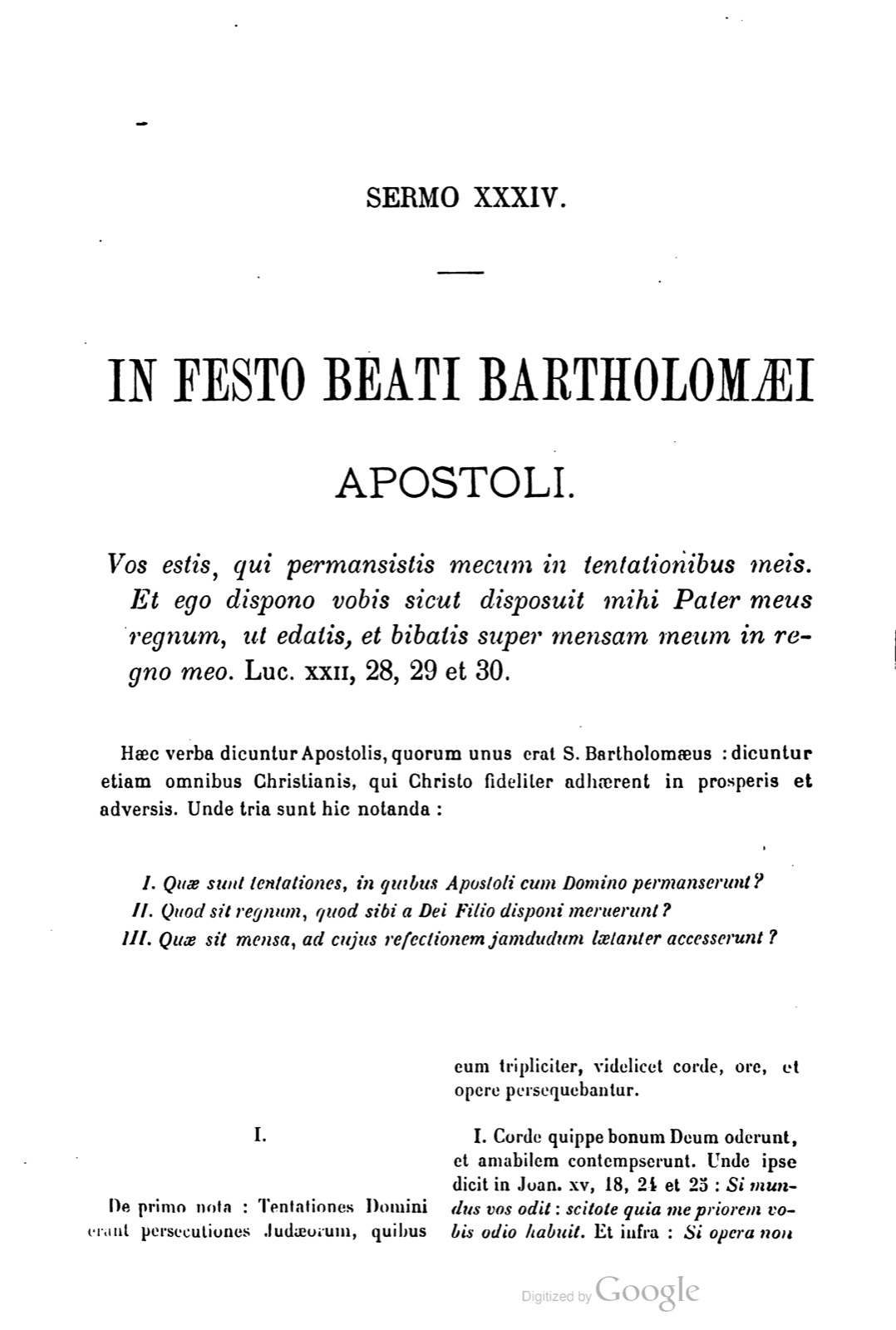
SERMO XXXIV.
IN FESTO BEATI BARTHOLOMÆI APOSTOLI.
Vos estis, qui permansistis mecum in tentationibus meis. Et ego dispono vobis sicut disposuit mihi Pater meus regnum, ut edatis, et bibatis super mensam meum in regno meo. Luc. XXII, 28, 29 et 30.
Hæc verba dicuntur Apostolis, quorum unus erat S. Bartholomæus: dicuntur etiam omnibus Christianis, qui Christo fideliter adhærent in prosperis et adversis. Unde tria sunt hic notanda:
I. Quæ sunt tentationes, in quibus Apostoli cum Domino permanserunt? II. Quod sit regnum, quod sibi a Dei Filio disponi meruerunt? III. Quæ sit mensa, ad cujus refectionem jamdudum lætanter accesserunt?
I.
De primo nota: Tentationes Domini erant persecutiones Judæorum, quibus eum tripliciter, videlicet corde, ore, et opere persequebantur.
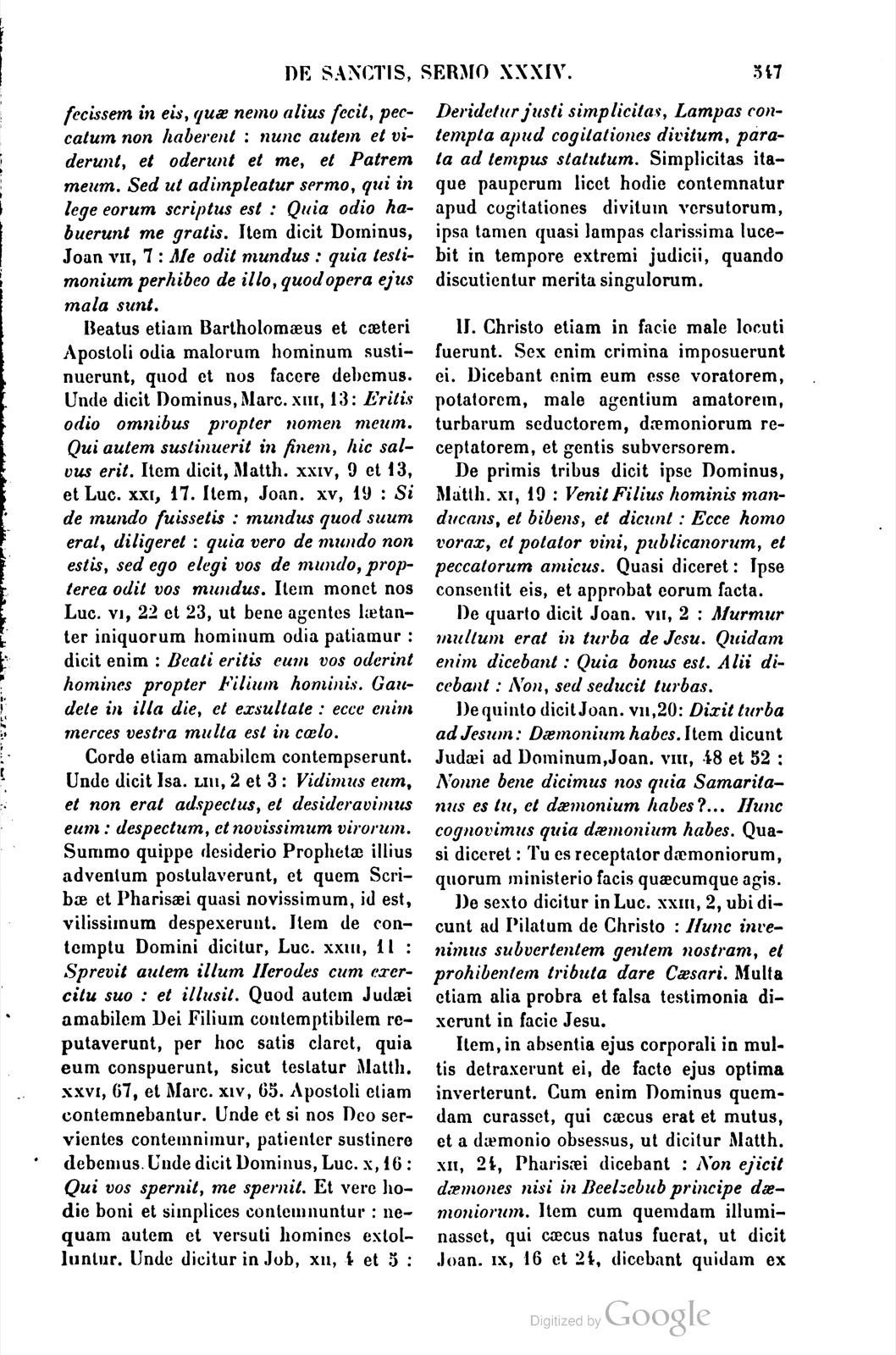
I. Corde quippe bonum Deum oderunt, et amabilem contempserunt. Unde ipse dicit in Joan. XV, 18, 24 et 25: Si mundus vos odit: scitote quia me priorem vobis odio habuit. Et infra: Si opera non fecissem in eis, quæ nemo alius fecit, peccatum non haberent: nunc autem et viderunt, et oderunt et me, et Patrem meum. Sed ut adimpleatur sermo, qui in lege eorum scriptus est: Quia odio habuerunt me gratis. Item dicit Dominus, Joan. VII, 7: Me odit mundus: quia testimonium perhibeo de illo, quod opera ejus mala sunt.
Beatus etiam Bartholomæus et cæteri Apostoli odia malorum hominum sustinuerunt, quod et nos facere debemus. Unde dicit Dominus, Marc. XIII, 13: Eritis odio omnibus propter nomen meum. Qui autem sustinuerit in finem, hic salvus erit. Item dicit, Matth. XXIV, 9 et 13, et Luc. XXI, 17. Item, Joan. XV, 19: Si de mundo fuissetis: mundus quod suum erat, diligeret: quia vero de mundo non estis, sed ego elegi vos de mundo, propterea odit vos mundus. Item monet nos Luc. VI, 22 et 23, ut bene agentes lætanter iniquorum hominum odia patiamur: dicit enim: Beati eritis cum vos oderint homines propter Filium hominis. Gaudete in illa die, et exsultate: ecce enim merces vestra multa est in cælo.
Corde etiam amabilem contempserunt. Unde dicit Isa. LIII, 2 et 3: Vidimus eum, et non erat adspectus, et desideravimus eum: despectum, et novissimum virorum. Summo quippe desiderio Prophetæ illius adventum postulaverunt, et quem Scribæ et Pharisæi quasi novissimum, id est, vilissimum despexerunt. Item de contemptu Domini dicitur, Luc. XXIII, 11: Sprevit autem illum Herodes cum exercitu suo: et illusit. Quod autem Judæi amabilem Dei Filium contemptibilem reputaverunt, per hoc satis claret, quia eum conspuerunt, sicut testatur Matth. XXVI, 67, et Marc. XIV, 65. Apostoli etiam contemnebantur. Unde et si nos Deo servientes contemnimur, patienter sustinere debemus. Unde dicit Dominus, Luc. X, 16: Qui vos spernit, me spernit. Et vere hodie boni et simplices contemnuntur: nequam autem et versuti homines extolluntur. Unde dicitur in Job, XII, 4 et 5: Deridetur justi simplicitas, Lampas contempta apud cogitationes divitum, parata ad tempus statutum. Simplicitas itaque pauperum licet hodie contemnatur apud cogitationes divitum versutorum, ipsa tamen quasi lampas clarissima lucebit in tempore extremi judicii, quando discutientur merita singulorum.
SERMON XXXIV.
ON THE FEAST OF BLESSED BARTHOLOMEW THE APOSTLE.
You are those who have remained with me in my temptations. And I dispose to you, as my Father has disposed to me, a kingdom, that you may eat and drink upon my table in my kingdom. Luke 22:28, 29 and 30.
These words are said to the Apostles, of whom one was Saint Bartholomew; they are also said to all Christians who faithfully adhere to Christ in prosperous things and adverse things. Hence three things are to be noted here:
I. What are the temptations in which the Apostles remained with the Lord? II. What is the kingdom that they deserved to have disposed to them by the Son of God? III. What is the table to whose refreshment they long since came gladly?
I.
On the first, note: The temptations of the Lord were the persecutions of the Jews, with which they persecuted him in a threefold way, namely in heart, mouth, and work.
I. For in heart they hated the good God and contemned the lovable one. Hence he himself says in John 15:18, 24 and 25: If the world hates you, know that it had me in hatred before you. And below: If I had not done among them works that no one else has done, they would not have sin; but now they have both seen and hated both me and my Father. But that the word that is written in their law may be fulfilled: They hated me without cause. Likewise the Lord says, John 7:7: The world hates me, because I bear witness concerning it that its works are evil.
Blessed Bartholomew also and the other Apostles endured the hates of evil men, which we too ought to do. Hence the Lord says, Mark 13:13: You will be hated by all on account of my name. But he who will have endured to the end, this one will be saved. Likewise he says, Matthew 24:9 and 13, and Luke 21:17. Likewise, John 15:19: If you had been of the world, the world would love what was its own; but because you are not of the world, but I chose you out of the world, therefore the world hates you. Likewise Luke 6:22 and 23 admonishes us, when we are doing good things, to suffer gladly the hates of wicked men; for he says: Blessed will you be when men hate you on account of the Son of Man. Rejoice on that day and exult; for behold, your reward is great in heaven.
In heart also they contemned the lovable one. Hence Isaiah 53:2 and 3 says: We saw him, and there was no appearance, and we desired him; despised, and the last of men. For the Prophets sought his coming with the highest desire, and Scribes and Pharisees despised him as the last, that is, the vilest. Likewise concerning the contempt of the Lord it is said, Luke 23:11: Herod with his army despised him and mocked him. But that the Jews reckoned the lovable Son of God contemptible is clear enough through this, that they spat upon him, as Matthew 26:67 and Mark 14:65 bear witness. The Apostles also were contemned. Hence if we serving God are contemned, we ought to endure patiently. Hence the Lord says, Luke 10:16: He who despises you despises me. And truly today good and simple persons are contemned, but wicked and crafty men are exalted. Hence it is said in Job 12:4 and 5: The simplicity of the just man is mocked, a lamp contemned in the thoughts of the rich, prepared for the appointed time. Therefore although the simplicity of the poor is today contemned among the thoughts of crafty rich men, it nevertheless will shine like a very bright lamp at the time of the final judgment, when the merits of individuals will be examined.
II. Christo etiam in facie male locuti fuerunt. Sex enim crimina imposuerunt ei. Dicebant enim eum esse voratorem, potatorem, male agentium amatorem, turbarum seductorem, dæmoniorum receptatorem, et gentis subversorem.
De primis tribus dicit ipse Dominus, Matth. XI, 19: Venit Filius hominis manducans, et bibens, et dicunt: Ecce homo vorax, et potator vini, publicanorum, et peccatorum amicus. Quasi diceret: Ipse consentit eis, et approbat eorum facta.
De quarto dicit Joan. VII, 2: Murmur multum erat in turba de Jesu. Quidam enim dicebant: Quia bonus est. Alii dicebant: Non, sed seducit turbas.
De quinto dicit Joan. VII, 20: Dixit turba ad Jesum: Dæmonium habes. Item dicunt Judæi ad Dominum, Joan. VIII, 48 et 52: Nonne bene dicimus nos quia Samaritanus es tu, et dæmonium habes?... Hunc cognovimus quia dæmonium habes. Quasi diceret: Tu es receptator dæmoniorum, quorum ministerio facis quæcumque agis.
De sexto dicitur in Luc. XXIII, 2, ubi dicunt ad Pilatum de Christo: Hunc invenimus subvertentem gentem nostram, et prohibentem tributa dare Cæsari. Multa etiam alia probra et falsa testimonia dixerunt in facie Jesu.
II. They also spoke evilly to Christ in his face. For they imposed six crimes on him. They said that he was a devourer, a drinker, a lover of evil-doers, a seducer of crowds, a receiver of demons, and an overturner of the nation.
Concerning the first three the Lord himself says, Matthew 11:19: The Son of Man came eating and drinking, and they say: Behold a man who is a devourer and a wine-drinker, a friend of publicans and sinners. As if he were saying: He consents to them and approves their deeds.
Concerning the fourth John 7:2 says: There was much murmuring in the crowd concerning Jesus. For certain persons were saying: Because he is good. Others were saying: No, but he seduces the crowds.
Concerning the fifth John 7:20 says: The crowd said to Jesus: You have a demon. Likewise the Jews say to the Lord, John 8:48 and 52: Do we not say well that you are a Samaritan and have a demon?... We have known that you have a demon. As if he were saying: You are a receiver of demons; by their ministry you do whatever things you do.
Concerning the sixth it is said in Luke 23:2, where they say to Pilate concerning Christ: We have found this man overturning our nation and forbidding tribute to be given to Caesar. Many other reproaches and false testimonies also they said in the face of Jesus.
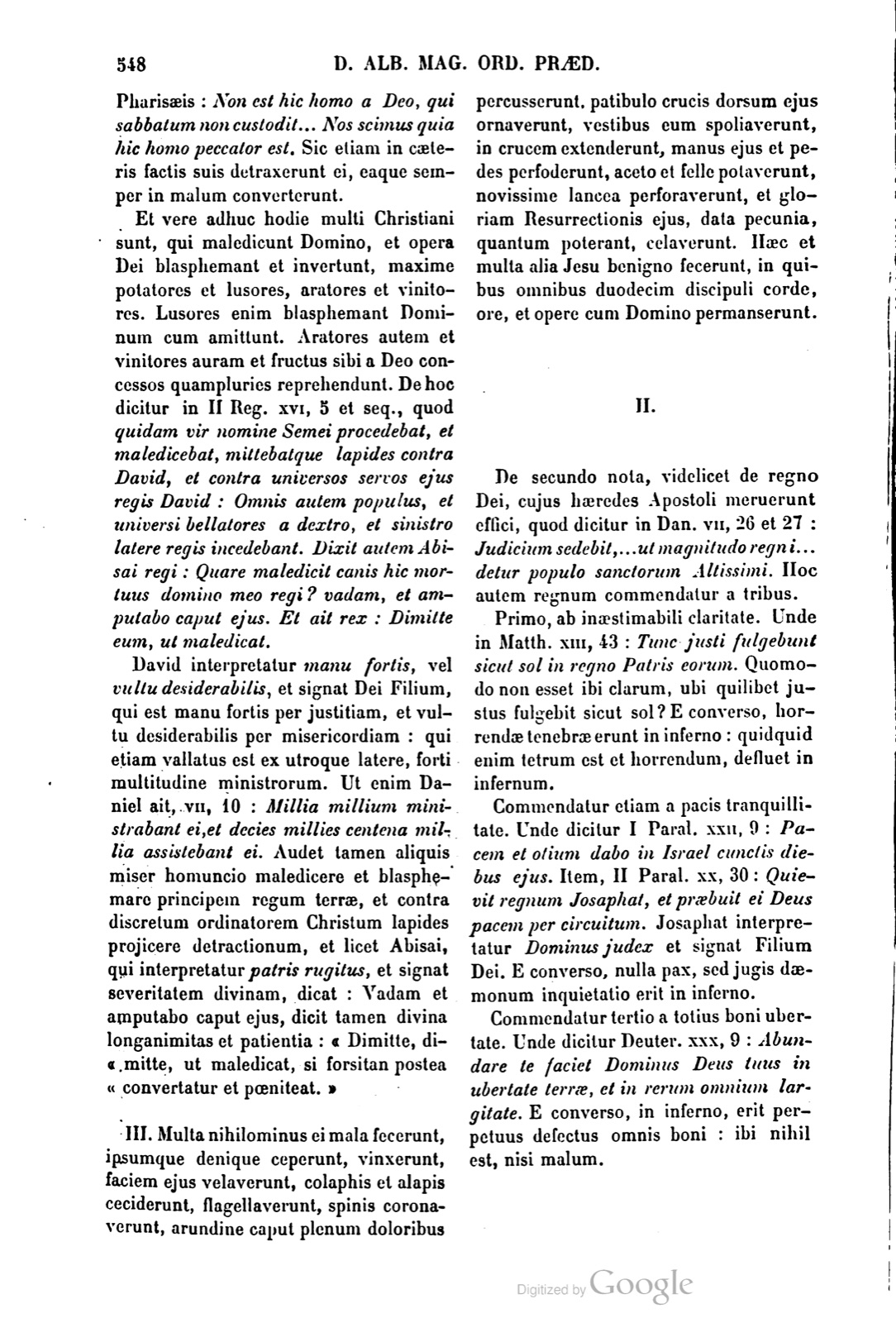
Item, in absentia ejus corporali in multis detraxerunt ei, de factis ejus optima inverterunt. Cum enim Dominus quemdam curasset, qui cæcus erat et mutus, et a dæmonio obsessus, ut dicitur Matth. XII, 24, Pharisæi dicebant: Non ejicit dæmones nisi in Beelzebub principe dæmoniorum. Item cum quemdam illuminasset, qui cæcus natus fuerat, ut dicit Joan. IX, 16 et 24, dicebant quidam ex Pharisæis: Non est hic homo a Deo, qui sabbatum non custodit... Nos scimus quia hic homo peccator est. Sic etiam in cæteris factis suis detraxerunt ei, eaque semper in malum converterunt.
Et vere adhuc hodie multi Christiani sunt, qui maledicunt Domino, et opera Dei blasphemant et invertunt, maxime potatores et lusores, aratores et vinitores. Lusores enim blasphemant Dominum cum amittunt. Aratores autem et vinitores auram et fructus sibi a Deo concessos quampluries reprehendunt. De hoc dicitur in II Reg. XVI, 5 et seq., quod quidam vir nomine Semei procedebat, et maledicebat, mittebatque lapides contra David, et contra universos servos ejus regis David: Omnis autem populus, et universi bellatores a dextro, et sinistro latere regis incedebant. Dixit autem Abisai regi: Quare maledicit canis hic mortuus domino meo regi? vadam, et amputabo caput ejus. Et ait rex: Dimitte eum, ut maledicat.
David interpretatur manu fortis, vel vultu desiderabilis, et signat Dei Filium, qui est manu fortis per justitiam, et vultu desiderabilis per misericordiam: qui etiam vallatus est ex utroque latere, forti multitudine ministrorum. Ut enim Daniel ait, VII, 10: Millia millium ministrabant ei, et decies millies centena millia assistebant ei. Audet tamen aliquis miser homuncio maledicere et blasphemare principem regum terræ, et contra discretum ordinatorem Christum lapides projicere detractionum, et licet Abisai, qui interpretatur patris rugitus, et signat severitatem divinam, dicat: Vadam et amputabo caput ejus, dicit tamen divina longanimitas et patientia: « Dimitte, dimitte, ut maledicat, si forsitan postea convertatur et pæniteat. »
III. Multa nihilominus ei mala fecerunt, ipsumque denique ceperunt, vinxerunt, faciem ejus velaverunt, colaphis et alapis ceciderunt, flagellaverunt, spinis coronaverunt, arundine caput plenum doloribus percusserunt, patibulo crucis dorsum ejus ornaverunt, vestibus eum spoliaverunt, in crucem extenderunt, manus ejus et pedes perfoderunt, aceto et felle potaverunt, novissime lancea perforaverunt, et gloriam Resurrectionis ejus, data pecunia, quantum poterant, celaverunt. Hæc et multa alia Jesu benigno fecerunt, in quibus omnibus duodecim discipuli corde, ore, et opere cum Domino permanserunt.
Likewise, in his bodily absence they detracted from him in many things; they inverted the best things from his deeds. For when the Lord had cured a certain man who was blind and mute and possessed by a demon, as is said in Matthew 12:24, the Pharisees were saying: He does not cast out demons except in Beelzebub, prince of demons. Likewise, when he had given sight to a certain man who had been born blind, as John 9:16 and 24 says, certain persons from the Pharisees were saying: This man is not from God, because he does not keep the Sabbath... We know that this man is a sinner. So also in his other deeds they detracted from him and always turned them into evil.
And truly still today there are many Christians who speak evil of the Lord and blaspheme and invert the works of God, especially drinkers and players, plowmen and vine-dressers. For players blaspheme the Lord when they lose. But plowmen and vine-dressers very often reproach the weather and the fruits granted to them by God. Concerning this it is said in 2 Kings 16:5 and following that a certain man named Shimei was going forth and cursing, and throwing stones against David and against all the servants of King David. But all the people and all the warriors were walking on the right and left side of the king. And Abishai said to the king: Why does this dead dog curse my lord the king? I will go and cut off his head. And the king said: Leave him, that he may curse.
David is interpreted strong by hand, or desirable in countenance, and signifies the Son of God, who is strong by hand through justice and desirable in countenance through mercy; he also is surrounded on each side by a strong multitude of ministers. For as Daniel says, 7:10: Thousands of thousands ministered to him, and ten thousand times a hundred thousand stood before him. Nevertheless some wretched little man dares to curse and blaspheme the prince of the kings of the earth, and to throw stones of detraction against Christ, the discreet ordainer; and although Abishai, which is interpreted roaring of the father and signifies divine severity, says: I will go and cut off his head, nevertheless divine long-suffering and patience says: "Leave him, leave him, that he may curse, if perhaps afterward he may be converted and repent."
III. Nonetheless they did many evil things to him: finally they seized him, bound him, veiled his face, struck him with fists and slaps, scourged him, crowned him with thorns, struck his head full of sorrows with a reed, adorned his back with the gibbet of the cross, stripped him of garments, stretched him upon the cross, pierced his hands and feet, gave him vinegar and gall to drink, at the last pierced him with a lance, and, with money given, hid the glory of his Resurrection as much as they could. These and many other things they did to kind Jesus, in all of which the twelve disciples remained with the Lord in heart, mouth, and work.
II.
De secundo nota, videlicet de regno Dei, cujus hæredes Apostoli meruerunt effici, quod dicitur in Dan. VII, 26 et 27: Judicium sedebit, ... ut magnitudo regni... detur populo sanctorum Altissimi. Hoc autem regnum commendatur a tribus. Primo, ab inæstimabili claritate. Unde in Matth. XIII, 43: Tunc justi fulgebunt sicut sol in regno Patris eorum. Quomodo non esset ibi clarum, ubi quilibet justus fulgebit sicut sol? E converso, horrendæ tenebræ erunt in inferno: quidquid enim tetrum est et horrendum, defluet in infernum.
Commendatur etiam a pacis tranquillitate. Unde dicitur I Paral. XXII, 9: Pacem et otium dabo in Israel cunctis diebus ejus. Item, II Paral. XX, 30: Quievit regnum Josaphat, et præbuit ei Deus pacem per circuitum. Josaphat interpretatur Dominus judex et signat Filium Dei. E converso, nulla pax, sed jugis dæmonum inquietatio erit in inferno.
Commendatur tertio a totius boni ubertate. Unde dicitur Deuter. XXX, 9: Abundare te faciet Dominus Deus tuus in ubertate terræ, et in rerum omnium largitate. E converso, in inferno, erit perpetuus defectus omnis boni: ibi nihil est, nisi malum.
III.
De tertio nota: Mensa Domini, ad quam jam accesserunt Apostoli et alii electi, est fruitio divinitatis et humanitatis Domini nostri Jesu Christi, cujus mensæ fercula sunt innumerabilia. De hac dicit Job, XXXVI, 16: Requies mensæ tuæ erit plena pinguedine.
Rogate ergo Dominum, ut omnia adversa mundi tam patienter sustineamus, ut ad regnum et mensam Dei Filii perveniamus. Quod nobis, etc.
II.
On the second, namely concerning the kingdom of God, of which the Apostles deserved to be made heirs, note that it is said in Daniel 7:26 and 27: The judgment will sit, ... so that the greatness of the kingdom... may be given to the people of the saints of the Most High. But this kingdom is commended by three things. First, by inestimable brightness. Hence in Matthew 13:43: Then the just will shine like the sun in the kingdom of their Father. How would it not be bright there, where every just person will shine like the sun? Conversely, horrible darknesses will be in hell; for whatever is foul and horrible will flow down into hell.
It is also commended by tranquillity of peace. Hence it is said, 1 Chronicles 22:9: I shall give peace and leisure in Israel all his days. Likewise, 2 Chronicles 20:30: The kingdom of Josaphat rested, and God gave him peace round about. Josaphat is interpreted Lord judge and signifies the Son of God. Conversely, there will be no peace in hell, but continual disturbance of demons.
It is commended thirdly by the abundance of every good. Hence Deuteronomy 30:9 says: The Lord your God will make you abound in the abundance of the earth and in the largess of all things. Conversely, in hell there will be a perpetual defect of every good; nothing is there except evil.
III.
On the third, note: The table of the Lord, to which the Apostles and other elect have already come, is the enjoyment of the divinity and humanity of our Lord Jesus Christ, whose table's dishes are innumerable. Concerning this Job 36:16 says: The rest of your table will be full of fatness.
Therefore pray to the Lord that we may sustain all adversities of the world so patiently that we may arrive at the kingdom and table of the Son of God. May he grant this to us, etc.

If a page does not appear, its photograph has not been uploaded yet.