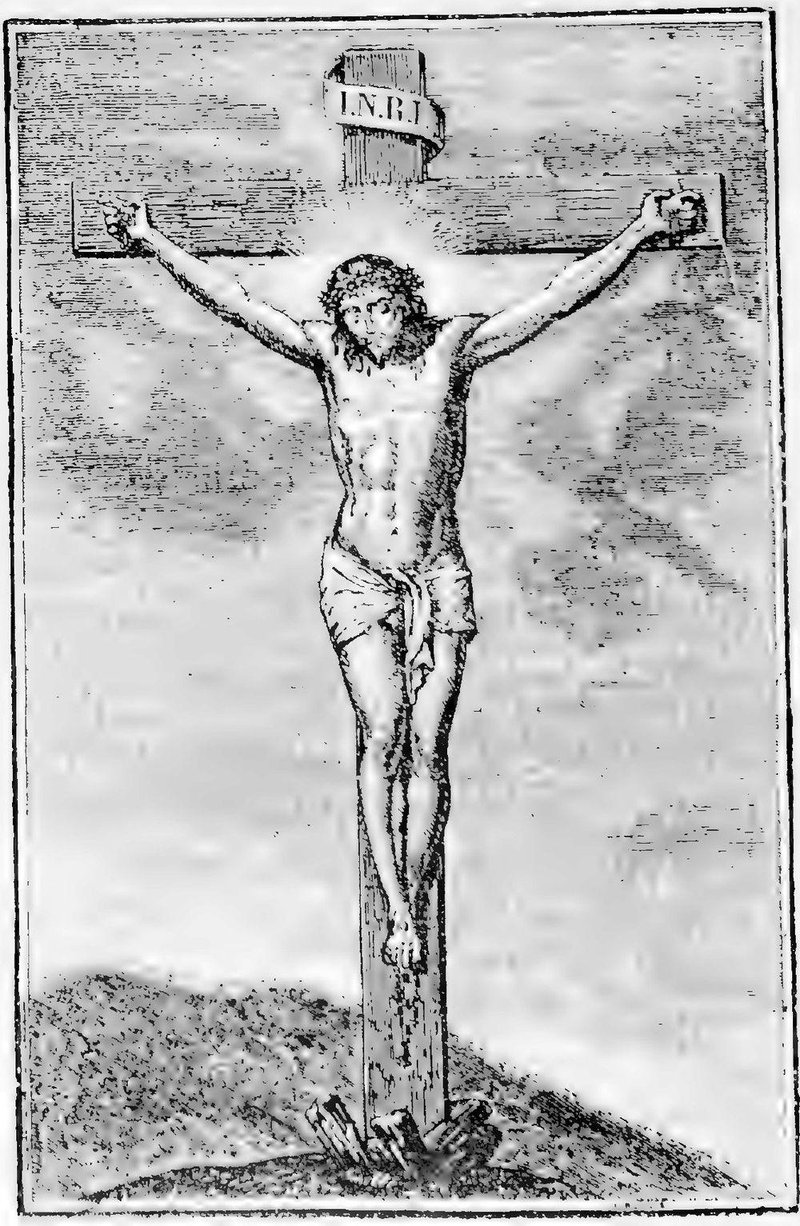
Plate I. Jesus Christ, teacher of Christian doctrine.
Preamble. The End of Man
My son,1 I am going to begin the explanation of Christian doctrine, which is to be the rule of your conduct all your life. Remembering that some books carry a portrait of their author at the beginning, I thought it very fitting to put here the image of Jesus our divine Master, who is the author of this heavenly doctrine; that is why it is called Christian. And since such portraits or images are usually shown in the most heroic act of the person’s life, to make a livelier impression on those who look at them, I decided to show you our lovable Redeemer on the cross. There he sealed with his most precious blood the doctrine he had taught, for this is the most heroic act of his life and an unmistakable proof of the tender love he had for us. You must therefore be very grateful, my son, for so great a benefit, and engrave on your memory the end for which he redeemed you at such cost, which was certainly nothing else than your eternal salvation. But see: to be saved you must love and serve him, since he created you for this end. Otherwise you would lose the immense riches and happiness he keeps in heaven for those who love and serve him here on earth.
To love him you must know him. And to know him at least a little, stop and consider his works: the heavens, which proclaim his glory [Ps. 18:2]; this earth you tread on, with its variety of plants, trees and animals; the depth of the seas; and, in short, the pleasant face of all nature. Then, by considering the greatness and magnificence of all these things, you will be able to come to know how great is the greatness and majesty of their Creator. Consider that he made all these things for your enjoyment and service. Consider yourself too: that he created you, preserves you and redeemed you, and wants nothing but the salvation of your soul. Can you help loving him? Yes, my son, love God, since he loves you so much. Love him with all your heart, with all your soul, with all your mind and with all your strength [Mark 12:30].
It is very just, too, that you serve him. Since he is the supreme Lord of all, all homage, all veneration and all honor are due to him in justice. Finally, the sailor longs to reach port, the soldier fights to win victory, and the traveler always sighs to reach the end of his journey. In the same way you must spare no means to attain the beatitude of glory. There you will see God face to face and enjoy goods and happiness that human understanding could never grasp. This is the end for which you were created. All created things, animate and inanimate alike, fulfil the end for which the Creator formed them. With greater reason, then, man, the noblest creature and the one that has received the greatest benefits from his supreme Maker, must walk toward the end for which he was created.
And do you know the means that lead to this end? Once you have entered the bosom of the Catholic, Apostolic, Roman Church through the one door of Baptism, they consist in knowing and practicing exactly the doctrine our divine Master Jesus Christ taught us. That is, you must know what you are to believe, what you are to hope for, what you are to receive and what you are to practice. And understand that it is not enough to know these things: it is also necessary to put them into practice. In this way you can steer safely to the port of your salvation. You will respond to the grace God gave you in calling you to his flock. You will rightly bear the name of Christian, which means disciple and imitator of Christ. And at last you will obtain happiness in this life and glory in the next, which is what I wish you.
Father. Who created you?
Child. God our Lord, creator of all things.
Q. For what end did God create you?
A. To know him, love him and serve him here on earth, and afterwards to see him and enjoy him for all eternity in heaven.
Q. Are you a Christian?
A. Yes, by the grace of God and the merits of our Lord Jesus Christ.
Q. Who is a Christian?
A. One who is baptized and professes the faith and law of Jesus Christ.
Preliminary Lesson. The Sign of the Christian
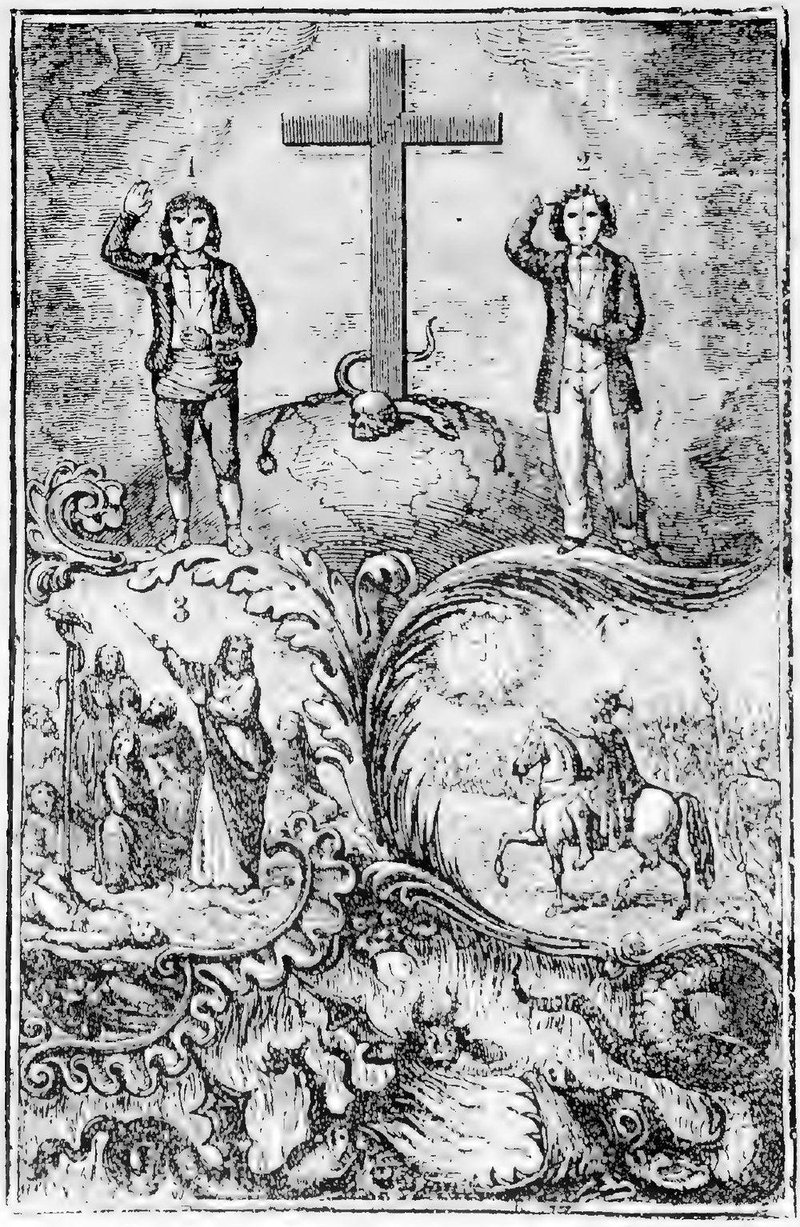
Plate II. The sign of the Christian. The holy cross. 1. A child signing himself. 2. A child blessing himself. 3. Moses in the desert. 4. Constantine. 5. Hell.
My son, do you see the cross in the middle of this plate? You must know that the holy cross is the outward sign of the Christian. It is like the badge and emblem of our great King Jesus Christ, by which we Christians are distinguished from all unbelievers and other enemies of the Catholic faith. The Roman emperors had an eagle as their sign or emblem, the kings of France the fleur-de-lis, and our kings lions and castles; and by this badge Spanish armies and ships are distinguished from foreign ones. We Christians must do the same with the holy cross, the badge or sign of Jesus Christ: we must adorn ourselves with it, to be distinguished from those who are strangers to our holy faith.
The cross is the sign of the Christian because on it Jesus Christ our Lord redeemed us. The kings and great ones of the world usually take as their emblem or arms the things with which they did some great deed, or that signify it; so the shield or coat of arms is a hieroglyph of a great work. And since Jesus Christ triumphed over hell and death by means of the holy cross, and redeemed us from slavery to the devil and to sin, it is very reasonable that the cross should be the shield or arms of Christ and of every Christian.
The holy cross also serves to make us known as Christians and to distinguish us from those who are not. In making it over ourselves we confess the chief mysteries of our holy Religion: the holy and undivided Trinity, the Incarnation, and the Redemption of the human race. In signing oneself one makes three crosses, or one cross three times: one on the forehead, another on the mouth, and another on the breast. So that you may learn to make them well, I have marked them on that child (no. 1) in the plate, in the places where you must make them. And in the child of no. 2 you have a model of how you must bless yourself.
When we bless ourselves we confess the chief mysteries of the Catholic faith. When we say “in the name”, we confess that there is only one God; and when we say “of the Father and of the Son and of the Holy Ghost”, we acknowledge that there are three persons in God. And by the actions we make and the words we say we signify the mystery of the Incarnation. Putting our hand to the forehead, we say “in the name of the Father”; and lowering the hand to the waist we say “and of the Son”. By this we confess that the Son came down from the bosom of the eternal Father into the womb of the Virgin Mary. And adding then “and of the Holy Ghost”, we confess too that this mystery was worked by the grace of the Holy Ghost. And the very cross we form signifies Jesus Christ crucified, our Savior and Redeemer, for on it he suffered and died to save and redeem us. It must therefore be made with great respect and due deliberation, forming the crosses and saying the words at the proper time, so as not to contradict by our careless manner what so holy a thing signifies.
But the sign of the cross does not only serve the Christian as a public profession of the chief mysteries of Religion. It is also for him a kind of summary of morals and the rule of his conduct and actions. To understand this, my son, you must know that Jesus Christ, our divine Master, wishing to give us in a few words an idea of his doctrine, which consists in following him, said these words to us: If any man will come after me, let him deny himself, and take up his cross daily, and follow me (Luke 9:23). And in St. Matthew he adds: The kingdom of heaven suffereth violence, and the violent bear it away (Matt. 11:12). That violence is the force done to the passions by practicing the Christian virtues, and those who do themselves violence in this way carry the kingdom off. The cross he wants us to carry every day is the sum of all the pains, labors, persecutions and so on that every Christian meets in the world on his way to heaven. The violence he must do is the effort by which he must overcome the obstacles set against him, and subdue disordered passions and vices. They that are Christ’s, says the Apostle, have crucified their flesh, with the vices and concupiscences (Gal. 5:24). And so the cross presents the Christian with a summary of the morals of the Gospel.
Nor is this all. The holy cross also shows the Christian the rule of his actions, prescribing that he must do all things in the name of God and for his glory. Whether you eat or drink, says the apostle St. Paul, or whatsoever else you do, do all to the glory of God (1 Cor. 10:31). For this reason, whenever we undertake anything, we should first make the sign of the cross, sealing it, so to speak, with it, so that it may be acknowledged by God and pleasing in his divine eyes. To know, then, whether our actions are good or bad, whether such contracts, such steps or such plans can be pleasing to God and for the glory of his name, we have only to see whether they conform to reason and to the law of God, and whether they can be preceded or followed by the sign of the holy cross. The cross not only shows us our duties; it also obtains for us the means of fulfilling them, by the blessing of heaven it draws down on us. For when we make it, we do not make a mere sign: we present to God a very effective petition, together with the sincere declaration that we believe all the mysteries of our redemption.
Finally, the holy cross is a shield that defends us from the darts of all our enemies, and an offensive weapon with which we rout all hell, as St. Ephrem affirms. That is why the Church uses it to exorcise devils. So, my son, when we sign ourselves we ask God to deliver us from our enemies. All who try to harm us, whether men, animals or devils, are our enemies; and God will deliver us from them all by means of the holy cross, as he has done so many times, if we make it over ourselves with lively faith and firm confidence.
To confirm all this, I am going to tell you some examples. The first is from the Old Testament, where we find that the holy cross, in figure, delivered the Israelites from the plague of fiery serpents. Look, son, at no. 3 of the plate. Do you see those serpents and those men lying dead on the ground? The Israelites had murmured, and God punished them by sending fiery serpents that killed all whom they bit. God commanded Moses to make a bronze serpent and raise it up on high, and all who looked at it were healed at once [Num. 21:6–9; cf. John 3:14]. Look at the cross, respect it greatly and bless yourself often. You will be healed not only of the ills of the body, but also of those that sin causes in your soul.
In no. 4 you have the second example. It is the cross that Constantine, the first emperor to profess Christianity publicly, saw in the sky, and he heard a voice saying to him: “In this sign you will conquer.” He did take the cross as his badge. He had the imperial standard made of it, which was called the Labarum; and with his troops led by it he conquered Licinius and peacefully established the reign of Jesus Christ in the world, placing the holy cross even on the imperial diadem.
We read in the life of St. John Chrysostom that in his time a fierce lion had grown so bold that it came near the town, did great damage in the fields and killed many people. Seeing this, the Saint had a cross set up there; and, wonder of wonders, the next day they found the lion dead beside it. So they knew that God our Lord had delivered them from so terrible an enemy by the holy cross.
We read likewise in the life of St. Francis Xavier that, with no other weapon than the holy cross, he put to flight in terror a crowd of barbarians who were coming to seize him.
And finally we read of St. Constantine, martyr, that when a wicked woman tried to lead him into the sin of impurity, by the holy cross which he made at once the temptress was left as if dead, and the Saint was freed from the temptation. Blessed Joseph Oriol healed countless people with the mere sign of the cross in the Blessed Sacrament chapel of the parish of Our Lady of the Pine in Barcelona.
But in a special way God delivers us from our enemies the devils by means of the holy cross. That is why St. Anthony particularly urged his disciples to make the sign of the cross often, because with it they had nothing to fear from the enemies of their salvation, the devils. “The sign of the cross,” he told them, “and a living faith in Jesus Christ are for the servants of God invincible weapons and a wall of bronze against all the efforts of hell.” But woe to those who do not bless themselves! We read in the life of St. Gregory the Pope that once, when he was exorcising a young woman possessed by the devil, the Saint commanded the evil spirit in the name of Jesus Christ to tell him why he had entered that young woman. He answered: because she had not blessed herself.
You see, then, son, how useful it is to bless yourself devoutly every day: on getting out of bed, on going to bed, on leaving the house, on entering and leaving the church, and on beginning any bodily or spiritual work. In this way you will honor Jesus Christ, drive away the devil, and do your work well. I would like fathers of families to do this and teach it to their children, for this is the way to make them practice it later. St. Louis, King of France, used to bless himself on beginning any work and say: “That is how my mother taught me.”
I would also like mothers to teach their little ones to bless themselves, and when they are too small to do it by themselves, to do it for them. In this way they will surely spare them many bodily and spiritual ills. Fr. Bartholomew Spina2 tells that a devil tried more than fifty times to kill a child and could not succeed, because his mother had blessed him when she put him to bed.
If you want, then, my son, to be delivered from your enemies, take care to bless yourself well every day. I say well, because if you do it badly, instead of driving away the devil you will make him laugh, as has sometimes happened, according to Ramírez. If you saw a man aiming a well-loaded gun at you, you would certainly be frightened. But if the gun had no barrel, far from frightening you, it would make you laugh. Now apply the comparison, and you will see that if the cross the Christian makes in blessing himself is well made, it frightens the devil more than a well-loaded gun would frighten you. But if it is badly made, it is worth less than a gun without a barrel, and so the devil laughs at it. So, dear son, bless yourself every day and form the crosses well. That is why I put the two children in the plate, so that you might learn from them to make the crosses well. In this way you will be delivered from all evil, spiritual and bodily, temporal and eternal, represented in those frightful figures of no. 5; and in the end we shall see each other together in heaven. Amen.
Q. What is the sign of the Christian?
A. The holy cross.
Q. Why?
A. Because on it Christ redeemed us.
Q. In how many ways do we use the sign of the holy cross?
A. In two: signing ourselves and blessing ourselves.3
Q. What is signing oneself?
A. Making three crosses with the thumb of the right hand, one on the forehead, another on the mouth and another on the breast, saying: “By the sign ✠ of the holy cross, from our ✠ enemies deliver us, Lord ✠ our God.”
Q. Why do we sign ourselves on the forehead?
A. That God may deliver us from evil thoughts.
Q. Why do we sign ourselves on the mouth?
A. That God may deliver us from evil words.
Q. Why do we sign ourselves on the breast?
A. That God may deliver us from evil deeds and desires.
Q. What is blessing oneself?
A. Making a cross with the right hand open, from the forehead to the breast and from the left shoulder to the right, saying: “In the name of the Father, and of the Son ✠, and of the Holy Ghost. Amen.”
Q. What do the words and action of blessing oneself signify?
A. They signify the mysteries of the Most Holy Trinity, the Incarnation and the Redemption.
Q. Tell me how.
A. The expression “in the name” signifies the unity of God; and saying “of the Father, of the Son and of the Holy Ghost” signifies the trinity of persons.
Q. How does it signify the mystery of the Incarnation?
A. By the action of lowering the hand from the forehead to the breast.
Q. How does it signify the mystery of the Redemption?
A. By the cross that is made, because on it Christ redeemed us.
Q. How should we sign and bless ourselves?
A. Slowly, attentively and devoutly.
Q. Is it good to do it often?
A. Yes: to honor Jesus Christ, to defend ourselves from our enemies, and to do our work well.
Q. On what occasions is it good to sign and bless ourselves?
A. On getting up and going to bed; on leaving the house; on entering and leaving the church; before eating; on beginning any task or occupation; and when some temptation troubles us.
Footnotes
-
[Claret’s note:] Since it is supposed here that a father is speaking to his son, it has been put this way. But the schoolmaster instructing his pupils will speak to them in the plural, and instead of “son” will say “children” or “gentlemen”. The schoolmistress will do the same with her girls. See the notice on p. 138. ↩
-
Bartolomeo Spina OP (c. 1475–1546), author of a treatise on witchcraft (Quaestio de strigibus). ↩
-
Spanish distinguishes signarse (the three small crosses on forehead, lips and breast) from santiguarse (the large sign of the cross). ↩