Works › Commentary on the Apocalypse of Blessed John
Volume 38 · pp. 636–639
Chapter XI: lemma and measuring the temple
A marker with ≈ is an approximate page boundary, placed by measure of the text; the page photographs remain the authority. In the paired views, clicking a page marker brings that page into view.
CAPUT XI.
Joannes templum metiens audit praedicaturos duos testes, quos bestia a mari ascendens occidet; at illi resurgentes in caelum ascendunt, ac terraemotu occiduntur septem millia hominum, et ad cantum septimi Angeli viginti quatuor seniores Deo gratias agunt.
1. Et datus est mihi calamus similis virgae, et dictum est mihi: Surge, et metire templum Dei, et altare, et adorantes in eo.
2. Atrium autem, quod est foris templum, ejice foras, et ne metiaris illud, quoniam datum est gentibus, et civitatem sanctam calcabunt mensibus quadraginta duobus.
3. Et dabo duobus testibus meis, et prophetabunt diebus mille ducentis sexaginta, amicti saccis.
4. Hi sunt duae olivae, et duo candelabra, in conspectu Domini terrae stantes.
5. Et si quis voluerit eos nocere, ignis exiet de ore eorum, et devorabit inimicos eorum: et si quis voluerit eos laedere, sic oportet eum occidi.
6. Hi habent potestatem claudendi caelum, ne pluat diebus prophetiae ipsorum: et potestatem habent super aquas convertendi eas in sanguinem, et percutere terram omni plaga quotiescumque voluerint.
7. Et cum finierint testimonium suum, bestia quae ascendit de abysso faciet adversum eos bellum, et vincet illos, et occidet eos.
8. Et corpora eorum jacebunt in plateis civitatis magnae, quae vocatur spiritualiter Sodoma, et Aegyptus, ubi et Dominus eorum crucifixus est.
9. Et videbunt de tribubus, et populis, et linguis, et gentibus, corpora eorum per tres dies et dimidium, et corpora eorum non sinent poni in monumentis.
10. Et inhabitantes terram gaudebunt super illos, et jucundabuntur, et munera mittent invicem, quoniam hi duo prophetae cruciaverunt eos qui habitabant super terram.
11. Et post dies tres et dimidium spiritus vitae a Deo intravit in eos. Et steterunt super pedes suos, et timor magnus cecidit super eos qui viderunt eos.
12. Et audierunt vocem magnam de caelo, dicentem eis: Ascendite huc. Et ascenderunt in caelum in nube: et viderunt illos inimici eorum.
13. Et in illa hora factus est terraemotus magnus, et decima pars civitatis cecidit, et occisa sunt in terraemotu nomina hominum septem millia: et reliqui in timorem sunt missi, et dederunt gloriam Deo caeli.
14. Vae secundum abiit, et ecce vae tertium veniet cito.
15. Et septimus Angelus tuba cecinit: et factae sunt voces magnae in caelo, dicentes: Factum est regnum hujus mundi, Domini nostri et Christi ejus, et regnabit in saecula saeculorum. Amen.
16. Et viginti quatuor seniores, qui in conspectu Dei sedent in sedibus suis, ceciderunt in facies suas, et adoraverunt Deum, dicentes:
17. Gratias agimus tibi, Domine Deus omnipotens, qui est, et qui eras, et qui venturus es, quia accepisti virtutem tuam magnam, et regnasti.
CHAPTER XI.
John, measuring the temple, hears that two witnesses are going to preach; the beast ascending from the sea will kill them; but they, rising again, ascend into heaven, and in an earthquake seven thousand human beings are killed, and at the sounding of the seventh Angel the twenty-four elders give thanks to God.
1. And a reed like a rod was given to me, and it was said to me: Rise, and measure the temple of God, and the altar, and those adoring in it.
2. But the court that is outside the temple, cast outside, and do not measure it, because it has been given to the Gentiles, and they will trample the holy city for forty-two months.
3. And I will give to my two witnesses, and they will prophesy for one thousand two hundred sixty days, clothed in sackcloth.
4. These are the two olive trees and the two candlesticks standing in the sight of the Lord of the earth.
5. And if anyone wills to harm them, fire will go out from their mouth and devour their enemies; and if anyone wills to hurt them, thus he must be killed.
6. These have power to close heaven, lest it rain during the days of their prophecy; and they have power over the waters to convert them into blood, and to strike the earth with every plague as often as they wish.
7. And when they have finished their testimony, the beast that ascends from the abyss will make war against them and will conquer them and will kill them.
8. And their bodies will lie in the streets of the great city, which is spiritually called Sodom and Egypt, where also their Lord was crucified.
9. And some from the tribes and peoples and tongues and nations will see their bodies for three and a half days, and they will not allow their bodies to be placed in tombs.
10. And those inhabiting the earth will rejoice over them and will be made glad, and they will send gifts to one another, because these two prophets tormented those who dwelt upon the earth.
11. And after three and a half days the spirit of life from God entered into them. And they stood upon their feet, and great fear fell upon those who saw them.
12. And they heard a great voice from heaven saying to them: Ascend here. And they ascended into heaven in a cloud, and their enemies saw them.
13. And in that hour a great earthquake occurred, and the tenth part of the city fell, and in the earthquake the names of seven thousand human beings were killed; and the rest were sent into fear and gave glory to the God of heaven.
14. The second woe has gone away, and behold, the third woe will come quickly.
15. And the seventh Angel sounded the trumpet; and great voices were made in heaven, saying: The kingdom of this world has become the kingdom of our Lord and of his Christ, and he will reign unto ages of ages. Amen.
16. And the twenty-four elders, who sit on their seats in the sight of God, fell on their faces and adored God, saying:
17. We give thanks to you, Lord God almighty, who is and who was and who is to come, because you have received your great power and have reigned.
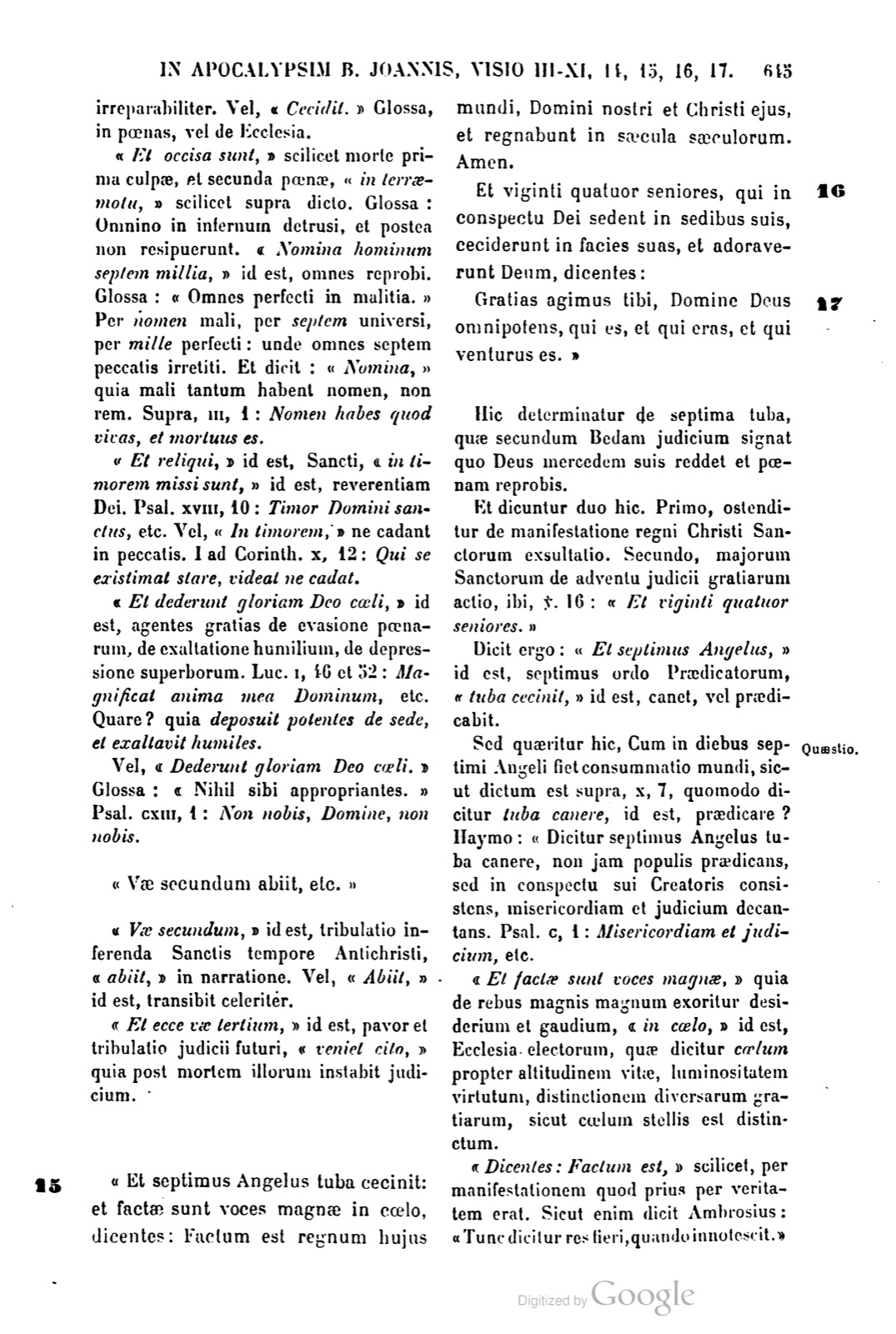
18. Et iratae sunt gentes, et advenit ira tua, et tempus mortuorum judicari, et reddere mercedem servis tuis prophetis, et sanctis, et timentibus nomen tuum, pusillis et magnis, et exterminandi eos qui corruperunt terram.
19. Et apertum est templum Dei in caelo: et visa est arca testamenti ejus in templo ejus, et facta sunt fulgura, et voces, et terraemotus, et grando magna.
IN CAPUT XI APOCALYPSIS ENARRATIO.
1. « Et datus est mihi calamus similis virgae, et dictum est mihi: Surge, et metire templum Dei, et altare, et adorantes in eo. »
Supra promissum est beato Joanni, quod oportet eum iterum praedicare. Hic ostenditur modus praedicationis suae.
Et tanguntur tria quae sunt necessaria Praedicatori. Primum est collatio scientiae, ibi, « Et datus est mihi. » Secundum, exercitatio in praedicatione, ibidem, « Surge. » Tertium, discretio in praedicationis prolatione, ibi, « Et metire templum. »
Dicit ergo: « Et datus est mihi. » In quo notatur, quod scientia datur a Deo. Sapient. IX, 4: Da mihi, Domine, sedium tuarum assistricem sapientiam.
« Calamus, » id est, scientia sacrae Scripturae, quae per calamum bene intelligitur, quia sicut calamo scribitur, sic per Scripturam sacrae scientiae et praedicationem ejus, in corde hominis fides et amor Dei cum caeteris virtutibus inferuntur. Ad Roman. X, 17: Fides ex auditu, auditus autem per verbum Christi. Psal. XLIV, 2: Lingua mea calamus scribae. Scriba est Spiritus sanctus: lingua Praedicatoris est calamus, qua loquitur Spiritus sanctus. Matth. X, 20: Non enim vos estis qui loquimini, sed Spiritus Patris vestri qui loquitur in vobis. Et sicut non laudatur calamus de bona littera, sed scriptor: sic non debet laudari de bona praedicatione Praedicator, sed Spiritus sanctus. Item, comparatur calamo propter mensuram: quia sermo Scripturae debet esse secundum capacitatem auditorum. Ezechiel. XL, 3: Calamus mensurae in manu ejus. Item, propter rectitudinem. Proverb. VIII, 9: Recti sunt sermones mei intelligentibus, et aequi invenientibus scientiam.
Iste autem calamus non est inanis, sed « similis virgae. » Glossa: « Sceptro, quia reges constituit. » Proverb. VIII, 15: Per me reges regnant, etc.
Nota: Virgae dicitur similis, quia promittit regnum observantibus. Matth. V, 3: Beati pauperes spiritu, quoniam ipsorum est regnum caelorum. Item, propter flexibilitatem in omnibus bonis expositionibus. II ad Timoth. III, 16: Omnis Scriptura divinitus inspirata utilis est, etc. Item, propter officium regendi. Hac enim suas oves regunt Praelati. Psal. XLIV, 7: Virga directionis virga regni tui. Item, propter officium corrigendi. Proverb. XXII, 15: Stultitia colligata est in corde pueri, et virga disciplinae, etc. Item, propter auctoritatem aliis praedicandi.
18. And the nations were angry, and your wrath came, and the time for the dead to be judged, and to render reward to your servants the prophets, and to the saints, and to those fearing your name, small and great, and to exterminate those who corrupted the earth.
19. And the temple of God was opened in heaven; and the ark of his testament was seen in his temple, and there were flashes of lightning, and voices, and an earthquake, and great hail.
ON CHAPTER XI OF THE APOCALYPSE, EXPOSITION.
1. “And a reed like a rod was given to me, and it was said to me: Rise, and measure the temple of God, and the altar, and those adoring in it.”
Above it was promised to blessed John that he must preach again. Here the mode of his preaching is shown.
And three things are touched on that are necessary for a Preacher. The first is the conferral of knowledge, there, “And it was given to me.” The second is exercise in preaching, in the same place, “Rise.” The third is discretion in the utterance of preaching, there, “And measure the temple.”
Therefore he says: “And it was given to me.” In this it is noted that knowledge is given by God. Wisdom IX, 4: Give me, Lord, wisdom, the attendant of your seats.
“A reed,” that is, the knowledge of sacred Scripture, which is well understood by a reed, because as one writes with a reed, so through the Scripture of sacred knowledge and its preaching, faith and the love of God with the other virtues are brought into the human heart. Romans X, 17: Faith is from hearing, and hearing through the word of Christ. Psalm XLIV, 2: My tongue is the reed of a scribe. The scribe is the Holy Spirit; the tongue of the Preacher is the reed by which the Holy Spirit speaks. Matthew X, 20: For it is not you who speak, but the Spirit of your Father who speaks in you. And just as the reed is not praised for good writing, but the writer is, so the Preacher ought not be praised for good preaching, but the Holy Spirit. Likewise, it is compared to a reed because of measure, because the word of Scripture ought to be according to the capacity of hearers. Ezekiel XL, 3: A measuring reed in his hand. Likewise, because of straightness. Proverbs VIII, 9: My words are right to those who understand and equitable to those who find knowledge.
But this reed is not empty, but “like a rod.” The Gloss says: “Like a scepter, because it establishes kings.” Proverbs VIII, 15: Through me kings reign, etc.
Note: It is said to be like a rod because it promises the kingdom to those observing it. Matthew V, 3: Blessed are the poor in spirit, for theirs is the kingdom of heaven. Likewise, because of flexibility in all good expositions. 2 Timothy III, 16: Every divinely inspired Scripture is useful, etc. Likewise, because of the office of ruling. For by this Prelates rule their sheep. Psalm XLIV, 7: The rod of direction is the rod of your kingdom. Likewise, because of the office of correcting. Proverbs XXII, 15: Folly is bound up in the heart of a child, and the rod of discipline, etc. Likewise, because of the authority of preaching to others.
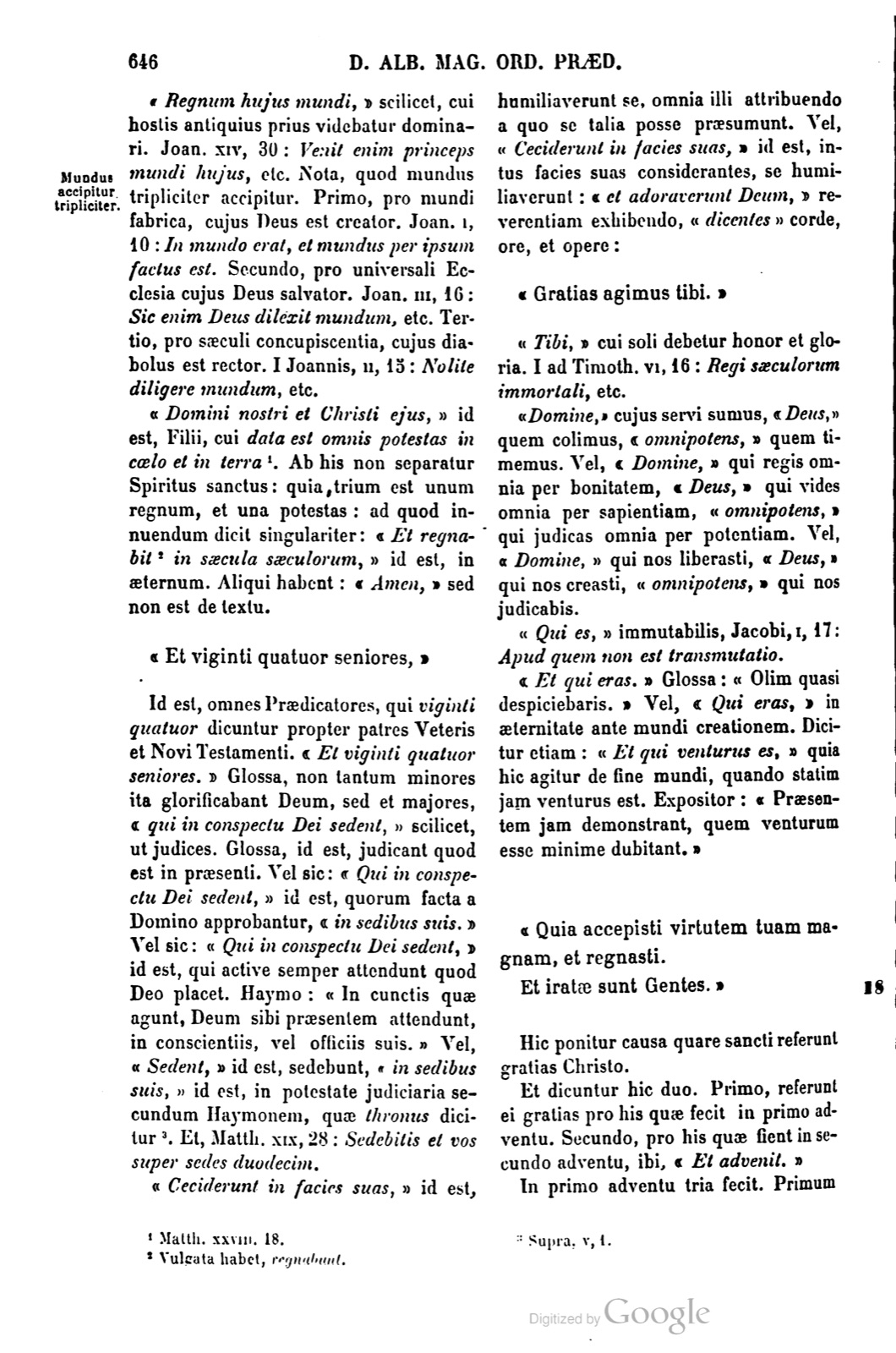
« Et dictum est mihi: Surge, »
Scilicet, ad praedicationis officium, et ne jaceas in viis peccatorum.
« Et metire templum Dei, etc. »
Hic tangitur de discretione praedicandi. Et primo dicitur, quod bonis est praedicandum. Secundo, quod malis est subtrahendum, ibi, V. 2: « Atrium autem. »
Dicit ergo: « Et metire templum Dei, » id est, Ecclesiam. I ad Corinth. III, 17: Templum Dei sanctum est, quod estis vos.
« Et altare, » id est, eminentiores in Ecclesia, vel saeculo renuntiantes, « et adorantes in eo, » id est, templo, scilicet, Patrem in spiritu et veritate 1. Vel, per templum intelligitur Ecclesia, per altare poenitentes et carnem mortificantes, per adorantes contemplativi et spirituales. Quasi diceret: Praedica unicuique secundum suam capacitatem et statum, simplicibus simplicia. I ad Corinth. III, 1 et 2: Tamquam parvulis in Christo lac vobis potum dedi, non escam. Majoribus majora. I ad Corinth. II, 6: Sapientiam loquimur inter perfectos.
Vel, aliter: « Metire templum, » id est, Ecclesiam triumphantem. Psal. XXVIII, 9: In templo ejus omnes dicent gloriam.
« Et altare, » id est, Christum, super quem oblationes Ecclesiae offeruntur. Exod. XX, 24: Altare de terra facietis mihi.
« Et adorantes in eo, » id est, omnes fideles. Et nota, quod inter adorantes et templum ponitur Christus, ad signandum quod Ecclesia militans per Christum conjungitur triumphanti, et e converso. Unde etiam dicitur mediator.
Sensus ergo est: « Metire templum, » id est, contemplare bonorum gaudia, et praedica, « et altare, » id est, Christum, praedicando quae de eo sunt credenda, « et adorantes in eo, » id est, multitudinem fidelium, quae est ex omni gente congregata. Vel, « Adorantes in eo, » id est, ostende qualiter fideles debent adorare.
2. « Atrium autem, quod est foris templum, ejice foras, et ne metiaris illud. »
Hic dicuntur tria. Primo, quod falsi fratres de Ecclesia ejiciendi sunt. Secundo, quod non est eis praedicandum, ibi, « Et ne metiaris. » Tertio, redditur causa horum, ibi, « Quoniam datum est. »
Dicit ergo: « Atrium autem, » id est, peccatores, « quod est foris templum, » id est, extra Ecclesiam merito, qui per atrium signantur, quia atrium adhaeret Ecclesiae, et tamen extra est: sic mali Christiani adhaerent per fidem, et tamen per peccatum extra manent. Item, atrium terra sancta est, et tamen ponuntur ibi cadavera: sic isti per baptismum sanctificati, et tamen peccatis pleni.
“And it was said to me: Rise,”
Namely, to the office of preaching, and so that you do not lie in the ways of sinners.
“And measure the temple of God, etc.”
Here discretion in preaching is touched upon. And first it is said that one must preach to the good. Second, that it must be withdrawn from the evil, there, V. 2: “But the court.”
Therefore he says: “And measure the temple of God,” that is, the Church. 1 Corinthians III, 17: The temple of God is holy, which you are.
“And the altar,” that is, the more eminent persons in the Church, or those renouncing the age, “and those adoring in it,” that is, in the temple, namely the Father in spirit and truth 1. Or, by the temple is understood the Church, by the altar penitents and those mortifying the flesh, by those adoring contemplative and spiritual persons. As if he were saying: Preach to each person according to his capacity and state, simple things to the simple. 1 Corinthians III, 1 and 2: As to little ones in Christ I gave you milk to drink, not food. Greater things to the greater. 1 Corinthians II, 6: We speak wisdom among the perfect.
Or otherwise: “Measure the temple,” that is, the triumphant Church. Psalm XXVIII, 9: In his temple all will speak glory.
“And the altar,” that is, Christ, upon whom the offerings of the Church are offered. Exodus XX, 24: You shall make me an altar of earth.
“And those adoring in it,” that is, all the faithful. And note that Christ is placed between those adoring and the temple, to signify that the militant Church is joined through Christ to the triumphant, and conversely. Hence he is also called mediator.
Therefore the sense is: “Measure the temple,” that is, contemplate the joys of the good and preach them; “and the altar,” that is, Christ, by preaching the things that must be believed concerning him; “and those adoring in it,” that is, the multitude of the faithful, which has been gathered from every nation. Or, “those adoring in it,” that is, show how the faithful ought to adore.
2. “But the court that is outside the temple, cast outside, and do not measure it.”
Here three things are said. First, that false brethren are to be cast out of the Church. Second, that one must not preach to them, there, “And do not measure.” Third, the cause of these is given, there, “Because it has been given.”
Therefore he says: “But the court,” that is, sinners, “that is outside the temple,” that is, outside the Church by merit, who are signified by the court, because the court clings to the Church and yet is outside; so evil Christians cling by faith and yet remain outside through sin. Likewise, the court is holy ground, and yet corpses are placed there; so these have been sanctified through baptism and yet are full of sins.
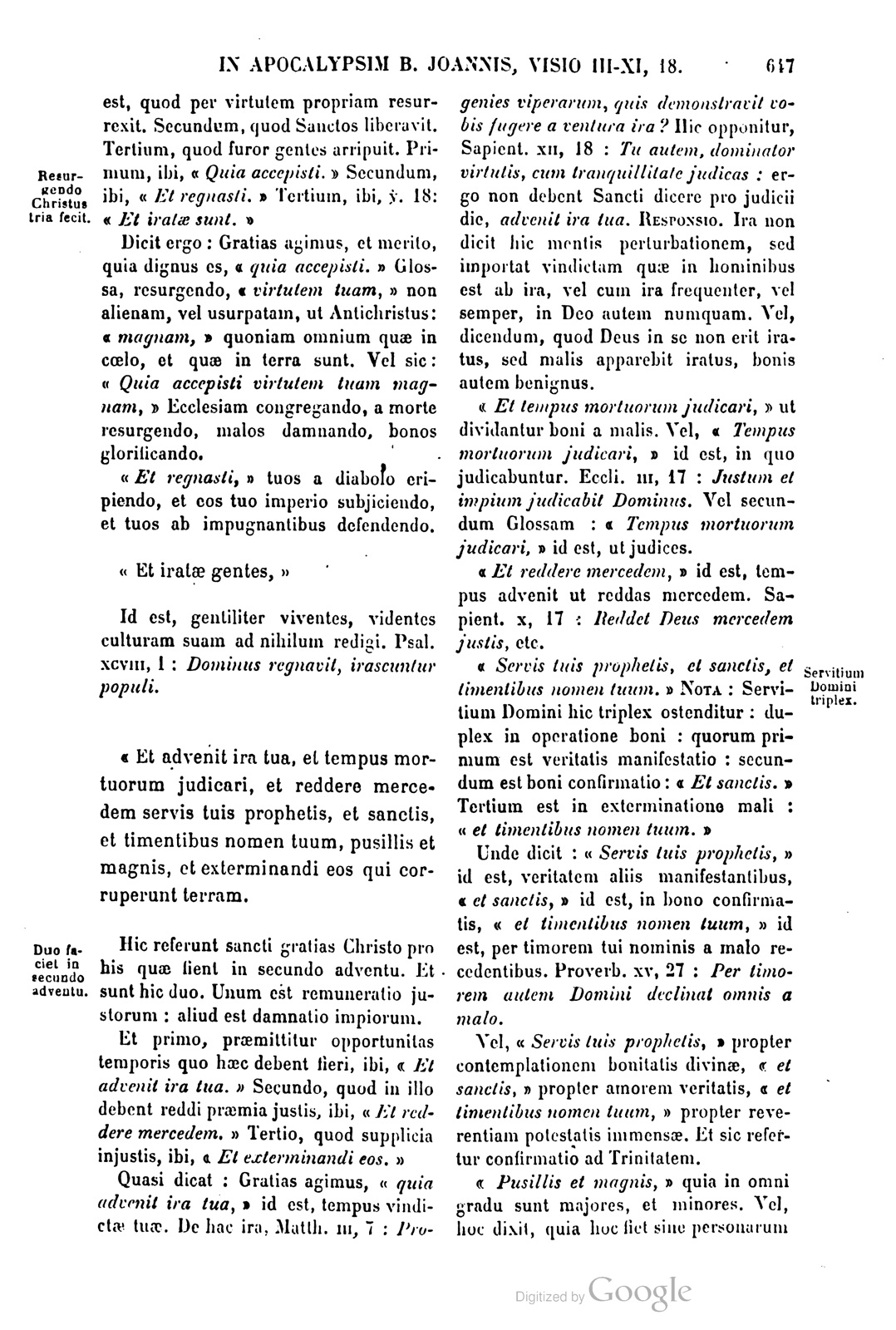
« Atrium autem, quod est foris templum, ejice foras. » Haymo: Quomodo potest foras ejici, quod interius non est?
Responsio. Hoc genus locutionis tale est, quale illud Psalmistae, Psal. LXVIII, 29: Deleantur de libro viventium, id est, non scribantur in eo. Ita etiam hic.
« Atrium ejice foras, » id est, noli computare intus. Vel, « Ejice foras, » id est, praedica ejiciendos foras et damnandos. Vel, « Ejice foras. » Glossa, excommunicando ostende esse foras. Haec ejectio signata est in ejectione ancillae 2. Ad Galat. IV, 30: Ejice ancillam et filium ejus.
« Et ne metiaris illud. » Nota: Dicit eum ratione significati, non significantis. Quasi diceret: Subtrahe eis beneficium praedicationis omnino, sicut dicit Glossa.
« Quoniam datum est gentibus, et civitatem sanctam calcabunt mensibus quadraginta duobus. »
Hic redditur causa.
Et dicuntur tria. Primo, quod reprobi qui sunt in Ecclesia sociabuntur gentibus in ultimis temporibus. Secundo, quod cum eis opprimunt Ecclesiam quadraginta duobus mensibus, ibi, « Et civitatem sanctam. » Tertio promittitur Ecclesiae ad consolationem duorum Prophetarum testimonium sive adventus, ibi, V. 3: « Et dabo duobus testibus. »
Dicit ergo: « Et ne metiaris illud, quoniam datum est, » scilicet, atrium, id est, mali Christiani, « gentibus, » scilicet, in societatem peccatorum, et mortuorum. Psal. CV, 35: Commixti sunt inter gentes.
« Et civitatem sanctam, » id est, Ecclesiam. Psal. CXXXVI, 4: Gloriosa dicta sunt de te, civitas Dei.
« Calcabunt, » id est, oppriment, licet non comminuant. Haymo: « Sicut silex tanto magis eliminatur, quanto magis calcatur: sic sancta Ecclesia ex persecutione perfidorum robustior redditur et luculentior. »
« Mensibus quadraginta duobus, » id est, tribus annis, et dimidio: tantum enim regnabit Antichristus. Et sicut populus Israel quadragesima mansione pervenit in terram promissionis, et tamen ab adversariis sustinuit multa, id est, mala in praecedentibus mansionibus 3: sic Ecclesia perveniet ad terram viventium post persecutiones quas sustinebit diebus illis.
Aliter: Per numerum istum signatur totum tempus vitae praesentis: et hoc propter sex aetates mundi, et septem dies quibus omne tempus volvitur. Sexies septem quadraginta duo faciunt. Et dicuntur menses propter defectum vitae praesentis, quae tota est in defectu. Unde per quadraginta duos menses signatur omne tempus quo impii Ecclesiam calcant sive conculcant, et bonos persequuntur, quod significatum fuit in persecutione Esau contra Jacob 4, et Cain contra Abel, et Saul contra David, et Judaeorum contra Christum.
“But the court that is outside the temple, cast outside.” Haymo asks: How can that be cast outside which is not inside?
Response. This kind of expression is like that saying of the Psalmist, Psalm LXVIII, 29: Let them be blotted out from the book of the living, that is, let them not be written in it. So also here.
“Cast the court outside,” that is, do not count it within. Or, “Cast outside,” that is, preach that they are to be cast outside and damned. Or, “Cast outside.” The Gloss says: show by excommunicating that it is outside. This casting out was signified in the casting out of the handmaid 2. Galatians IV, 30: Cast out the handmaid and her son.
“And do not measure it.” Note: He says “it” by reason of the thing signified, not of the signifying word. As if he were saying: Withdraw from them the benefit of preaching altogether, as the Gloss says.
“Because it has been given to the Gentiles, and they will trample the holy city for forty-two months.”
Here the cause is given.
And three things are said. First, that the reprobate who are in the Church will be associated with the Gentiles in the last times. Second, that with them they oppress the Church for forty-two months, there, “And the holy city.” Third, for the consolation of the Church the testimony or advent of the two Prophets is promised, there, V. 3: “And I will give to my two witnesses.”
Therefore he says: “And do not measure it, because it has been given,” namely the court, that is, evil Christians, “to the Gentiles,” namely into the society of sinners and the dead. Psalm CV, 35: They were mingled among the Gentiles.
“And the holy city,” that is, the Church. Psalm CXXXVI, 4: Glorious things are said of you, city of God.
“They will trample,” that is, oppress, although they will not crush it. Haymo says: “As flint is polished so much the more as it is trampled, so holy Church is rendered stronger and brighter from the persecution of the faithless.”
“For forty-two months,” that is, for three and a half years, for Antichrist will reign for so long. And as the people Israel arrived at the land of promise at the fortieth station, and yet endured many things from adversaries, that is, evils in the preceding stations 3, so the Church will arrive at the land of the living after the persecutions that it will endure in those days.
Otherwise: By that number is signified the whole time of the present life, and this because of the six ages of the world and the seven days through which all time is rolled. Six times seven make forty-two. And they are called months because of the defect of the present life, which is wholly in defect. Hence by forty-two months is signified the whole time in which the impious tread or trample the Church and persecute the good, which was signified in the persecution of Esau against Jacob 4, and of Cain against Abel, and of Saul against David, and of the Jews against Christ.
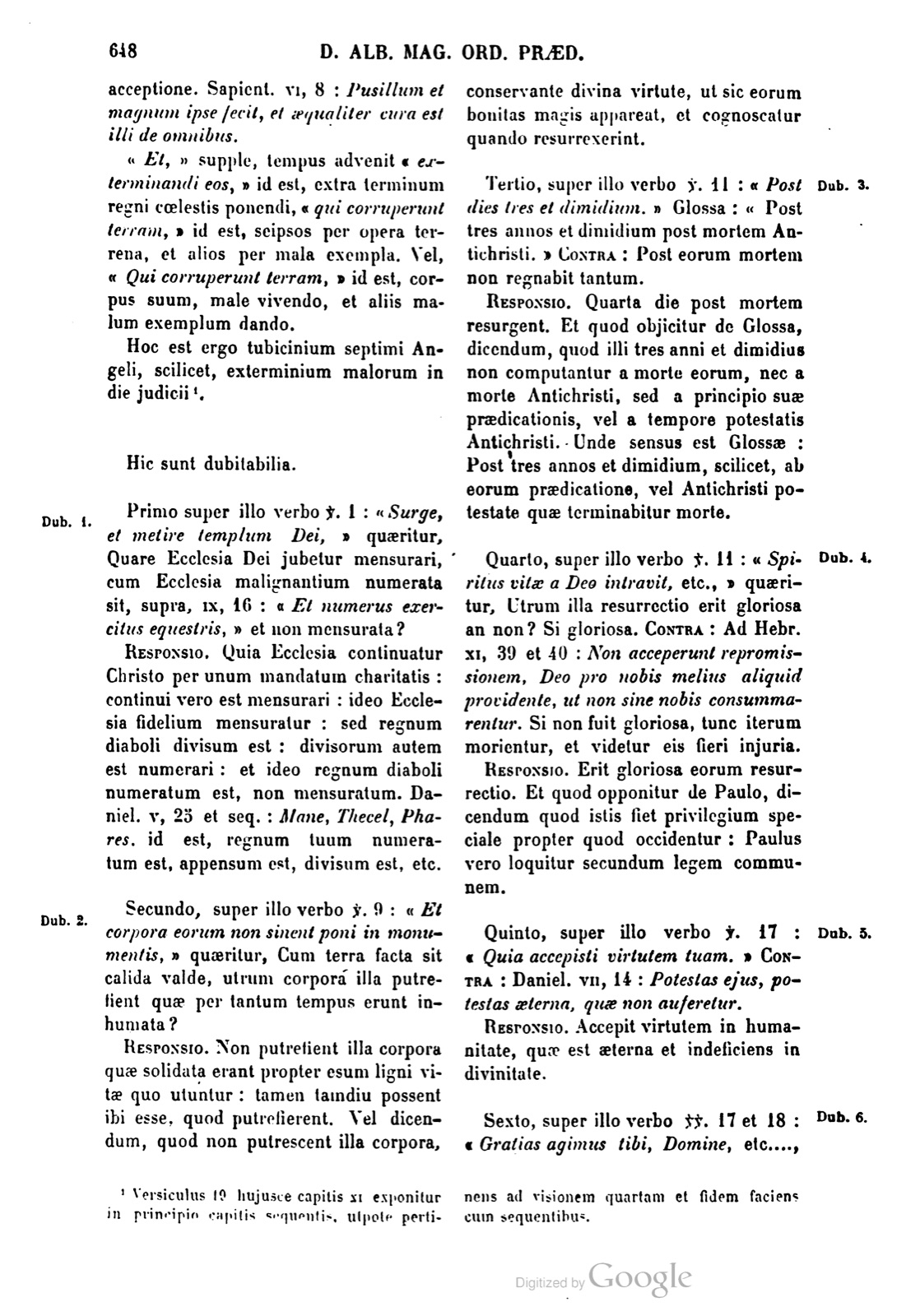
If a page does not appear, its photograph has not been uploaded yet.