Works › Sermons for the Seasons of the Year
Volume 13 · pp. 292–295
Sermon LXXVI. On the Twenty-Second Sunday After Trinity
A marker with ≈ is an approximate page boundary, placed by measure of the text; the page photographs remain the authority. In the paired views, clicking a page marker brings that page into view.
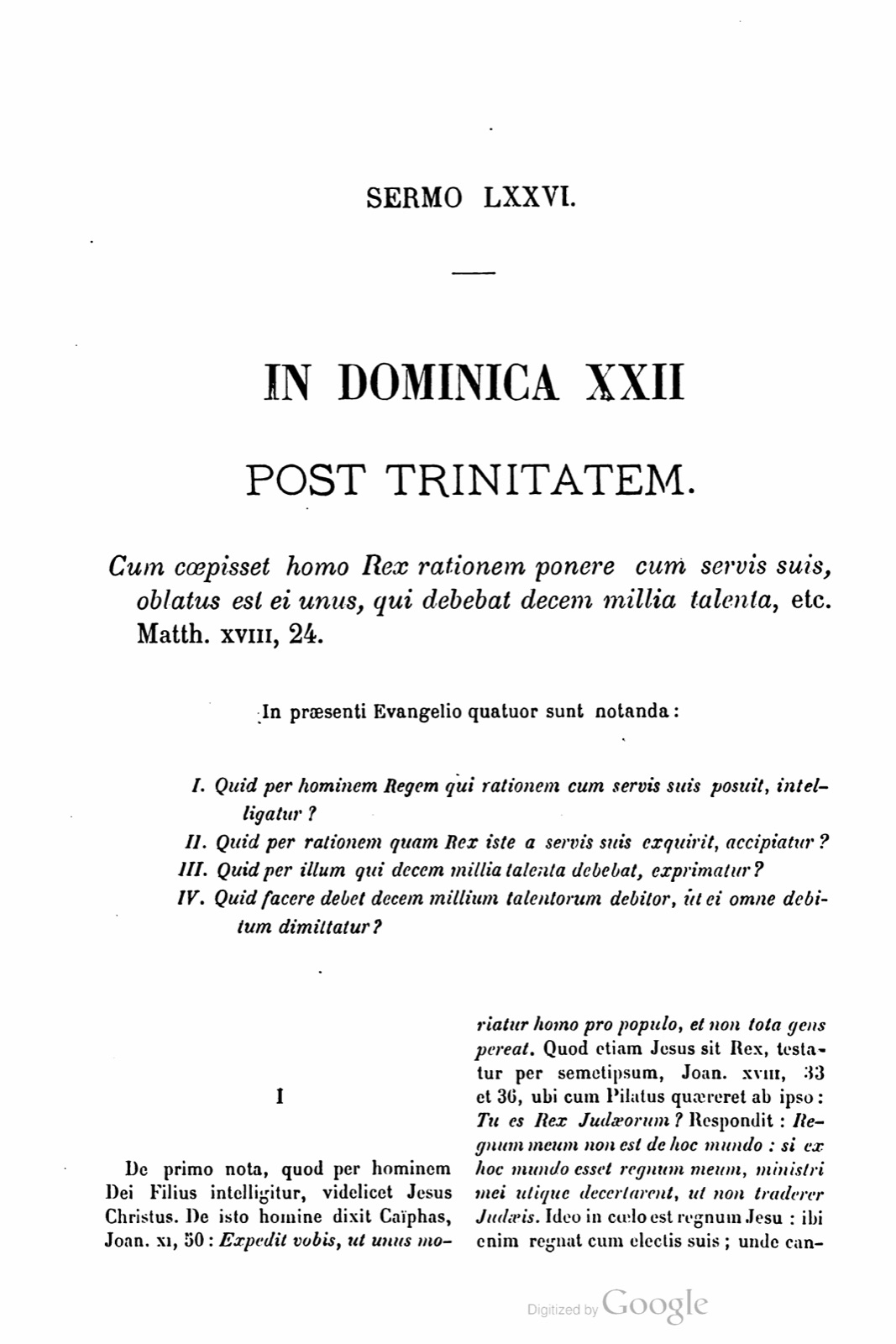
SERMO LXXVI.
IN DOMINICA XXII POST TRINITATEM.
Cum coepisset homo Rex rationem ponere cum servis suis, oblatus est ei unus, qui debebat decem millia talenta, etc. Matth. XVIII, 24.
In praesenti Evangelio quatuor sunt notanda:
I. Quid per hominem Regem qui rationem cum servis suis posuit, intelligatur? II. Quid per rationem quam Rex iste a servis suis exquirit, accipiatur? III. Quid per illum qui decem millia talenta debebat, exprimatur? IV. Quid facere debet decem millium talentorum debitor, ut ei omne debitum dimittatur?
I.
De primo nota, quod per hominem Dei Filius intelligitur, videlicet Jesus Christus. De isto homine dixit Caiphas, Joan. XI, 50: Expedit vobis, ut unus moriatur homo pro populo, et non tota gens pereat. Quod etiam Jesus sit Rex, testatur per semetipsum, Joan. XVIII, 33 et 36, ubi cum Pilatus quaereret ab ipso: Tu es Rex Judaeorum? Respondit: Regnum meum non est de hoc mundo: si ex hoc mundo esset regnum meum, ministri mei utique decertarent, ut non traderer Judaeis. Ideo in caelo est regnum Jesu: ibi enim regnat cum electis suis; unde cantatur: "O quam gloriosum est regnum, in quo cum Christo regnant omnes Sancti, amicti stolis albis, et sequuntur Agnum, quocumque ierit."
II.
De secundo nota, quod per rationem, quam iste homo Rex cum servis suis est positurus, significatur examinatio meritorum, sicut dicit Glossa. Hanc autem Dominus particulariter facit in morte uniuscujusque, sed generaliter eam faciet in die judicii. De hac dicitur in Psal. XVI, 3: Probasti cor meum, et visitasti nocte: igne me examinasti, etc. Dominus enim nocte, id est, in morte, quando videlicet sol materialis occidit hominibus, uniuscujusque cor probat, linguam visitat, et opus examinat, et hoc igne, id est, sapientia et austeritate judiciaria. In igne quippe duo notantur, lux, et ardor. Per lucem intelligitur sapientia Judicis. Per ardorem austeritas ejusdem figuratur. Per sapientiam quippe nullius facinus pertransit indiscussum. Per austeritatem vero nullum peccatum relinquit impunitum.
1. Quod autem Dominus in morte cor hominis probet, sive scrutetur, declarat per Jerem. XVII, 10: Ego Dominus scrutans cor, et probans renes: qui do unicuique juxta viam suam, et juxta fructum adinventionum suarum. Dicitur etiam, Sap. I, 9: In cogitationibus impii interrogatio erit.
SERMON LXXVI.
ON THE TWENTY-SECOND SUNDAY AFTER TRINITY.
When the man, the King, had begun to set an account with his servants, one was brought to him who owed ten thousand talents, etc. Matthew XVIII, 24.
In the present Gospel four things are to be noted:
I. What is understood by the man, the King, who set an account with his servants? II. What is received by the account which that King requires from his servants? III. What is expressed by him who owed ten thousand talents? IV. What ought the debtor of ten thousand talents to do so that every debt may be forgiven him?
I.
Concerning the first, note that by the man the Son of God is understood, namely Jesus Christ. Concerning this man Caiphas said, John XI, 50: It is expedient for you that one man die for the people and the whole nation not perish. That Jesus is also King, he testifies through himself, John XVIII, 33 and 36, where when Pilate asked him: Are you the King of the Jews? He answered: My kingdom is not of this world; if my kingdom were of this world, my ministers would certainly fight so that I might not be handed over to the Jews. Therefore the kingdom of Jesus is in heaven; for there he reigns with his elect; hence it is sung: "O how glorious is the kingdom in which all the Saints reign with Christ, clothed with white robes, and follow the Lamb wherever he goes."
II.
Concerning the second, note that by the account which this man, the King, is about to set with his servants, the examination of merits is signified, as the Gloss says. But the Lord does this particularly at the death of each person, and generally he will do it on the day of judgment. Concerning this it is said in Psalm XVI, 3: You have tested my heart and visited by night; by fire you have examined me, etc. For the Lord by night, that is, in death, when namely the material sun sets for human beings, tests the heart of each person, visits the tongue, and examines the work; and he does this by fire, that is, by judicial wisdom and austerity. For in fire two things are noted, light and heat. By light is understood the wisdom of the Judge. By heat the austerity of the same is figured. For through wisdom no crime passes undiscussed. But through austerity he leaves no sin unpunished.
1. That the Lord at death tests or searches the heart of a human being, he declares through Jeremiah XVII, 10: I the Lord search the heart and test the reins; I give to each one according to his way and according to the fruit of his inventions. It is also said, Wisdom I, 9: There will be interrogation in the thoughts of the impious.
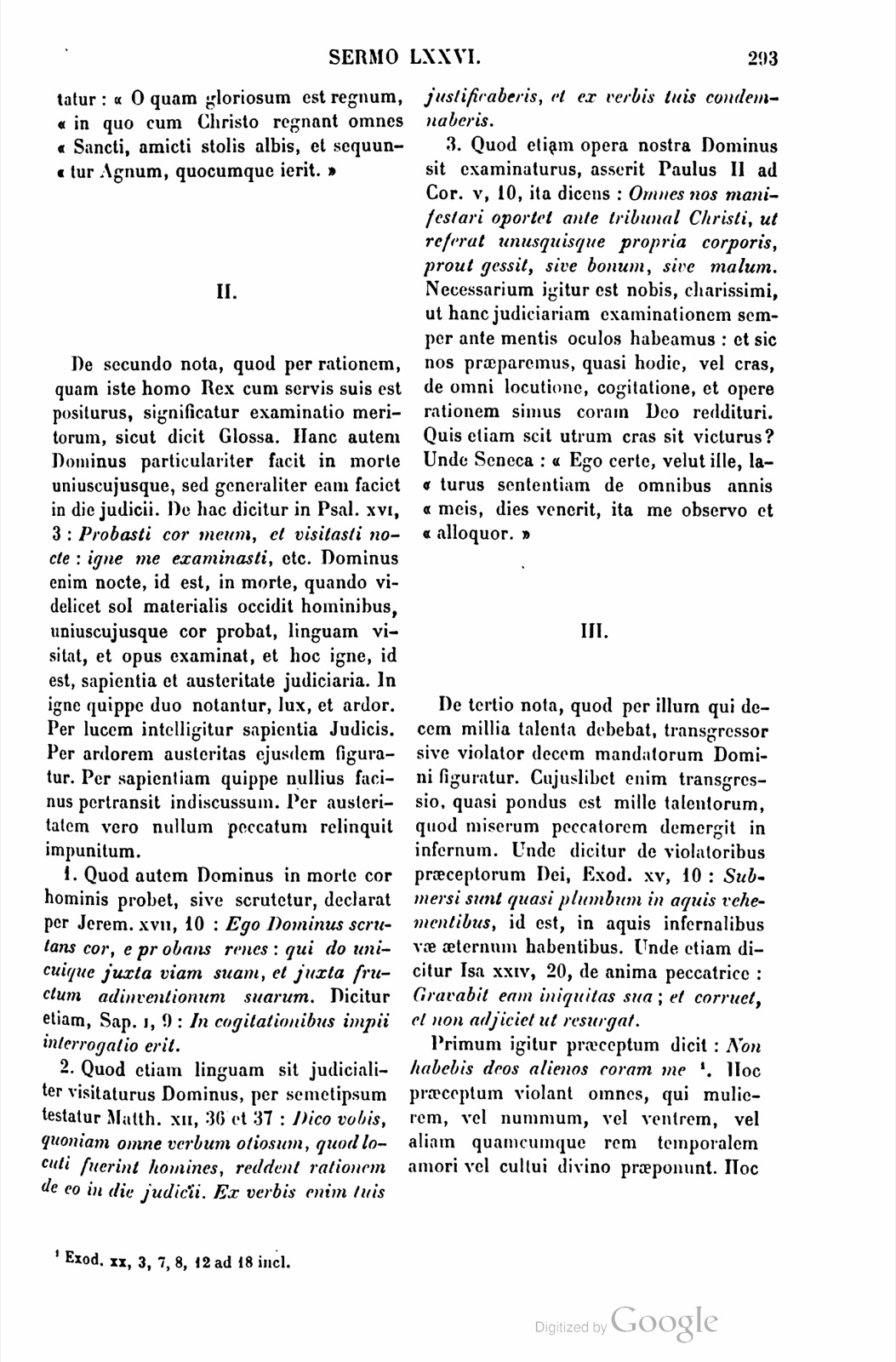
2. Quod etiam linguam sit judicialiter visitaturus Dominus, per semetipsum testatur Matth. XII, 36 et 37: Dico vobis, quoniam omne verbum otiosum, quod locuti fuerint homines, reddent rationem de eo in die judicii. Ex verbis enim tuis justificaberis, et ex verbis tuis condemnaberis.
3. Quod etiam opera nostra Dominus sit examinaturus, asserit Paulus II ad Cor. V, 10, ita dicens: Omnes nos manifestari oportet ante tribunal Christi, ut referat unusquisque propria corporis, prout gessit, sive bonum, sive malum. Necessarium igitur est nobis, charissimi, ut hanc judiciariam examinationem semper ante mentis oculos habeamus: et sic nos praeparemus, quasi hodie, vel cras, de omni locutione, cogitatione, et opere rationem simus coram Deo reddituri. Quis etiam scit utrum cras sit victurus? Unde Seneca: "Ego certe, velut ille, laturus sententiam de omnibus annis meis, dies venerit, ita me observo et alloquor."
III.
De tertio nota, quod per illum qui decem millia talenta debebat, transgressor sive violator decem mandatorum Domini figuratur. Cujuslibet enim transgressio, quasi pondus est mille talentorum, quod miserum peccatorem demergit in infernum. Unde dicitur de violatoribus praeceptorum Dei, Exod. XV, 10: Submersi sunt quasi plumbum in aquis vehementibus, id est, in aquis infernalibus vae aeternum habentibus. Unde etiam dicitur Isa. XXIV, 20, de anima peccatrice: Gravabit eam iniquitas sua; et corruet, et non adjiciet ut resurgat.
Primum igitur praeceptum dicit: Non habebis deos alienos coram me 1. Hoc etiam praeceptum violant mulieres, quae sortilegia, et incantationes, et maleficia faciunt, et qui in talibus confidunt.
Secundum praeceptum dicit: Non assumes nomen Domini Dei tui in vanum. Istud violant, qui perjuria committunt, et qui etiam sine causa juramenta emittunt.
2. That the Lord is also going to visit the tongue judicially, he testifies through himself, Matthew XII, 36 and 37: I say to you that every idle word that human beings have spoken, they will render an account of it on the day of judgment. For from your words you will be justified, and from your words you will be condemned.
3. That the Lord is also going to examine our works, Paul asserts at II Corinthians V, 10, speaking thus: We all must be manifested before the tribunal of Christ, so that each one may receive the proper things of the body, according as he has done, whether good or evil. Therefore it is necessary for us, dearest ones, that we always have this judicial examination before the eyes of the mind; and so let us prepare ourselves, as if today or tomorrow we were about to render an account before God concerning every speech, thought, and work. Who also knows whether he will live tomorrow? Hence Seneca says: "Certainly I, as if that day had come, about to pass sentence concerning all my years, so observe and address myself."
III.
Concerning the third, note that by him who owed ten thousand talents is figured the transgressor or violator of the ten commandments of the Lord. For any transgression is as it were a weight of a thousand talents, which sinks the miserable sinner into hell. Hence it is said concerning violators of God's precepts, Exodus XV, 10: They were submerged like lead in vehement waters, that is, in infernal waters having eternal woe. Hence it is also said in Isaiah XXIV, 20 concerning the sinful soul: Its iniquity will weigh it down, and it will fall and not add to rise.
Therefore the first precept says: You shall not have strange gods before me 1. Women also violate this precept who make sorceries, incantations, and malefices, and those who trust in such things.
The second precept says: You shall not take the name of the Lord your God in vain. Those violate this who commit perjuries and who also send forth oaths without cause.
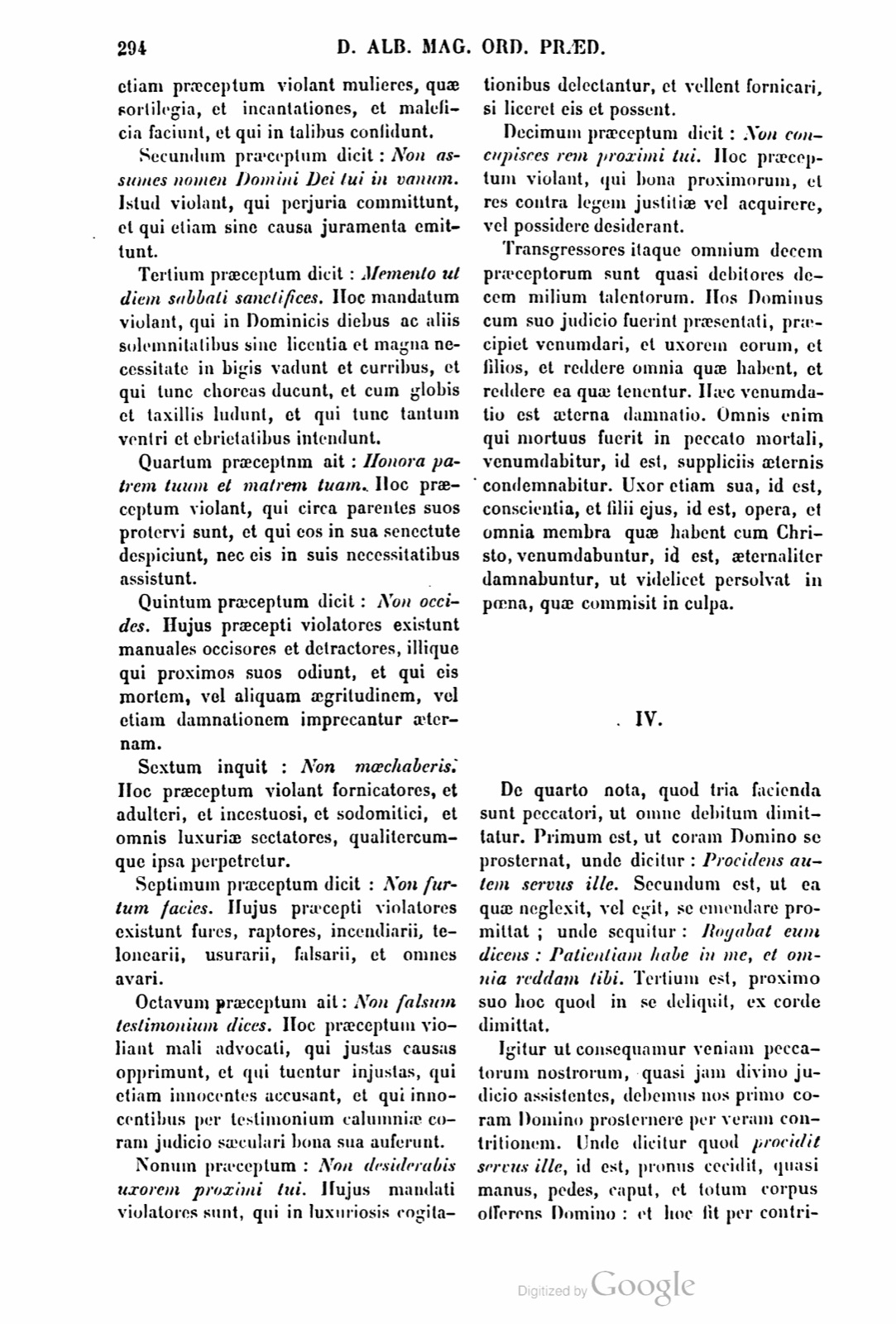
Tertium praeceptum dicit: Memento ut diem sabbati sanctifices. Hoc mandatum violant, qui in Dominicis diebus ac aliis solemnitatibus sine licentia et magna necessitate in bigis vadunt et curribus, et qui tunc choreas ducunt, et cum globis et taxillis ludunt, et qui tunc tantum ventri et ebrietatibus intendunt.
Quartum praeceptum ait: Honora patrem tuum et matrem tuam. Hoc praeceptum violant, qui circa parentes suos protervi sunt, et qui eos in sua senectute despiciunt, nec eis in suis necessitatibus assistunt.
Quintum praeceptum dicit: Non occides. Hujus praecepti violatores existunt manuales occisores et detractores, illique qui proximos suos odiunt, et qui eis mortem, vel aliquam aegritudinem, vel etiam damnationem imprecantur aeternam.
Sextum inquit: Non moechaberis. Hoc praeceptum violant fornicatores, et adulteri, et incestuosi, et sodomitici, et omnis luxuriae sectatores, qualitercumque ipsa perpetretur.
Septimum praeceptum dicit: Non furtum facies. Hujus praecepti violatores existunt fures, raptores, incendiarii, telonearii, usurarii, falsarii, et omnes avari.
Octavum praeceptum ait: Non falsum testimonium dices. Hoc praeceptum violant mali advocati, qui justas causas opprimunt, et qui tuentur injustas, qui etiam innocentes accusant, et qui innocentibus per testimonium calumniae coram judicio saeculari bona sua auferunt.
Nonum praeceptum: Non desiderabis uxorem proximi tui. Hujus mandati violatores sunt, qui in luxuriosis cogitationibus delectantur, et vellent fornicari, si liceret eis et possent.
Decimum praeceptum dicit: Non concupisces rem proximi tui. Hoc praeceptum violant, qui bona proximorum, et res contra legem justitiae vel acquirere, vel possidere desiderant.
Transgressores itaque omnium decem praeceptorum sunt quasi debitores decem milium talentorum. Hos Dominus cum suo judicio fuerint praesentati, praecipiet venumdari, et uxorem eorum, et filios, et reddere omnia quae habent, et reddere ea quae tenentur. Haec venumdati est aeterna damnatio. Omnis enim qui mortuus fuerit in peccato mortali, venumdabitur, id est, suppliciis aeternis condemnabitur. Uxor etiam sua, id est, conscientia, et filii ejus, id est, opera, et omnia membra quae habent cum Christo, venumdabuntur, id est, aeternaliter damnabuntur, ut videlicet persolvat in poena, quae commisit in culpa.
The third precept says: Remember to sanctify the sabbath day. Those violate this command who on Sundays and other solemnities, without permission and great necessity, go in two-horse carts and wagons, and who then lead dances and play with balls and dice, and who then attend only to the belly and drunkennesses.
The fourth precept says: Honor your father and your mother. Those violate this precept who are insolent toward their parents, and who despise them in their old age and do not assist them in their necessities.
The fifth precept says: You shall not kill. Violators of this precept are manual killers and detractors, and those who hate their neighbors and wish them death, or some sickness, or even eternal damnation.
The sixth says: You shall not commit adultery. This precept fornicators, adulterers, incestuous persons, sodomites, and followers of every lust violate, in whatever way it is perpetrated.
The seventh precept says: You shall not steal. Violators of this precept are thieves, robbers, incendiaries, toll-collectors, usurers, forgers, and all the avaricious.
The eighth precept says: You shall not speak false testimony. Bad advocates violate this precept, who oppress just causes and defend unjust ones, who also accuse the innocent, and who by the testimony of calumny before secular judgment take their goods from innocent people.
The ninth precept: You shall not desire the wife of your neighbor. Violators of this command are those who delight in lustful thoughts and would wish to fornicate if it were permitted to them and they could.
The tenth precept says: You shall not covet your neighbor's thing. Those violate this precept who desire either to acquire or to possess the goods of neighbors and things against the law of justice.
Therefore the transgressors of all ten precepts are as it were debtors of ten thousand talents. When these have been presented to the Lord with his judgment, he will order them to be sold, and their wife and sons, and to render all the things that they have and to render the things that they owe. This sale is eternal damnation. For everyone who has died in mortal sin will be sold, that is, condemned to eternal punishments. His wife also, that is, conscience, and his sons, that is, works, and all the members that they have with Christ, will be sold, that is, damned eternally, so that namely he may pay in punishment the things that he committed in fault.
IV.
De quarto nota, quod tria facienda sunt peccatori, ut omne debitum dimittatur. Primum est, ut coram Domino se prosternat, unde dicitur: Procidens autem servus ille. Secundum est, ut ea quae neglexit, vel egit, se emendare promittat; unde sequitur: Rogabat eum dicens: Patientiam habe in me, et omnia reddam tibi. Tertium est, proximo suo hoc quod in se deliquit, ex corde dimittat.
Igitur ut consequamur veniam peccatorum nostrorum, quasi jam divino judicio assistentes, debemus nos primo coram Domino prosternere per veram contritionem. Unde dicitur quod procidit servus ille, id est, pronus cecidit, quasi manus, pedes, caput, et totum corpus offerens Domino: et hoc fit per contritionem. Vera quippe contritio totum corpus offert paenitentiae.
Secundo promittere debemus, quod volumus bona quae negleximus, et mala quae commisimus, omnia recuperare, et emendare per plenam satisfactionem. Unde etiam dicebat ille: Patientiam habe in me, et omnia reddam tibi 2. Quasi diceret: Permitte me diutius vivere, et ego totum emendabo, quod peccavi.
Tertio debemus proximis nostris, qui nos offenderunt, ex toto corde dimittere. Quod quia non fecit servus ille, cui Dominus decem millia talentorum dimiserat, sed tamen a servo suo tam impatienter extorsit centum denarios: Vocavit illum Dominus, et omne debitum quod dimiserat, repetiit, et exegit per tortores. Et hoc valde terribile est exemplum omnibus his, qui nolunt injurias sibi illatas ex corde dimittere. Unde etiam Dominus in conclusione hujus Evangelii dicit: Sic et Pater meus caelestis faciet vobis, si non remiseritis unusquisque fratri suo de cordibus vestris 3.
Rogate ergo Dominum, ut sic debitoribus nostris dimittamus, ut a nostris debitis absoluti societatem supernorum civium attingamus. Amen.
IV.
Concerning the fourth, note that three things are to be done by the sinner so that every debt may be forgiven. The first is that he prostrate himself before the Lord; hence it is said: But that servant, falling down. The second is that he promise to amend the things that he neglected or did; hence it follows: He asked him, saying: Have patience with me, and I will render all things to you. The third is that from the heart he forgive his neighbor for that in which he has offended against him.
Therefore so that we may obtain pardon of our sins, as if now standing before divine judgment, we ought first to prostrate ourselves before the Lord through true contrition. Hence it is said that that servant fell down, that is, fell prone, as if offering hands, feet, head, and whole body to the Lord; and this happens through contrition. For true contrition offers the whole body to repentance.
Second, we ought to promise that we wish to recover all the good things that we neglected and the evils that we committed, and to amend them through full satisfaction. Hence that man also said: Have patience with me, and I will render all things to you 2. As if he were saying: Permit me to live longer, and I will amend all that I have sinned.
Third, we ought from the whole heart to forgive our neighbors who have offended us. Because that servant, to whom the Lord had forgiven ten thousand talents, did not do this, but nevertheless so impatiently extorted a hundred denarii from his servant, the Lord called him and repeated and exacted through torturers the whole debt that he had forgiven. And this is a very terrible example to all those who are unwilling from the heart to forgive injuries inflicted on them. Hence also the Lord says in the conclusion of this Gospel: So also my heavenly Father will do to you, if each one does not forgive his brother from your hearts 3.
Therefore ask the Lord that we may so forgive our debtors that, absolved from our debts, we may reach the society of the citizens above. Amen.

If a page does not appear, its photograph has not been uploaded yet.