Volume 13 · pp. 562–566
Sermon XXXVIII. Third on the Nativity of Blessed Mary, Opening
A marker with ≈ is an approximate page boundary, placed by measure of the text; the page photographs remain the authority. In the paired views, clicking a page marker brings that page into view.
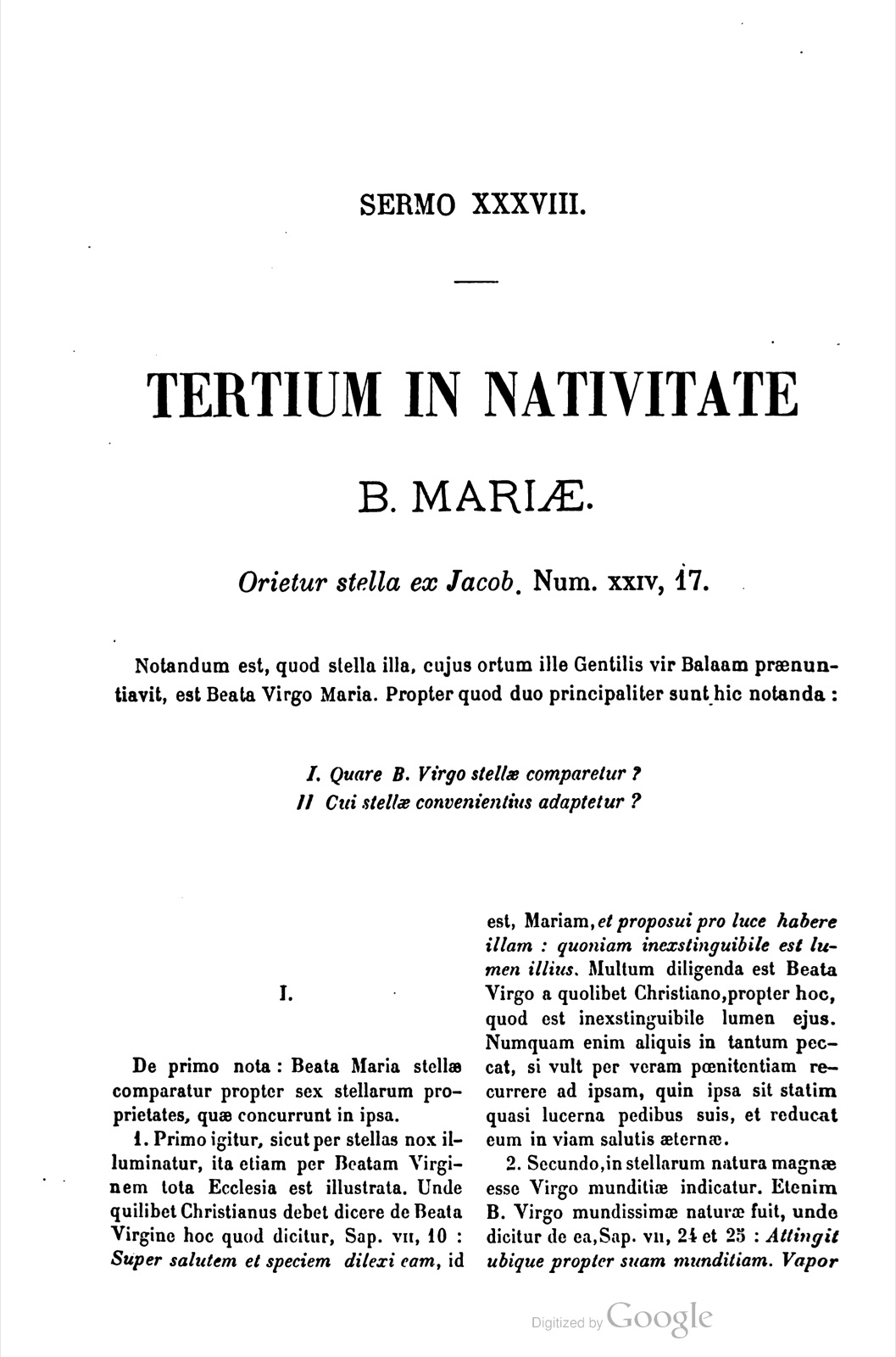
SERMO XXXVIII.
TERTIUM IN NATIVITATE B. MARIÆ.
Orietur stella ex Jacob. Num. XXIV, 17.
Notandum est, quod stella illa, cujus ortum ille Gentilis vir Balaam prænuntiavit, est Beata Virgo Maria. Propter quod duo principaliter sunt hic notanda:
I. Quare B. Virgo stellæ comparetur? II. Cui stellæ convenientius adaptetur?
I.
De primo nota: Beata Maria stellæ comparatur propter sex stellarum proprietates, quæ concurrunt in ipsa.
1. Primo igitur, sicut per stellas nox illuminatur, ita etiam per Beatam Virginem tota Ecclesia est illustrata. Unde quilibet Christianus debet dicere de Beata Virgine hoc quod dicitur, Sap. VII, 10: Super salutem et speciem dilexi eam, id est, Mariam, et proposui pro luce habere illam: quoniam inexstinguibile est lumen illius. Multum diligenda est Beata Virgo a quolibet Christiano, propter hoc, quod est inexstinguibile lumen ejus. Numquam enim aliquis in tantum peccat, si vult per veram pœnitentiam recurrere ad ipsam, quin ipsa sit statim quasi lucerna pedibus suis, et reducat eum in viam salutis æternæ.
2. Secundo, in stellarum natura magnæ esse Virgo munditiæ indicatur. Etenim B. Virgo mundissimæ naturæ fuit, unde dicitur de ea, Sap. VII, 24 et 25: Attingit ubique propter suam munditiam. Vapor
SERMON XXXVIII.
THIRD ON THE NATIVITY OF BLESSED MARY.
A star will rise from Jacob. Numbers 24:17.
It must be noted that that star whose rising that Gentile man Balaam foretold is the Blessed Virgin Mary. On account of this two things are principally to be noted here:
I. Why is the Blessed Virgin compared to a star? II. To which star is she more suitably adapted?
I.
On the first, note: Blessed Mary is compared to a star on account of six properties of stars, which concur in her.
1. First, therefore, as night is illuminated by the stars, so also the whole Church is illumined by the Blessed Virgin. Hence any Christian ought to say concerning the Blessed Virgin what is said in Wisdom 7:10: Above health and beauty I loved her, that is, Mary, and I proposed to have her for light, because her light is inextinguishable. The Blessed Virgin is much to be loved by any Christian, on account of this, that her light is inextinguishable. For no one sins so greatly, if he wishes through true penance to run back to her, that she is not immediately like a lamp to his feet and leads him back into the way of eternal salvation.
2. Secondly, in the nature of stars the Virgin is indicated to be of great cleanness. For the Blessed Virgin was of most clean nature; hence it is said concerning her, Wisdom 7:24 and 25: She reaches everywhere on account of her cleanness. A vapor
est enim virtutis Dei, et emanatio quædam est claritatis omnipotentis Dei sincera: et ideo nihil inquinatum in eam incurrit. Vere dicitur, quod munditia Beatæ Virginis attingit ubique. Attigit enim Patrem, et Filium, et Spiritum sanctum. Patrem attigit ex sinu suo accipiens Filium suum unigenitum. Filium attigit, eumdem recipiens in uterum suum. Attigit et Spiritum sanctum, quem habuit in divinæ conceptionis adjutorium. Et vere B. Virgo Maria munda fuit. Fuit enim claritatis omnipotentis Dei sincera emanatio. Ipsa ab initio, et ante sæcula 1 emanavit a Deo, quia ad hoc ut fieret mater Filii Dei, prædestinata fuit ab æterno: et ideo nihil coinquinatum potuit intrare in illam. Decuit enim ut illa quæ futura erat mater Dei, sancta esset et immaculata. Quod autem Beata Virgo ab æterno præordinata fuerit in matrem Dei, ipsa protestatur, Proverb. VIII, 22 et 23, ubi dicitur: Dominus possedit me in initio viarum suarum, antequam quidquam faceret a principio. Ab æterno ordinata sum.
3. Tertio, quælibet stella major est quam esse videatur: ita etiam Beata Virgo, licet magni meriti esset apud Deum per humilitatem, tamen parva erat apud semetipsam. Unde legitur, Luc. I, 28, quod cum Angelus dixisset: Ave gratia plena, Dominus tecum: ipsa hæc audiens suadente humilitate turbata est. Quasi diceret: Ego non sum digna quod sim vel dicar gratia plena, et quod Dominus sit mecum, et quia appeller inter mulieres benedicta. Hinc etiam cum Angelus postmodum insinuaret ei, quod conceptura et paritura esset Dei Filium: ipsa tamen ab humilitate sua non recessit. Sed cum Angelus omnem legationem suam adimplesset, respondit ei, dicens: Ecce ancilla Domini. Non dicit: Ecce sponsa Patris, ecce mater Filii, ecce sacrarium Spiritus sancti. Quod si dixisset, mentita non fuisset. Debemus etiam et nos imitari humilitatem Beatæ Mariæ, ut videlicet per humilitatem parvi simus in oculis nostris, et sic magni erimus in oculis Dei. Unde dixit Samuel ad Saulem, I Reg. XV, 17: Nonne cum parvulus esses in oculis tuis, caput in tribubus Israel factus es? unxitque te Dominus in regem super Israel? Quasi diceret: Olim cum parvulus eras in oculis tuis, magnus fuisti in oculis Domini. Nunc autem cum magnus es in oculis tuis, parvus es in oculis Domini: propter quod etiam subjungit: Abjecit te Dominus ne sis rex 2.
4. Quarto, ex ordinato motu stellarum dulcis harmonia suscitatur, licet a nobis non audiatur. Ita etiam B. Virgo dulcem harmoniam devotæ laudis effudit in aures Domini, quando gratias egit ei super beneficiis ab eo susceptis. Ait enim: Magnificat anima mea Dominum. Et exsultavit spiritus meus, et cætera quæ sequuntur 3. Similiter et nos pro singulis beneficiis a Deo susceptis, debemus ei referre magnificas laudes et devotas gratiarum actiones, et sic dulcem harmoniam suscitabimus auribus suæ benignitatis. Sic enim provocabitur, quod plura nobis misericordiarum suarum munera largietur. Unde monet nos Eccli. XLIII, 33 et 34: Benedicentes Dominum, exaltate illum quantum potestis: major est enim omni laude. Exaltantes eum replemini virtute. Quasi diceret: Si exaltaveritis eum, gratias ei referendo, amplioribus virtutum donis vos adimplebit. Hinc etiam dicit Bernardus: « Disce in agendo gratias non esse tardus aut segnis: ingratitudo enim est ventus urens, exsiccans fontem misericordiæ, et rorem pietatis. »
5. Quinto, stella in effusione radiorum suorum non corrumpitur aut violatur. Sic et B. Virgo in Nativitate Dei Filii non est corrupta: sed quem Virgo concepit, et quem Virgo in utero portavit, hunc etiam Virgo peperit, et post partum inviolata ac semper Virgo permansit. Unde cantatur in Sequentia Lætabundus:
For it is the virtue of God, and it is a certain sincere emanation of the brightness of almighty God; and therefore nothing defiled runs into her. It is truly said that the cleanness of the Blessed Virgin reaches everywhere. For she reached the Father, and the Son, and the Holy Spirit. She reached the Father by receiving from his bosom his only-begotten Son. She reached the Son, receiving the same into her womb. She also reached the Holy Spirit, whom she had as helper of the divine conception. And truly Blessed Virgin Mary was clean. For she was a sincere emanation of the brightness of almighty God. She emanated from God from the beginning and before the ages 1, because she was predestined from eternity for this, that she should become mother of the Son of God; and therefore nothing defiled could enter into her. For it was fitting that she who was going to be mother of God should be holy and immaculate. But that the Blessed Virgin had been preordained from eternity as mother of God, she herself declares, Proverbs 8:22 and 23, where it is said: The Lord possessed me in the beginning of his ways, before he made anything from the beginning. From eternity I was ordained.
3. Thirdly, any star is greater than it seems to be; so also the Blessed Virgin, although she was of great merit before God through humility, nevertheless was small before herself. Hence one reads, Luke 1:28, that when the Angel had said: Hail full of grace, the Lord is with you, she, hearing these things, was troubled by persuading humility. As if she were saying: I am not worthy that I be or be called full of grace, and that the Lord be with me, and that I be called blessed among women. Hence also when the Angel afterward suggested to her that she would conceive and bear the Son of God, nevertheless she did not withdraw from her humility. But when the Angel had fulfilled his whole embassy, she responded to him, saying: Behold the handmaid of the Lord. She does not say: Behold the bride of the Father, behold the mother of the Son, behold the shrine of the Holy Spirit. But if she had said it, she would not have lied. We also ought to imitate the humility of Blessed Mary, namely that through humility we may be small in our own eyes, and thus we will be great in the eyes of God. Hence Samuel said to Saul, 1 Kings 15:17: When you were little in your own eyes, were you not made head among the tribes of Israel? and did the Lord not anoint you as king over Israel? As if he were saying: Once, when you were little in your own eyes, you were great in the eyes of the Lord. But now, when you are great in your own eyes, you are little in the eyes of the Lord; on account of this he also adds: The Lord has rejected you from being king 2.
4. Fourthly, from the ordered motion of the stars sweet harmony is stirred up, although it is not heard by us. So also the Blessed Virgin poured out the sweet harmony of devoted praise into the ears of the Lord, when she gave thanks to him for the benefits received from him. For she says: My soul magnifies the Lord. And my spirit has exulted, and the rest that follows 3. Similarly we too, for the individual benefits received from God, ought to return to him magnificent praises and devoted actions of thanks, and thus we will stir up sweet harmony to the ears of his kindness. For thus he will be provoked to grant us more gifts of his mercies. Hence Ecclesiasticus 43:33 and 34 admonishes us: Blessing the Lord, exalt him as much as you can; for he is greater than all praise. Exalting him, be filled with virtue. As if he were saying: If you exalt him by returning thanks to him, he will fill you with ampler gifts of virtues. Hence Bernard also says: "Learn, in giving thanks, not to be tardy or sluggish; for ingratitude is a burning wind, drying up the fountain of mercy and the dew of dutiful kindness."
5. Fifthly, a star is not corrupted or violated in the outpouring of its rays. So also Blessed Virgin in the Nativity of the Son of God is not corrupted; but whom the Virgin conceived, and whom the Virgin carried in the womb, this one the Virgin also bore, and after birth she remained inviolate and always Virgin. Hence it is sung in the Sequence Laetabundus:
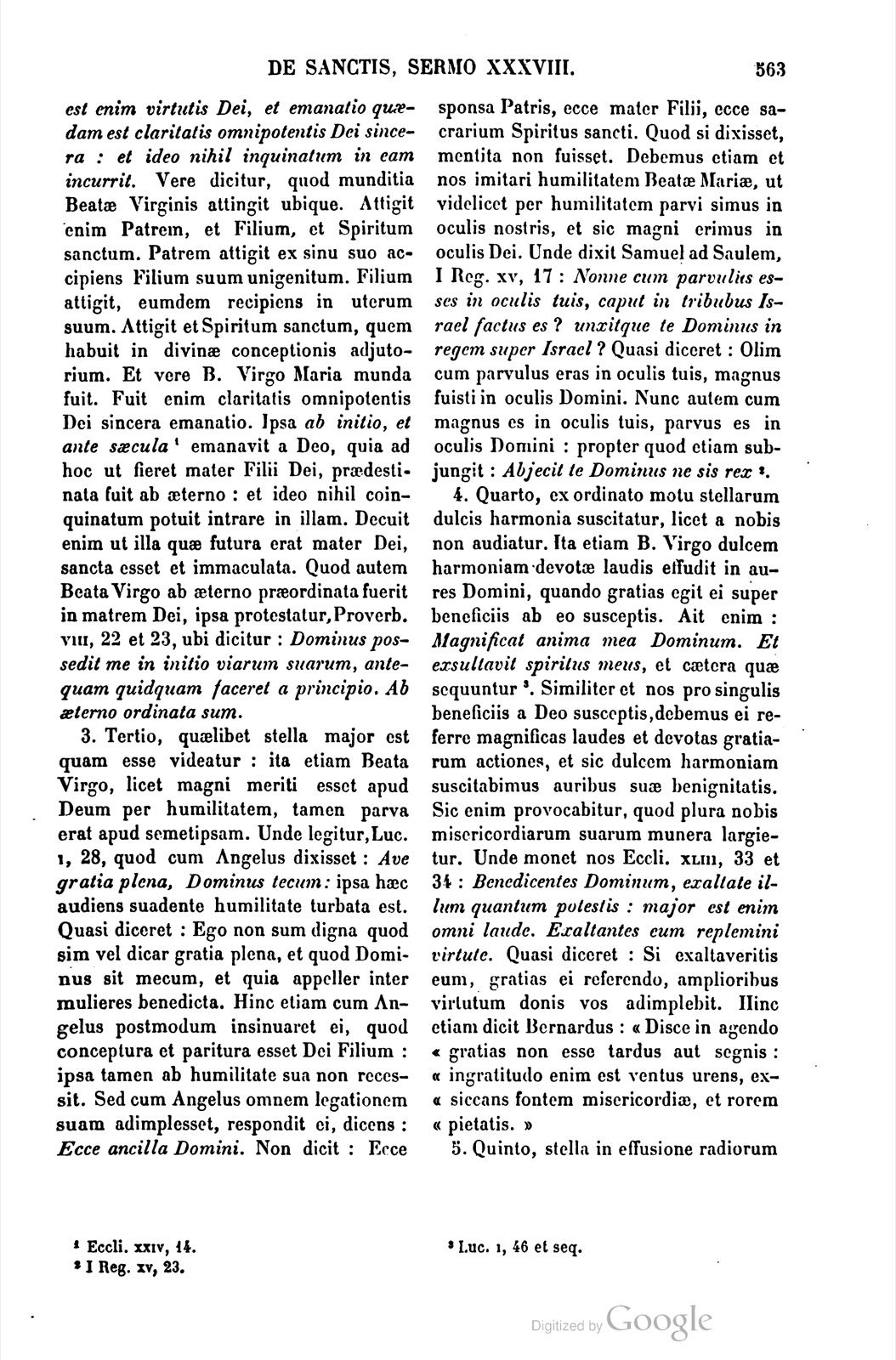
« Sicut sidus radium, Profert Virgo Filium, Pari forma. Non est læsum radio Sidus, nec est Filio Virgo læsa. »
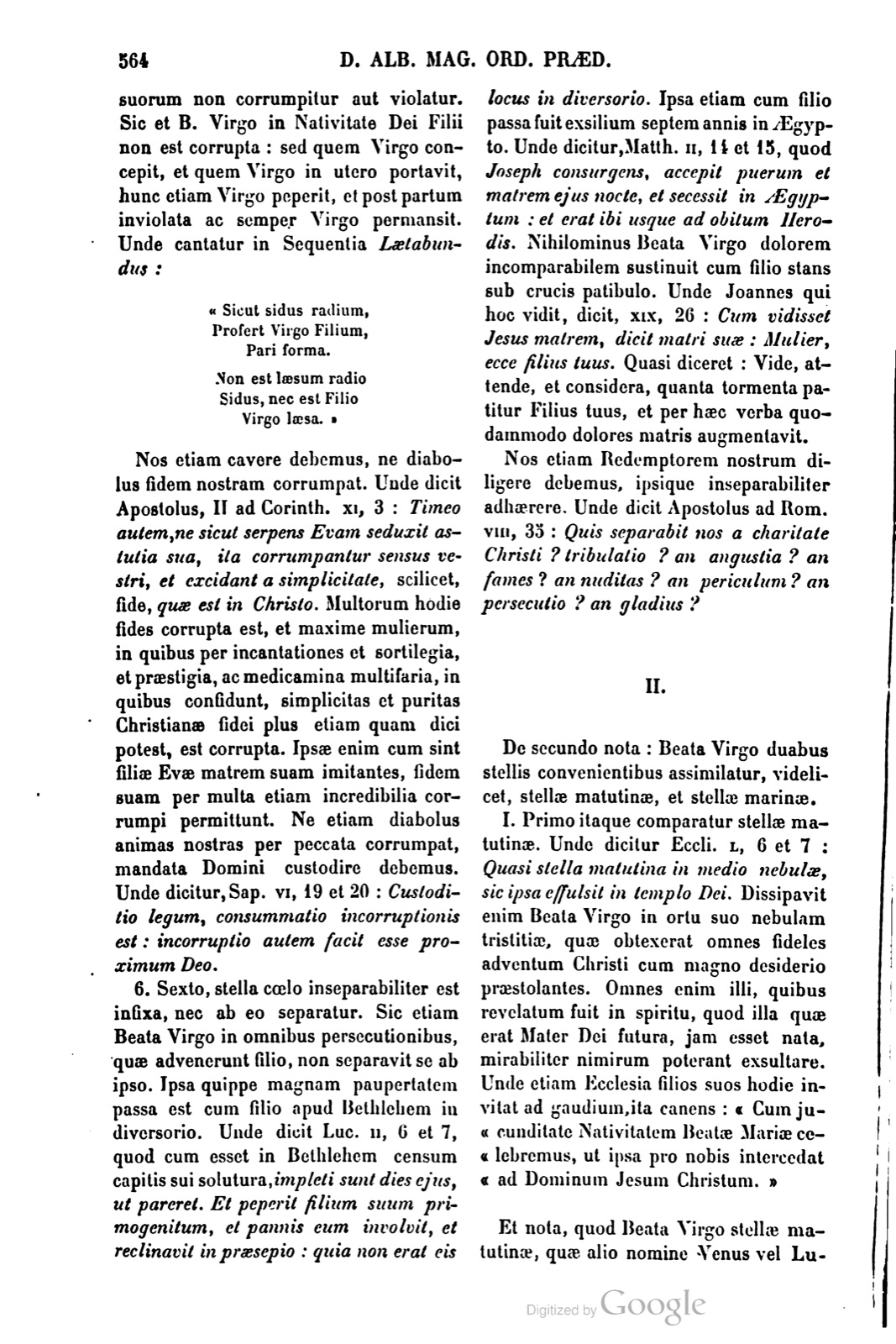
Nos etiam cavere debemus, ne diabolus fidem nostram corrumpat. Unde dicit Apostolus, II ad Corinth. XI, 3: Timeo autem, ne sicut serpens Evam seduxit astutia sua, ita corrumpantur sensus vestri, et excidant a simplicitate, scilicet, fide, quæ est in Christo. Multorum hodie fides corrupta est, et maxime mulierum, in quibus per incantationes et sortilegia, et præstigia, ac medicamina multifaria, in quibus confidunt, simplicitas et puritas Christianæ fidei plus etiam quam dici potest, est corrupta. Ipsæ enim cum sint filiæ Evæ matrem suam imitantes, fidem suam per multa etiam incredibilia corrumpi permittunt. Ne etiam diabolus animas nostras per peccata corrumpat, mandata Domini custodire debemus. Unde dicitur, Sap. VI, 19 et 20: Custoditio legum, consummatio incorruptionis est: incorruptio autem facit esse proximum Deo.
6. Sexto, stella cœlo inseparabiliter est infixa, nec ab eo separatur. Sic etiam Beata Virgo in omnibus persecutionibus, quæ advenerunt filio, non separavit se ab ipso. Ipsa quippe magnam paupertatem passa est cum filio apud Bethlehem in diversorio. Unde dicit Luc. II, 6 et 7, quod cum esset in Bethlehem censum capitis sui solutura, impleti sunt dies ejus, ut pareret. Et peperit filium suum primogenitum, et pannis eum involvit, et reclinavit in præsepio: quia non erat eis locus in diversorio. Ipsa etiam cum filio passa fuit exsilium septem annis in Ægypto. Unde dicitur, Matth. II, 14 et 15, quod Joseph consurgens, accepit puerum et matrem ejus nocte, et secessit in Ægyptum: et erat ibi usque ad obitum Herodis. Nihilominus Beata Virgo dolorem incomparabilem sustinuit cum filio stans sub crucis patibulo. Unde Joannes qui hoc vidit, dicit, XIX, 26: Cum vidisset Jesus matrem, dicit matri suæ: Mulier, ecce filius tuus. Quasi diceret: Vide, attende, et considera, quanta tormenta patitur Filius tuus, et per hæc verba quodammodo dolores matris augmentavit.
Nos etiam Redemptorem nostrum diligere debemus, ipsique inseparabiliter adhærere. Unde dicit Apostolus ad Rom. VIII, 35: Quis separabit nos a charitate Christi? tribulatio? an angustia? an fames? an nuditas? an periculum? an persecutio? an gladius?
II.
De secundo nota: Beata Virgo duabus stellis convenientibus assimilatur, videlicet, stellæ matutinæ, et stellæ marinæ.
I. Primo itaque comparatur stellæ matutinæ. Unde dicitur Eccli. L, 6 et 7: Quasi stella matutina in medio nebulæ, sic ipsa effulsit in templo Dei. Dissipavit enim Beata Virgo in ortu suo nebulam tristitiæ, quæ obtexerat omnes fideles adventum Christi cum magno desiderio præstolantes. Omnes enim illi, quibus revelatum fuit in spiritu, quod illa quæ erat Mater Dei futura, jam esset nata, mirabiliter nimirum poterant exsultare. Unde etiam Ecclesia filios suos hodie invitat ad gaudium, ita canens: « Cum jucunditate Nativitatem Beatæ Mariæ celebremus, ut ipsa pro nobis intercedat ad Dominum Jesum Christum. »
Et nota, quod Beata Virgo stellæ matutinæ, quæ alio nomine Venus vel Lucifer appellatur, propter quinque comparatur.
1. Primo enim, sicut Lucifer diem et ortum solis immediate præcedit: ita et Beata Virgo Maria Dei Filium, qui verus est dies et sol æternus, corporali introitu præcessit in mundum, imo et ipsa verum diem et solem æternum, id est, Dei Filium profugatis tenebris perduxit in hunc mundum: propter quod cantamus de ea: « Felix namque es sacra Virgo Maria, et omni laude dignissima: quia ex te ortus est sol justitiæ, Christus Deus noster. » De die etiam, quem hæc stella produxit in orbem, dicitur in Psal. LXXXIII, 11: Melior est dies una in atriis tuis, super millia. In atriis quippe militantis Ecclesiæ solus Christus melior est, quam sint multa millia aliorum justorum. Unde et sponsa in Cant. V, 10, dicit quod ex millibus est electus.
"As a star the ray, The Virgin brings forth the Son, In equal form. The star is not harmed by the ray, Nor by the Son Is the Virgin harmed."
We also ought to beware lest the devil corrupt our faith. Hence the Apostle says, 2 Corinthians 11:3: But I fear lest, as the serpent seduced Eve by his craftiness, so your senses may be corrupted and fall away from the simplicity, namely faith, which is in Christ. The faith of many today has been corrupted, and especially of women, in whom through incantations and sorceries, and tricks, and manifold medicines, in which they trust, the simplicity and purity of Christian faith is corrupted more than can even be said. For since they are daughters of Eve, imitating their mother, they permit their faith to be corrupted through many even incredible things. But lest the devil corrupt our souls through sins, we ought to keep the commands of the Lord. Hence it is said, Wisdom 6:19 and 20: The keeping of laws is the consummation of incorruption; but incorruption makes one to be near God.
6. Sixthly, a star is inseparably fixed in heaven and is not separated from it. So also Blessed Virgin did not separate herself from her son in all the persecutions that came upon him. For she suffered great poverty with her son at Bethlehem in the lodging-place. Hence Luke 2:6 and 7 says that, when she was in Bethlehem about to pay the census of her head, the days for her to give birth were fulfilled. And she bore her firstborn son, and wrapped him in swaddling clothes, and laid him in the manger, because there was no place for them in the lodging-place. She also suffered exile with her son for seven years in Egypt. Hence it is said, Matthew 2:14 and 15, that Joseph, rising, took the child and his mother by night and withdrew into Egypt, and he was there until the death of Herod. Nonetheless Blessed Virgin sustained incomparable sorrow with her son, standing beneath the gibbet of the cross. Hence John, who saw this, says, 19:26: When Jesus had seen his mother, he says to his mother: Woman, behold your son. As if he were saying: See, attend, and consider how great torments your Son is suffering; and through these words he in a certain way increased the mother's sorrows.
We also ought to love our Redeemer and adhere to him inseparably. Hence the Apostle says to the Romans 8:35: Who will separate us from the charity of Christ? tribulation? or distress? or hunger? or nakedness? or danger? or persecution? or the sword?
II.
On the second, note: The Blessed Virgin is assimilated to two suitable stars, namely to the morning star and to the marine star.
I. First, therefore, she is compared to the morning star. Hence Ecclesiasticus 50:6 and 7 says: Like the morning star in the midst of cloud, so she shone forth in the temple of God. For Blessed Virgin in her rising dissipated the cloud of sadness that had covered all the faithful awaiting the advent of Christ with great desire. For all those to whom it had been revealed in spirit that she who was going to be Mother of God had now been born could wonderfully and surely exult. Hence also the Church today invites her children to joy, singing thus: "With gladness let us celebrate the Nativity of Blessed Mary, that she may intercede for us to the Lord Jesus Christ."
And note that Blessed Virgin is compared to the morning star, which by another name is called Venus or Lucifer, on account of five things.
1. For first, just as Lucifer immediately precedes the day and the rising of the sun, so also Blessed Virgin Mary, by bodily entrance into the world, preceded the Son of God, who is the true day and eternal sun; indeed she herself, after the darknesses had been put to flight, led the true day and eternal sun, that is, the Son of God, into this world. On account of this we sing concerning her: "For happy are you, sacred Virgin Mary, and most worthy of all praise, because from you has arisen the sun of justice, Christ our God." Concerning the day also that this star produced into the world, it is said in Psalm 83:11: One day in your courts is better than thousands. For in the courts of the militant Church Christ alone is better than many thousands of other just persons. Hence also the bride in Song of Songs 5:10 says that he is chosen from thousands.
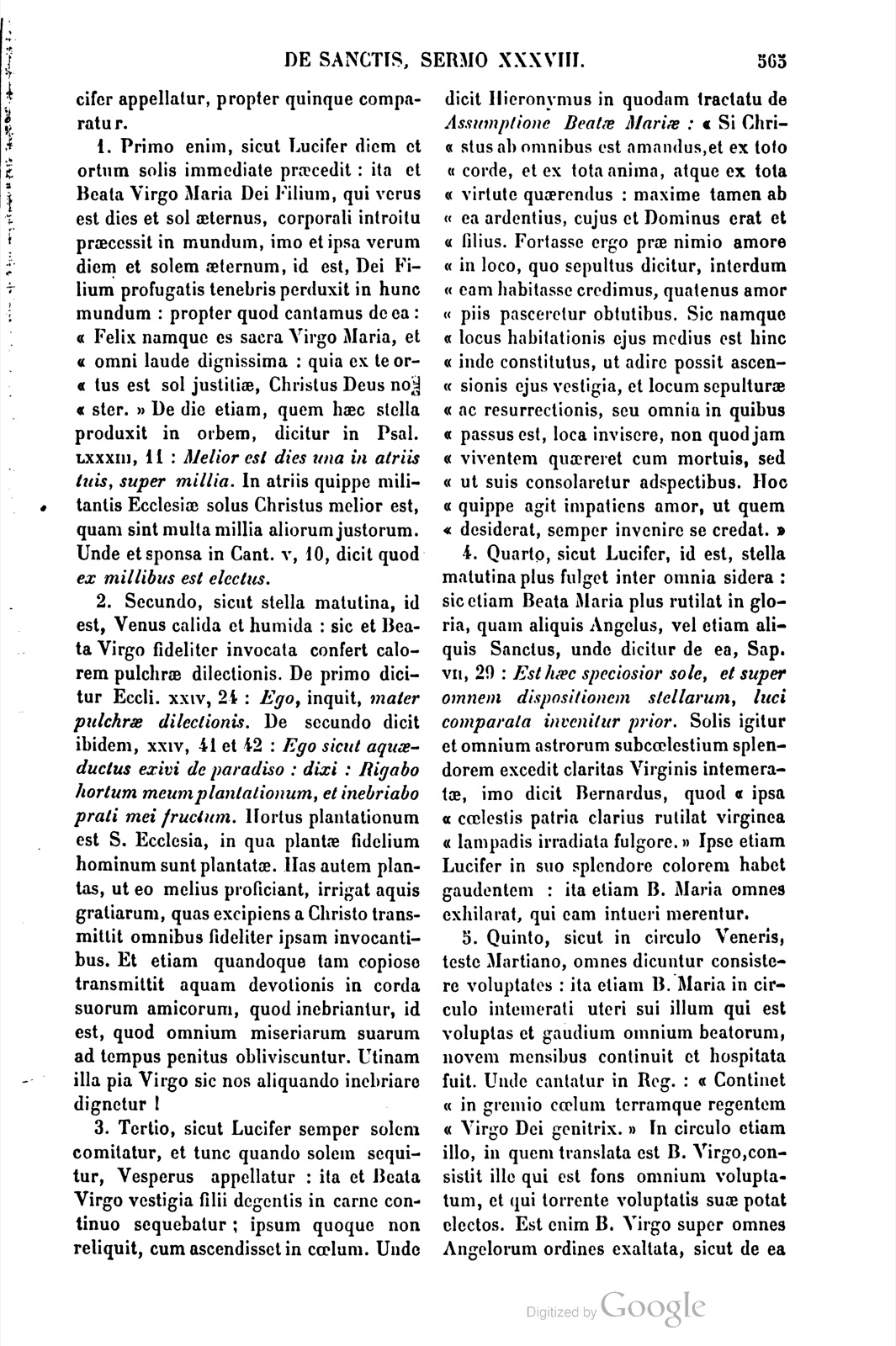
2. Secundo, sicut stella matutina, id est, Venus calida et humida: sic et Beata Virgo fideliter invocata confert calorem pulchræ dilectionis. De primo dicitur Eccli. XXIV, 24: Ego, inquit, mater pulchræ dilectionis. De secundo dicit ibidem, XXIV, 41 et 42: Ego sicut aquæductus exivi de paradiso: dixi: Rigabo hortum meum plantationum, et inebriabo prati mei fructum. Hortus plantationum est S. Ecclesia, in qua plantæ fidelium hominum sunt plantatæ. Has autem plantas, ut eo melius proficiant, irrigat aquis gratiarum, quas excipiens a Christo transmittit omnibus fideliter ipsam invocantibus. Et etiam quandoque tam copiose transmittit aquam devotionis in corda suorum amicorum, quod inebriantur, id est, quod omnium miseriarum suarum ad tempus penitus obliviscuntur. Utinam illa pia Virgo sic nos aliquando inebriare dignetur!
3. Tertio, sicut Lucifer semper solem comitatur, et tunc quando solem sequitur, Vesperus appellatur: ita et Beata Virgo vestigia filii degentis in carne continuo sequebatur; ipsum quoque non reliquit, cum ascendisset in cælum. Unde dicit Hieronymus in quodam tractatu de Assumptione Beatæ Mariæ: « Si Christus ab omnibus est amandus, et ex toto corde, et ex tota anima, atque ex tota virtute quærendus: maxime tamen ab ea ardentius, cujus et Dominus erat et filius. Fortasse ergo præ nimio amore in loco, quo sepultus dicitur, interdum eam habitasse credimus, quatenus amor piis pasceretur obtutibus. Sic namque locus habitationis ejus medius est hinc inde constitutus, ut adire possit ascensionis ejus vestigia, et locum sepulturæ ac resurrectionis, seu omnia in quibus passus est, loca invisere, non quod jam viventem quæreret cum mortuis, sed ut suis consolaretur adspectibus. Hoc quippe agit impatiens amor, ut quem desiderat, semper invenire se credat. »
4. Quarto, sicut Lucifer, id est, stella matutina plus fulget inter omnia sidera: sic etiam Beata Maria plus rutilat in gloria, quam aliquis Angelus, vel etiam aliquis Sanctus, unde dicitur de ea, Sap. VII, 29: Est hæc speciosior sole, et super omnem dispositionem stellarum, luci comparata invenitur prior. Solis igitur et omnium astrorum subcœlestium splendorem excedit claritas Virginis intemeratæ, imo dicit Bernardus, quod « ipsa cœlestis patria clarius rutilat virginea lampadis irradiata fulgore. » Ipse etiam Lucifer in suo splendore colorem habet gaudentem: ita etiam B. Maria omnes exhilarat, qui eam intueri merentur.
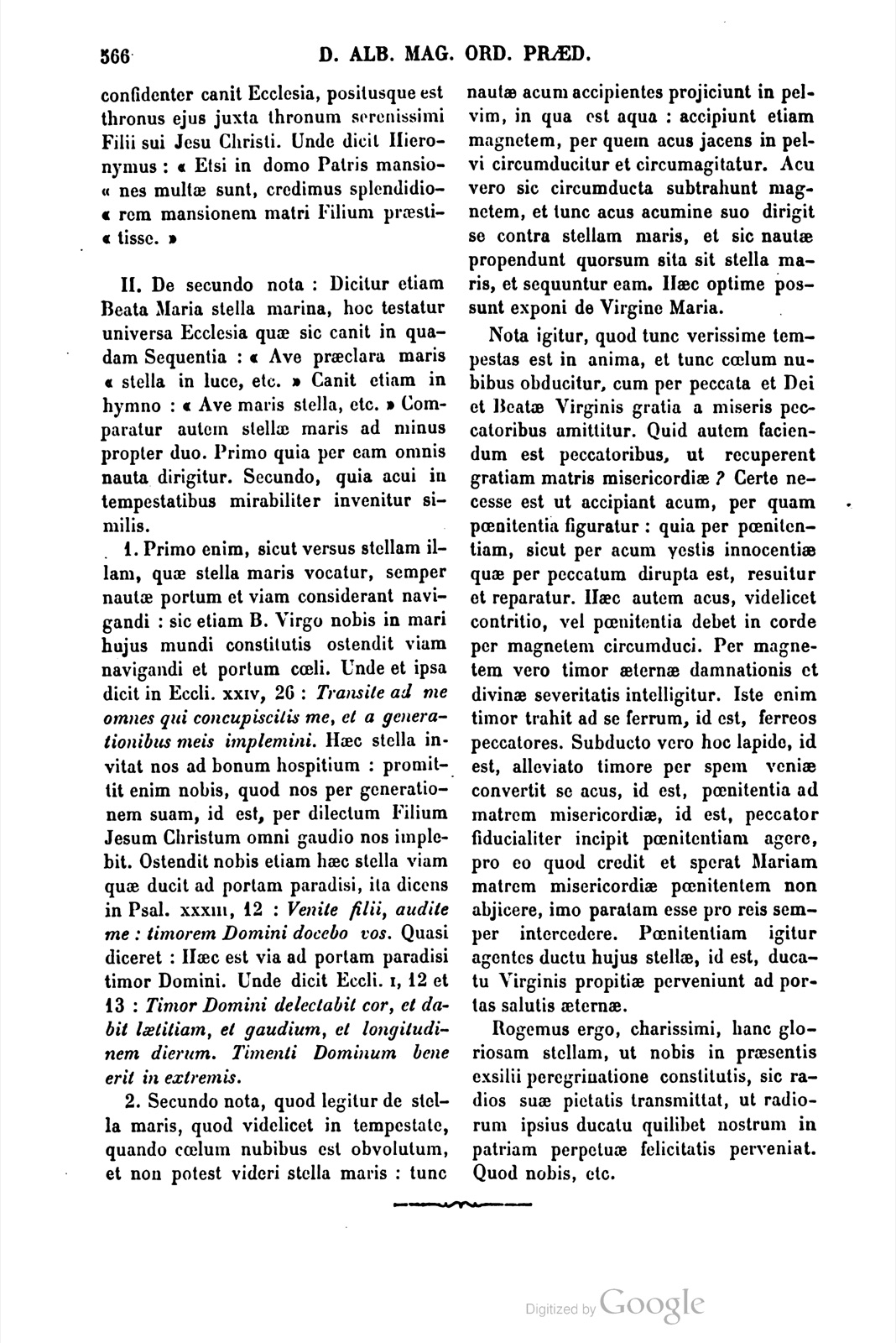
5. Quinto, sicut in circulo Veneris, teste Martiano, omnes dicuntur consistere voluptates: ita etiam B. Maria in circulo intemerati uteri sui illum qui est voluptas et gaudium omnium beatorum, novem mensibus continuit et hospitata fuit. Unde cantatur in Reg.: « Continet in gremio cælum terramque regentem Virgo Dei genitrix. » In circulo etiam illo, in quem translata est B. Virgo, consistit ille qui est fons omnium voluptatum, et qui torrente voluptatis suæ potat electos. Est enim B. Virgo super omnes Angelorum ordines exaltata, sicut de ea confidenter canit Ecclesia, positusque est thronus ejus juxta thronum serenissimi Filii sui Jesu Christi. Unde dicit Hieronymus: « Etsi in domo Patris mansiones multæ sunt, credimus splendidiorem mansionem matri Filium præstitisse. »
2. Secondly, just as the morning star, that is, Venus, is warm and moist, so also Blessed Virgin, when faithfully invoked, confers the warmth of beautiful love. Concerning the first it is said, Ecclesiasticus 24:24: I, she says, am the mother of beautiful love. Concerning the second she says in the same place, 24:41 and 42: I went out from paradise like an aqueduct; I said: I will water my garden of plantings, and I will inebriate the fruit of my meadow. The garden of plantings is holy Church, in which the plants of faithful men are planted. But these plants, so that they may advance the better, she waters with waters of graces, which she receives from Christ and transmits to all faithfully invoking her. And sometimes she also transmits the water of devotion so copiously into the hearts of her friends that they are inebriated, that is, that for a time they utterly forget all their miseries. Would that that dutiful Virgin might deign someday to inebriate us thus!
3. Thirdly, just as Lucifer always accompanies the sun, and when it follows the sun it is called Vesper, so also the Blessed Virgin continually followed the footsteps of the son dwelling in flesh; she also did not leave him when he had ascended into heaven. Hence Jerome says in a certain tractate on the Assumption of Blessed Mary: "If Christ is to be loved by all and to be sought with the whole heart, and with the whole soul, and with the whole strength, yet especially more ardently by her whose Lord and son he was. Therefore perhaps through excessive love we believe that sometimes she dwelt in the place where he is said to have been buried, so that love might be fed by dutiful gazings. For the place of her habitation is so placed in the middle on this side and that, that she can approach the footsteps of his ascension and the place of burial and resurrection, or visit all the places in which he suffered, not because she was now seeking the living one with the dead, but so that she might be consoled by her own sights. For impatient love does this, that it always believes that it finds the one whom it desires."
4. Fourthly, just as Lucifer, that is, the morning star, shines more among all the stars, so also Blessed Mary glows more in glory than any Angel, or even any Saint; hence it is said concerning her, Wisdom 7:29: She is more beautiful than the sun, and above every arrangement of the stars, compared to light she is found before it. Therefore the brightness of the undefiled Virgin exceeds the splendor of the sun and of all subcelestial stars; indeed Bernard says that "the heavenly fatherland itself glows more brightly, irradiated by the radiance of the virginal lamp." Lucifer itself also has a rejoicing color in its splendor; so also Blessed Mary gladdens all who deserve to behold her.
5. Fifthly, just as, with Martianus as witness, all pleasures are said to consist in the circle of Venus, so also Blessed Mary in the circle of her undefiled womb contained and hosted for nine months him who is the pleasure and joy of all the blessed. Hence it is sung in the Response: "The Virgin Mother of God contains in her womb the one ruling heaven and earth." In that circle also into which Blessed Virgin was translated there consists he who is the fountain of all pleasures, and who gives drink to the elect with the torrent of his pleasure. For Blessed Virgin is exalted above all the orders of Angels, as the Church confidently sings concerning her, and her throne has been placed beside the throne of her most serene Son Jesus Christ. Hence Jerome says: "Even if there are many mansions in the house of the Father, we believe that the Son granted a more splendid mansion to the mother."
II. De secundo nota: Dicitur etiam Beata Maria stella marina, hoc testatur universa Ecclesia quæ sic canit in quadam Sequentia: « Ave præclara maris stella in luce, etc. » Canit etiam in hymno: « Ave maris stella, etc. » Comparatur autem stellæ maris ad minus propter duo. Primo quia per eam omnis nauta dirigitur. Secundo, quia acui in tempestatibus mirabiliter invenitur similis.
1. Primo enim, sicut versus stellam illam, quæ stella maris vocatur, semper nautæ portum et viam considerant navigandi: sic etiam B. Virgo nobis in mari hujus mundi constitutis ostendit viam navigandi et portum cæli. Unde et ipsa dicit in Eccli. XXIV, 26: Transite ad me omnes qui concupiscitis me, et a generationibus meis implemini. Hæc stella invitat nos ad bonum hospitium: promittit enim nobis, quod nos per generationem suam, id est, per dilectum Filium Jesum Christum omni gaudio nos implebit. Ostendit nobis etiam hæc stella viam quæ ducit ad portam paradisi, ita dicens in Psal. XXXIII, 12: Venite filii, audite me: timorem Domini docebo vos. Quasi diceret: Hæc est via ad portam paradisi timor Domini. Unde dicit Eccli. I, 12 et 13: Timor Domini delectabit cor, et dabit lætitiam, et gaudium, et longitudinem dierum. Timenti Dominum bene erit in extremis.
2. Secundo nota, quod legitur de stella maris, quod videlicet in tempestate, quando cælum nubibus est obvolutum, et non potest videri stella maris: tunc nautæ acum accipientes projiciunt in pelvim, in qua est aqua: accipiunt etiam magnetem, per quem acus jacens in pelvi circumducitur et circumagitatur. Acu vero sic circumducta subtrahunt magnetem, et tunc acus acumine suo dirigit se contra stellam maris, et sic nautæ propendunt quorsum sita sit stella maris, et sequuntur eam. Hæc optime possunt exponi de Virgine Maria.
Nota igitur, quod tunc verissime tempestas est in anima, et tunc cælum nubibus obducitur, cum per peccata et Dei et Beatæ Virginis gratia a miseris peccatoribus amittitur. Quid autem faciendum est peccatoribus, ut recuperent gratiam matris misericordiæ? Certe necesse est ut accipiant acum, per quam pœnitentia figuratur: quia per pœnitentiam, sicut per acum vestis innocentiæ quæ per peccatum dirupta est, resuitur et reparatur. Hæc autem acus, videlicet contritio, vel pœnitentia debet in corde per magnetem circumduci. Per magnetem vero timor æternæ damnationis et divinæ severitatis intelligitur. Iste enim timor trahit ad se ferrum, id est, ferreos peccatores. Subducto vero hoc lapide, id est, alleviato timore per spem veniæ convertit se acus, id est, pœnitentia ad matrem misericordiæ, id est, peccator fiducialiter incipit pœnitentiam agere, pro eo quod credit et sperat Mariam matrem misericordiæ pœnitentem non abjicere, imo paratam esse pro reis semper intercedere. Pœnitentiam igitur agentes ductu hujus stellæ, id est, ducatu Virginis propitiæ perveniunt ad portas salutis æternæ.
Rogemus ergo, charissimi, hanc gloriosam stellam, ut nobis in præsentis exsilii peregrinatione constitutis, sic radios suæ pietatis transmittat, ut radiorum ipsius ducatu quilibet nostrum in patriam perpetuæ felicitatis perveniat. Quod nobis, etc.
II. On the second, note: Blessed Mary is also called the marine star; the whole Church testifies this, which sings thus in a certain Sequence: "Hail, bright star of the sea in light, etc." It also sings in the hymn: "Hail, star of the sea, etc." But she is compared to the star of the sea at least on account of two things. First, because through it every sailor is directed. Secondly, because she is found wonderfully similar to a needle in storms.
1. For first, just as sailors always consider the harbor and the way of navigation toward that star that is called the star of the sea, so also Blessed Virgin, for us established in the sea of this world, shows the way of navigation and the harbor of heaven. Hence she herself also says in Ecclesiasticus 24:26: Pass over to me, all you who desire me, and be filled from my generations. This star invites us to good lodging; for she promises to us that through her generation, that is, through her beloved Son Jesus Christ, she will fill us with every joy. This star also shows us the way that leads to the gate of paradise, saying thus in Psalm 33:12: Come, children, hear me; I will teach you the fear of the Lord. As if she were saying: This is the way to the gate of paradise, the fear of the Lord. Hence Ecclesiasticus 1:12 and 13 says: The fear of the Lord will delight the heart, and will give gladness, and joy, and length of days. It will be well in the last things for the one fearing the Lord.
2. Secondly, note that one reads concerning the star of the sea that namely in a storm, when the sky is covered with clouds and the star of the sea cannot be seen, then sailors, taking a needle, throw it into a basin in which there is water; they also take a magnet, through which the needle lying in the basin is drawn around and turned around. But when the needle has thus been drawn around, they withdraw the magnet, and then the needle directs itself with its point against the star of the sea, and thus sailors consider in which direction the star of the sea is situated and follow it. These things can be excellently expounded concerning the Virgin Mary.
Therefore note that then there is most truly a storm in the soul, and then the sky is covered with clouds, when through sins the grace of God and of the Blessed Virgin is lost by wretched sinners. But what must sinners do, so that they may recover the grace of the mother of mercy? Certainly it is necessary that they take a needle, through which penance is figured, because through penance, as through a needle, the garment of innocence that was torn through sin is sewn again and repaired. But this needle, namely contrition or penance, ought to be drawn around in the heart by a magnet. But by the magnet is understood the fear of eternal damnation and of divine severity. For this fear draws iron to itself, that is, iron-hearted sinners. But when this stone has been withdrawn, that is, when fear has been lightened through hope of pardon, the needle turns itself, that is, penance turns itself, to the mother of mercy; that is, the sinner trustingly begins to do penance, because he believes and hopes that Mary, the mother of mercy, does not cast away the penitent, but rather is always ready to intercede on behalf of the guilty. Therefore those doing penance, by the guidance of this star, that is, by the guidance of the propitious Virgin, arrive at the gates of eternal salvation.
Therefore let us ask, dearest ones, this glorious star, that, as we are established in the pilgrimage of the present exile, she may so transmit to us the rays of her dutiful kindness that by the guidance of her rays each of us may arrive in the fatherland of perpetual felicity. May he grant this to us, etc.
If a page does not appear, its photograph has not been uploaded yet.