Works › Prayers on the Sunday Gospels of the Whole Year
Volume 13 · p. 375
XXX. Third Sunday after the Feast of Trinity, Prayer
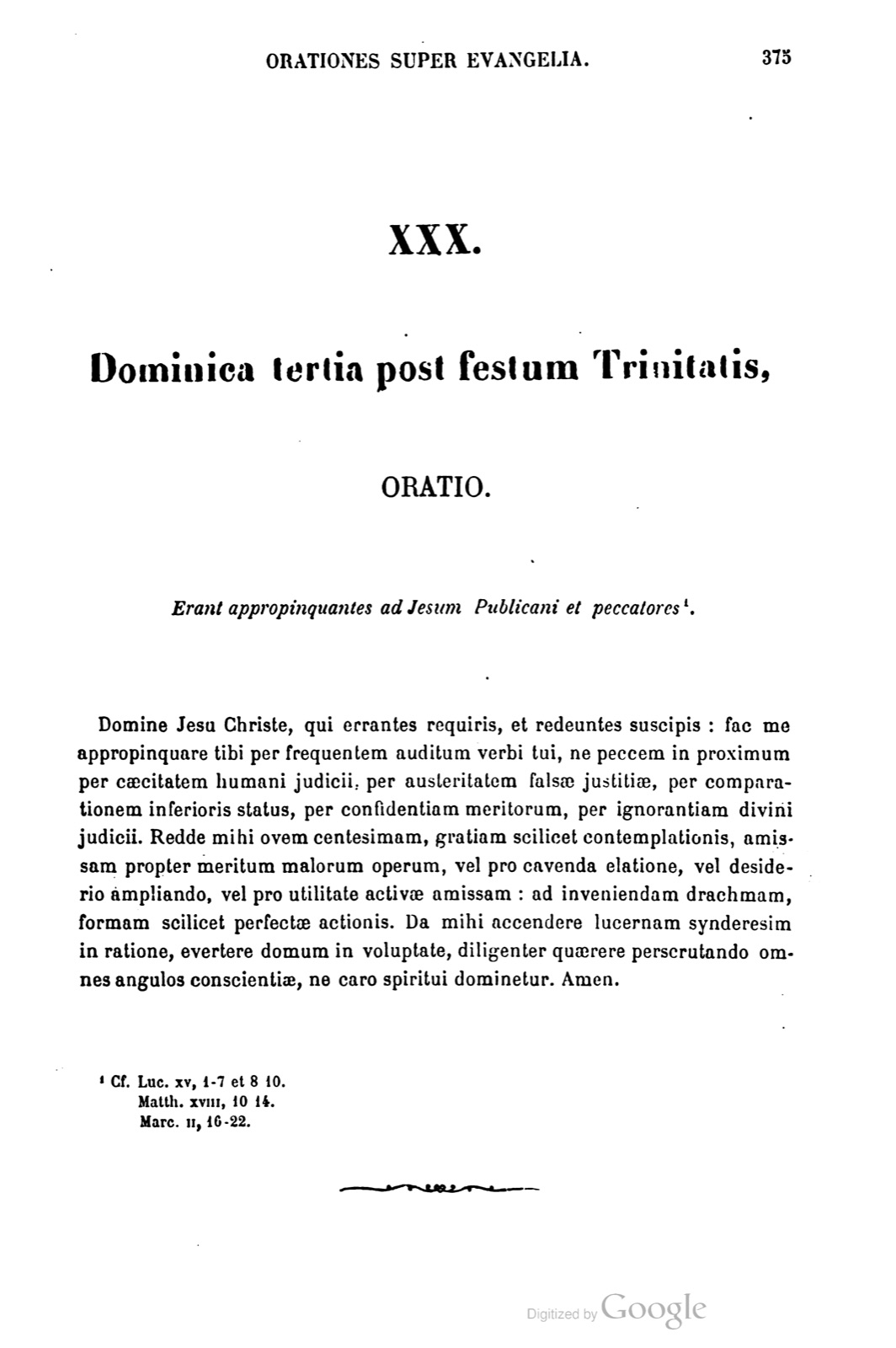
XXX. Dominica tertia post festum Trinitatis, Oratio. Erant appropinquantes ad Jesum Publicani et peccatores 1. Domine Jesu Christe, qui errantes requiris, et redeuntes suscipis: fac me appropinquare tibi per frequentem auditum verbi tui, ne peccem in proximum per caecitatem humani judicii, per austeritatem falsae justitiae, per comparationem inferioris status, per confidentiam meritorum, per ignorantiam divini judicii. Redde mihi ovem centesimam, gratiam scilicet contemplationis, amissam propter meritum malorum operum, vel pro cavenda elatione, vel desiderio ampliando, vel pro utilitate activae amissam: ad inveniendam drachmam, formam scilicet perfectae actionis. Da mihi accendere lucernam synderesim in ratione, evertere domum in voluptate, diligenter quaerere perscrutando omnes angulos conscientiae, ne caro spiritui dominetur. Amen.
XXX. Third Sunday after the Feast of Trinity, Prayer. Publicans and sinners were drawing near to Jesus 1. Lord Jesus Christ, who seek those wandering and receive those returning: make me draw near to you through frequent hearing of your word, lest I sin against the neighbor through blindness of human judgment, through austerity of false justice, through comparison of a lower state, through confidence in merits, through ignorance of divine judgment. Restore to me the hundredth sheep, namely the grace of contemplation, lost because of the merit of evil works, or lost for avoiding elation, or for enlarging desire, or for the usefulness of the active life; for finding the drachma, namely the form of perfect action. Grant me to light the lamp, synderesis in reason, to overturn the house in pleasure, to seek diligently by searching all the corners of conscience, lest flesh dominate spirit. Amen.
Notes
- Compare Luke 15:1-7 and 8-10; Matthew 18:10-14; Mark 2:16-22. (Cf. Luc. XV, 1-7 et 8-10. Matth. XVIII, 10-14. Marc. II, 16-22.) ↩
If a page does not appear, its photograph has not been uploaded yet.